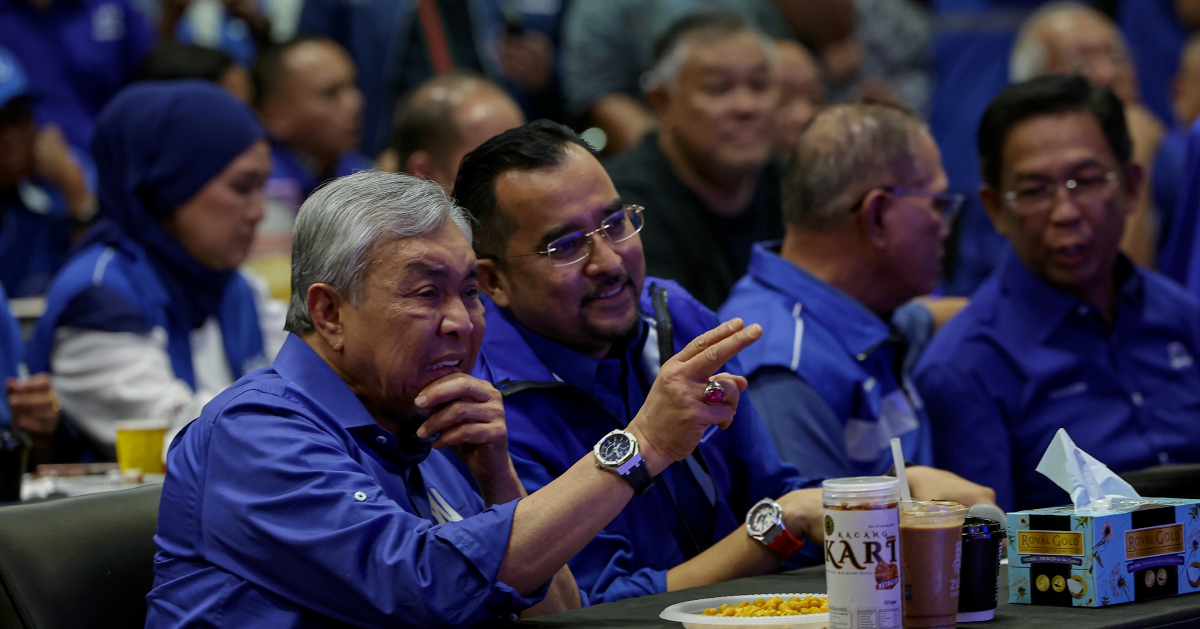
Umno's secretary-general Datuk Dr Asyraf Wajdi Dusuki has issued a candid reminder to the party's membership and grassroots activists in the wake of Barisan Nasional's triumph in the Negri Sembilan state election, emphasizing the dangers of allowing electoral success to breed arrogance. His remarks suggest a deliberate effort to temper enthusiasm within the ruling coalition and guard against the triumphalism that has historically preceded political reversals for the party.
The warning carries particular weight given Umno's tumultuous recent history. The party experienced a dramatic defeat in the 2018 general election, when arrogance and perceived disconnection from voter concerns contributed substantially to its loss of federal power—a shock from which the party has spent the subsequent years attempting to recover. Barisan Nasional's more recent electoral successes, including victories in several state elections, appear to have restored some momentum, but Asyraf's intervention suggests party leadership remains acutely conscious of the psychological dangers that accompany a renewed sense of invincibility.
The Negri Sembilan result delivered a meaningful boost to Barisan Nasional's political standing across Malaysia. The coalition's performance in this state election served as a referendum on the continued relevance of the broad alliance that dominated Malaysian politics for decades before its 2018 collapse. Victory here sends a signal that despite internal fractures and challenges to its traditional support base, the coalition retains the organizational machinery and voter appeal necessary to win contests when conditions align favorably. For Umno specifically, as the largest component of Barisan Nasional, the outcome represents validation of its continued centrality to Malaysian politics.
However, electoral victories can obscure underlying vulnerabilities. Asyraf's counsel reflects an understanding that winning elections does not automatically resolve the structural challenges facing Umno. The party continues to navigate complex internal divisions, regional factional dynamics, and shifting voter demographics that have made its political position less secure than during its pre-2018 dominance. A single state election victory, however decisive, cannot be mistaken for a fundamental restoration of the party's former supremacy.
The secretary-general's message also addresses a recurring pattern in Malaysian politics whereby ruling parties, emboldened by electoral success, have frequently implemented unpopular policies or made decisions perceived as disconnected from public sentiment. In the Umno context specifically, the party's loss of federal power in 2018 followed years during which voter frustration accumulated over governance issues, perceived corruption, and a sense that the leadership had grown remote from ordinary concerns. Asyraf's emphasis on humility thus carries an implicit acknowledgment that electoral mandates must be earned through continued responsiveness and good governance, rather than treated as permanent entitlements.
For Southeast Asian observers and Malaysia's broader political landscape, this intervention by a senior ruling-party figure reflects international trends whereby established political movements attempt to recalibrate their relationship with electorates following periods of decline. The challenge facing Umno parallels that confronting other long-governing parties across the region that have struggled to adapt to changing voter expectations and demographic shifts. Asyraf's call for introspection suggests party leadership understands that survival in contemporary politics requires constant calibration and awareness rather than the assured dominance of previous eras.
The timing of his remarks is significant, coming immediately after the Negri Sembilan results when party morale would be at its peak and when triumphalist messaging might most naturally emerge. By issuing this cautionary note at precisely this moment, Asyraf demonstrates leadership awareness of the psychological mechanics of political decline—that overconfidence tends to crystallize during moments of victory, making it the optimal juncture for preventive messaging.
The statement also carries implications for how Barisan Nasional coordinates across its diverse membership. The coalition includes multiple parties with sometimes competing interests, and its coherence depends on all components maintaining sufficient discipline to avoid the internal conflicts that previously weakened it. Asyraf's emphasis on collective restraint thus functions partly as a signal to coalition partners that Umno, despite its electoral success, remains committed to coalition-building and reciprocal consideration rather than seeking to consolidate hegemonic control.
Looking forward, how Umno translates Negri Sembilan's victory into sustained political advantage depends substantially on whether the party can maintain the balanced perspective that Asyraf advocates. Recent Malaysian political history suggests that electoral success proves ephemeral without corresponding attention to governance quality, institutional integrity, and sustained engagement with voter concerns. The secretary-general's warning effectively frames the Negri Sembilan result as a beginning rather than a culmination—an opportunity that carries equal risk of squandering through complacency.

