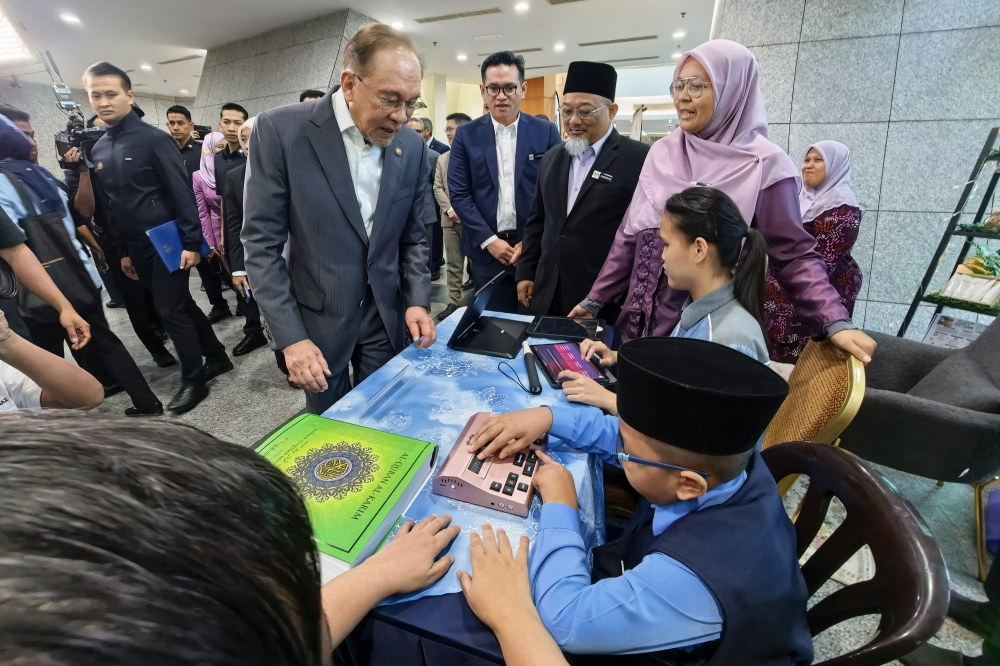
Prime Minister Datuk Seri Anwar Ibrahim has moved to allay longstanding anxieties about the place of Bahasa Melayu in an increasingly globalised world, asserting that citizens should feel confident acquiring proficiency in multiple languages without fear of compromising the national tongue's standing. Speaking in Putrajaya, the Prime Minister framed multilingual capability as a strategic asset rather than a cultural threat, positioning language acquisition as complementary to rather than competitive with the constitutional role of Bahasa Melayu.
Anwar's intervention reflects a carefully calibrated approach to one of Malaysia's most sensitive cultural debates. The relationship between Bahasa Melayu and English has periodically sparked strong public sentiment, with passionate advocates contending that emphasis on foreign language learning diverts resources and attention from strengthening the national language. Yet the government's position increasingly acknowledges economic realities: in finance, technology, science, and international commerce, English proficiency has become nearly indispensable for competitiveness. The Prime Minister's remarks seek to bridge this apparent contradiction by reframing the issue entirely.
At the foundation of Anwar's argument lies a distinction between language learning and language identity. Bahasa Melayu's constitutional status as the national and official language remains immutable, enshrined in the Federal Constitution and fundamental to Malaysian sovereignty. That position cannot be negotiated or undermined by education policy choices. What can and should change, according to this perspective, is Malaysia's willingness to invest in developing citizens who command multiple linguistic repertoires. The Prime Minister suggests that possession of such skills represents sophistication rather than disloyalty.
This position carries particular weight given Malaysia's diversity and economic trajectory. As a multiethnic nation with three major language communities—Malay, Chinese, and Indian—the country has always navigated linguistic pluralism. Moreover, the digital economy and knowledge-based sectors that policymakers wish to develop overwhelmingly operate in English. Universities worldwide teach advanced subjects in English; international conferences, research publications, and professional networks operate largely in that language. For Malaysian students and workers to participate fully in these spheres without disadvantage, English capability is increasingly non-negotiable.
Anwar's framing also implicitly addresses a generational dimension. Younger Malaysians, particularly those from urban areas and higher socioeconomic backgrounds, often demonstrate greater multilingual fluency than their parents. Rather than viewing this trend with alarm as cultural drift, the Prime Minister positions it as natural adaptation to a connected world. This reframing may help reduce defensiveness around language policy among both educators and parents who worry that traditional concerns about preserving Bahasa Melayu are being dismissed as backward-looking.
However, the statement also invites scrutiny of implementation. Educational systems require substantial resources, and choices about curriculum emphasis inevitably involve trade-offs. If schools allocate increasing classroom hours to English language instruction, proportionally less time becomes available for deepening proficiency in Bahasa Melayu itself. The question of whether current language pedagogy in Malaysian schools achieves both objectives adequately—producing students equally comfortable in Bahasa Melayu and English—remains contested among educators. Anwar's rhetoric sidesteps the practical challenges of achieving this dual objective within existing resource constraints.
The Prime Minister's comments also carry diplomatic implications for Malaysia's international positioning. In Southeast Asia, where regional integration through ASEAN increasingly requires English as a working language, Malaysian officials who operate fluently across multiple languages enhance the nation's diplomatic and commercial influence. Thailand, Vietnam, and Indonesia have each grappled with similar questions about language policy, and Malaysia's confident embrace of multilingualism without abandoning Bahasa Melayu could model a pragmatic approach for regional peers.
Critics of language diversification sometimes argue that weakening Bahasa Melayu's dominance in education threatens social cohesion and national identity among students of different ethnic backgrounds. From this perspective, a common national language serves integrative functions beyond mere communication. Anwar's position implicitly accepts this integrative role while suggesting it is compatible with multilingual capability. Whether this balance proves achievable depends largely on how education policy actually evolves in practice.
The statement also reflects broader government priorities under Anwar's leadership. His administration has emphasised pragmatism, economic modernisation, and regional integration. These goals naturally lead toward policies that enhance Malaysian workers' and professionals' competitive advantages in global markets. Language capability fits squarely within this agenda. At the same time, Anwar's government remains attentive to cultural sensitivities and nationalist concerns that shape public opinion among significant voter constituencies.
Moving forward, the practical question becomes whether Malaysia's educational institutions will receive adequate investment and strategic direction to produce graduates genuinely proficient in both Bahasa Melayu and English, plus potentially a third language. Current evidence suggests many Malaysian school-leavers achieve neither threshold convincingly. Anwar's rhetorical repositioning represents necessary framing, but converting aspirational language policy into measurable improvements in student outcomes will require sustained commitment, adequate funding, and careful curriculum design that avoids false trade-offs between linguistic competencies.

