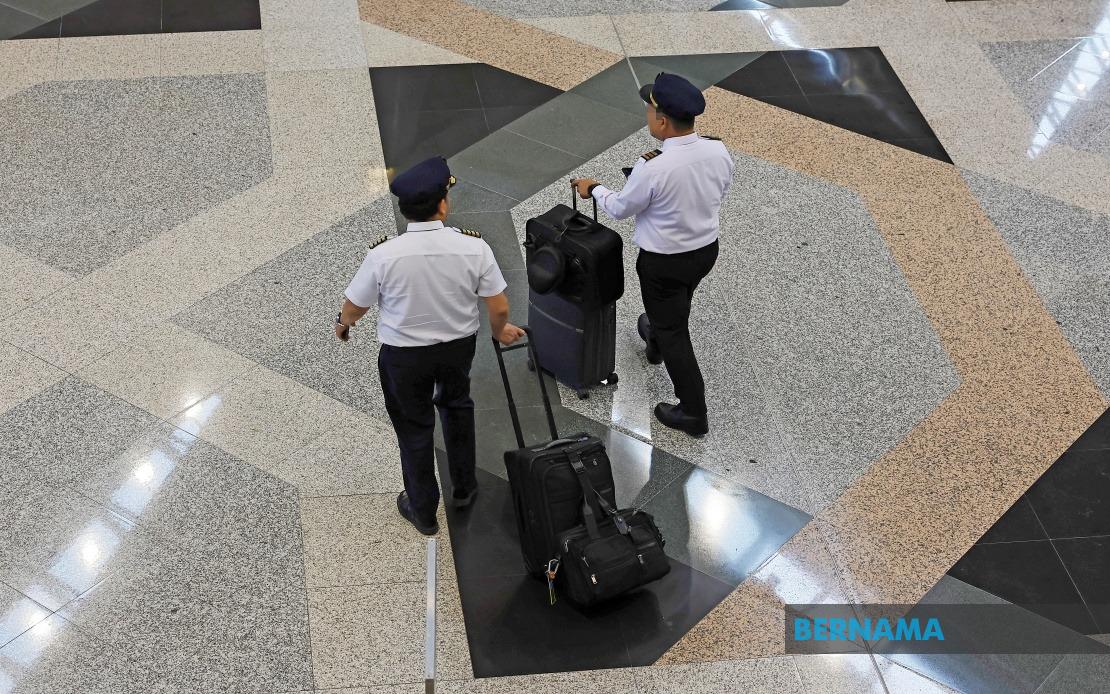
Safety advocates are now questioning whether Kuala Lumpur International Airport's security infrastructure adequately protects Malaysia's aviation sector from emerging drug-trafficking threats. Tan Sri Lee Lam Thye, chairman of the Alliance For A Safe Community, has publicly called for a sweeping examination of screening protocols at KLIA after a 39-year-old Malaysian pilot was apprehended by Indonesian authorities at Soekarno-Hatta International Airport in Jakarta with an alleged 25 kilogrammes of narcotics in his possession. The detention at Terminal 3 marks a troubling breach in the supply chain that should alarm policymakers across Southeast Asia, where aviation security standards remain inconsistent across national borders.
Lee's intervention signals growing concern about potential vulnerabilities in Malaysia's border security architecture, particularly regarding personnel who enjoy privileged access to restricted airport zones. While maintaining that the accused pilot deserves the presumption of innocence pending legal proceedings, Lee has articulated a critical question that resonates beyond this single incident: how the alleged contraband traversed KLIA's detection systems without triggering alerts. This inquiry touches on deeper systemic issues within Malaysian aviation security that demand transparent scrutiny from responsible authorities.
The case exposes a potential enforcement gap affecting airport workers and flight crew, categories of people who regularly bypass certain screening measures due to their occupational status. Lee has specifically advocated for eliminating differential treatment in security protocols, arguing that no professional designation should exempt individuals from rigorous inspection procedures. His position reflects international best practices where security protocols apply uniformly regardless of employment status or seniority, a standard that many regional airports struggle to implement consistently.
Lee has formally requested that enforcement agencies—including the Civil Aviation Authority, airport security operations teams, and police departments—collaborate on a comprehensive audit of current screening methodology. This examination should evaluate not only physical scanning technology but also human resource vetting, staff training regimens, and compliance monitoring systems. The recommendation implicitly acknowledges that procedural weaknesses often emerge from inadequate oversight of personnel rather than deficiencies in detection equipment alone.
The reputational stakes for Malaysia's aviation sector extend beyond immediate passenger confidence. International carriers, freight operators, and business aviation services consider security certification when selecting hub locations and routing decisions. A perception that Malaysian airports cannot reliably prevent drug trafficking could influence investment patterns and operational deployments across the region. Neighbouring countries such as Singapore and Thailand might exploit such gaps in competitive positioning within Southeast Asia's aviation landscape.
Lee has emphasized that maintaining public trust in Malaysia's aviation safety apparatus requires demonstrable commitment to security consistency. When screening procedures allow substances to pass undetected, travellers—both domestic and international—rationally reassess their confidence in airport operations. This erosion of confidence can prove difficult to rebuild even after corrective measures are implemented, creating long-term economic consequences for ground handlers, retailers, and hospitality businesses dependent on passenger volume.
The alleged incident also highlights how transnational drug-smuggling networks exploit aviation corridors between multiple countries. A pilot operating flights across Southeast Asia potentially represents an attractive recruitment target for trafficking organisations, given privileged access and reduced scrutiny at certain checkpoints. The Jakarta arrest suggests that while Indonesian authorities successfully intercepted the shipment, the contraband had already passed through Malaysian security zones, indicating the detection failure occurred upstream.
Malaysia's Civil Aviation Authority faces particular responsibility in this matter, as it oversees licensing, training, and conduct standards for flight crew. The Authority should consider whether existing vetting procedures adequately screen for vulnerabilities to criminal recruitment, substance abuse indicators, or financial pressures that might motivate illicit activity. Periodic psychological assessments and financial audits, common in other high-security professions, warrant serious consideration within the Malaysian aviation context.
Lee's call also implicitly challenges the fragmentation of airport security governance across multiple agencies. KLIA operates under complex jurisdictional arrangements involving federal authorities, concession operators, and law enforcement bodies, creating potential coordination failures. A unified security command structure with clear accountability lines would strengthen the ability to detect and respond to emerging threats. Regional coordination mechanisms with neighbouring countries would further enhance detection capabilities by sharing threat intelligence and establishing consistent standards.
The broader implications for Malaysia's standing as a Southeast Asian aviation hub cannot be understated. Airlines increasingly demand certainty regarding security protocols when selecting maintenance bases, crew training facilities, and passenger hub operations. A systematic approach to addressing the security gaps exposed by this case would signal professional competence and institutional commitment to international standards, potentially strengthening Malaysia's competitive position in aviation services across the region.
Moving forward, the relevant authorities must balance operational efficiency with security imperatives. Enhanced screening procedures inevitably require additional time and resources, potentially creating delays at peak operational periods. However, the cost of permitting drug trafficking through Malaysian airports—measured in criminal liability, international sanctions, and reputation damage—far exceeds the investment required for comprehensive security improvements. Lee's intervention provides political cover for security agencies to implement necessary but resource-intensive procedural changes.
The investigation phase should produce actionable findings within defined timeframes, with measurable improvements implemented transparently. Regular audits and periodic refresh cycles would prevent complacency from reestablishing security gaps. Engagement with international aviation security bodies and peer institutions in Singapore, Thailand, and Indonesia would benchmark Malaysia's standards against regional best practices and facilitate knowledge exchange regarding emerging smuggling methods and detection technologies.

