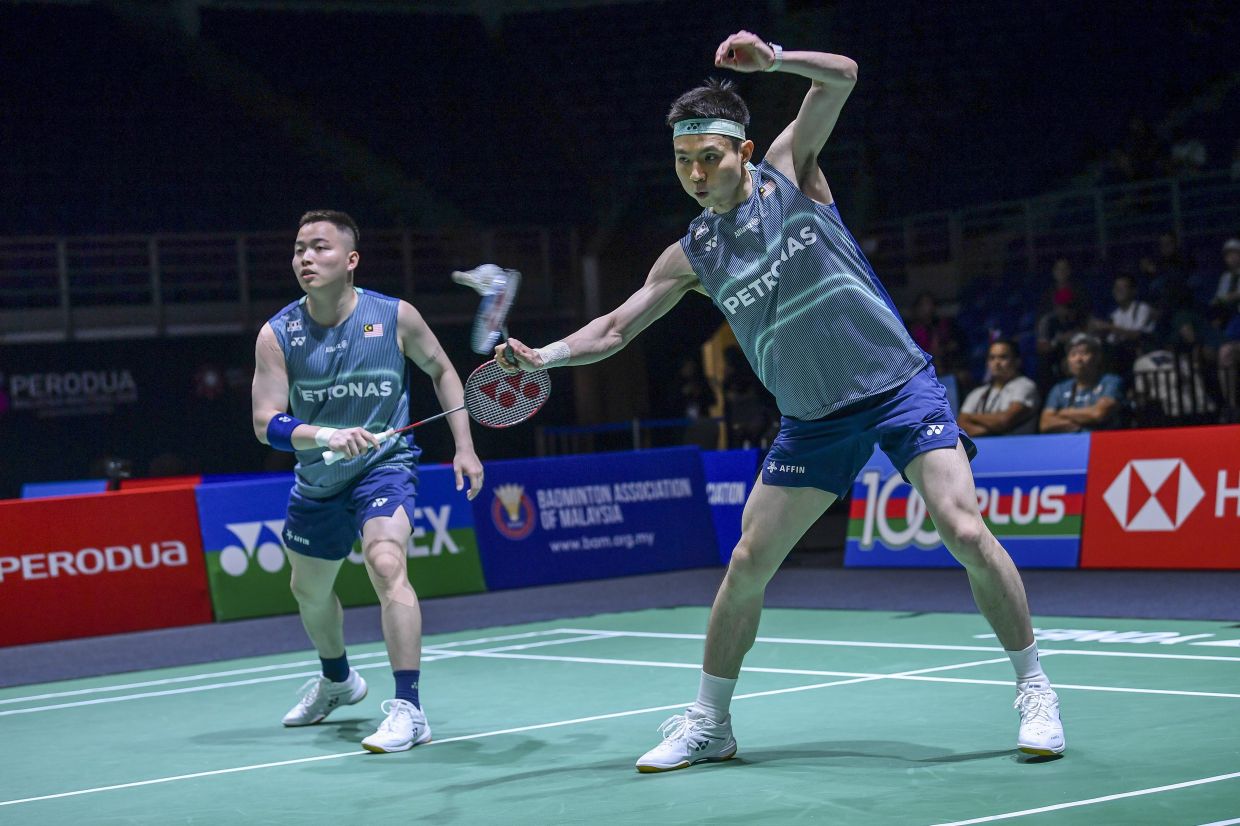
The Badminton Association of Malaysia's new leadership is drawing a line in the sand over player conduct. Datuk Seri Lee Chong Wei, who chairs the BAM performance committee, has issued a pointed message to athletes contemplating exit strategies: no player stands above the institution, and threats to depart will no longer serve as effective leverage to bend policy decisions.
Lee's warning comes in the wake of remarks by men's doubles player Soh Wooi Yik, who indicated he and partner Aaron Chia are examining all possibilities as the pair pursues their goal of competing together through the 2028 Los Angeles Olympics. The statement, seemingly innocent on its surface, carries the implicit suggestion that the partnership could pursue alternative pathways if BAM refuses to accommodate their wishes—a negotiating posture that Lee has now explicitly rejected as counterproductive and manipulative.
The crux of Lee's position centres on institutional memory and gratitude. He emphasised that BAM invested considerable resources into developing these athletes from youth, providing infrastructure, coaching, and financial support that enabled their ascent to elite status. When players subsequently achieve international success, Lee argues, they must acknowledge the federation's foundational role in that journey rather than leverage their accomplishments to extract concessions. This philosophical stance represents a notable departure from how previous BAM administrations handled similar situations, suggesting the current leadership believes past managements capitulated too readily to player pressure.
Lee was explicit that BAM remains receptive to genuine dialogue. He stated the federation's door remains open for substantive discussions about player concerns and aspirations. However, this receptiveness comes with a non-negotiable condition: conversations must occur through formal channels rather than through public posturing or implicit threats. The distinction matters considerably, as it establishes a framework where BAM retains decision-making authority whilst still respecting players' right to voice concerns. What the federation will not tolerate, Lee made unmistakably clear, is players deploying exit threats as a negotiation tactic when the association's judgements displease them.
The timing of this pronouncement carries particular significance given the coaching team's ongoing experimentation with different pairings during the current Olympic cycle. Aaron Chia has recently been paired with Aaron Tai, with the combination finishing runners-up at the Taiwan Open. Soh Wooi Yik, after initially struggling alongside Man Wei Chong, reached the final of the Korean Masters with that pairing. These reshufflings, whilst potentially frustrating to players accustomed to established partnerships, reflect BAM's systematic approach to identifying the strongest possible combinations heading toward Los Angeles 2028.
The federation has scheduled another pairing reconfiguration for the China Masters beginning September 1, where Aaron will partner Wei Chong whilst Wooi Yik teams with Aaron Tai. Such constant rotation—whilst analytically sound from a competitive standpoint—understandably frustrates athletes seeking stability and continuity. However, Lee's comments suggest BAM views this experimental phase as non-negotiable, and players unhappy with the arrangement cannot simply threaten departure to reverse the decision.
For Aaron Chia and Soh Wooi Yik specifically, any contemplation of leaving the national system carries substantial consequences that may render such threats economically irrational. Both players remain contractually bound to BAM through 2028, meaning departure could trigger significant financial penalties. Beyond compensation claims, athletes abandoning the national set-up risk international competition bans, a particularly damaging prospect given that qualifying for the Los Angeles Olympics depends on accumulating ranking points through sanctioned tournaments. Players operating outside BAM's framework would find those crucial pathways effectively closed.
This structural reality underscores why Lee's message carries weight. Unlike some previous threats to leave that might have been tactically viable under more accommodating administrations, the current management appears confident that the contractual and competitive barriers to departure are sufficiently formidable to deter players from pursuing such strategies. The new regime is essentially calling what it perceives as bluffs, betting that players will ultimately choose to work within the system rather than risk career-damaging isolation.
The broader context reveals a Malaysian sports governance shift toward accountability and institutional authority. Rather than viewing athletes as temperamental talents requiring constant appeasement, Lee articulates a philosophy treating them as professionals with reciprocal obligations. Players benefit from BAM's investment and infrastructure; in return, they accept the federation's coaching decisions and strategic direction. Where previous administrators may have negotiated individually based on player leverage, this approach asserts that systemic integrity trumps individual accommodation.
Such positioning has implications beyond badminton. As Malaysian sports associations increasingly adopt professional management structures and data-driven training protocols, similar tensions will likely emerge across other disciplines. Athletes accustomed to negotiating from positions of competitive strength may encounter institutional resistance that their predecessors did not face. Lee's warning signals that national sports bodies are gradually shifting from athlete-centric to organisation-centric governance models, potentially reshaping how Malaysian players interact with federations across the sporting landscape.
The Aaron Chia-Soh Wooi Yik situation ultimately tests whether BAM's new management can maintain this firmer stance when confronted with the potential loss of high-profile talent. If the federation ultimately reverses course and permits the partnership to continue, Lee's credibility suffers considerably. Conversely, if both players ultimately acquiesce to BAM's pairing strategy despite their stated preferences, the message to other athletes becomes crystal clear: exit threats are no longer viable negotiating tools under this administration.

