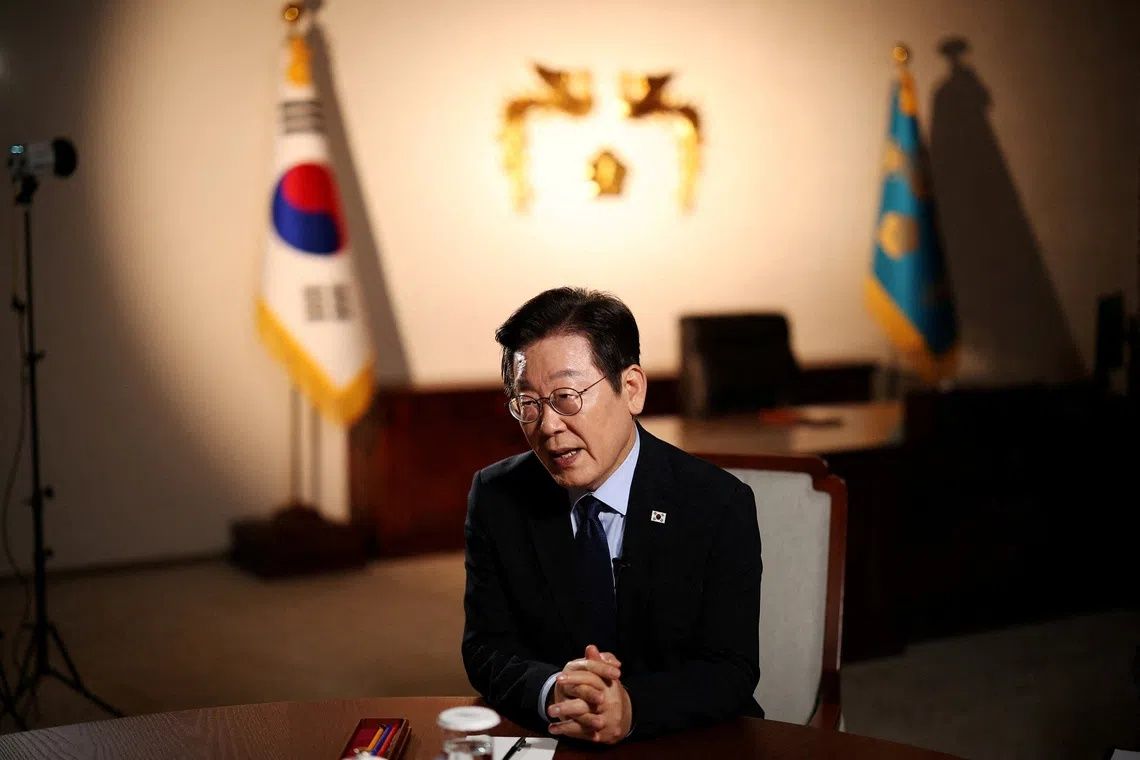
South Korean President Lee Jae Myung has publicly backed a constitutional overhaul that would reshape the nation's executive framework, potentially reshuffling the balance of power between the presidency and parliament. According to Yonhap News Agency citing Blue House officials, the president favours a model permitting four-year presidential terms with the possibility of re-election, alongside measures to reinforce legislative authority at the expense of executive concentration. This announcement carries significant weight as South Korea grapples with questions about how best to structure its highest office following decades of debate over presidential power and accountability.
The proposed framework represents a departure from the current constitutional arrangement, which limits any president to a single five-year mandate. Under existing rules, sitting presidents become constitutionally ineligible to run again once their tenure concludes, a restriction designed to prevent dynasticism and encourage orderly transitions of power. Lee's reported preference signals a willingness to reconsider this foundational pillar, though the move remains politically contentious given South Korea's complex history with presidential term limits and succession disputes that have frequently dominated national politics.
According to presidential officials, the four-year renewable model enjoys the widest appeal among the various reform options currently circulating in public debate. This framing suggests that extensive consultation and polling have informed the Blue House position, indicating that the administration views this approach as most likely to secure broad societal buy-in. The emphasis on public acceptance underscores the delicate political arithmetic surrounding constitutional change in South Korea, where deep partisan divides and historical grievances frequently obstruct consensus-building on fundamental governance questions.
Lee's administration has also acknowledged lingering concerns about what observers describe as the "imperial presidency"—a characterisation reflecting anxieties about excessive executive power that has periodically destabilised Korean politics. By signalling openness to strengthening parliamentary prerogatives alongside adjusting presidential term limits, the president attempts to position his administration as responsive to broader anxieties about institutional balance. This rhetorical pivot carries tactical value in framing constitutional reform as a democratic correction rather than as self-interested political maneuvering by the sitting executive.
The constitutional amendment process itself presents formidable procedural obstacles. South Korean law stipulates that any proposed revision must secure support from a minimum of 200 lawmakers within the National Assembly, a threshold that effectively demands cross-party cooperation in a legislature frequently fractured along ideological lines. Presidential Blue House sources have emphasised that reform efforts must rest upon genuine political consensus, acknowledging implicitly that unilateral attempts by the executive to rewrite constitutional foundations would invite fierce resistance and potentially delegitimise the entire process.
Historically, constitutional amendments in South Korea have proven exceptionally difficult to achieve, with fewer than ten major revisions since the 1948 founding of the modern republic. Each substantial reform has typically emerged only after prolonged negotiation, public debate, and frequently, shifts in party control of the National Assembly. The requirement for supermajority support ensures that minority parties possess effective veto power over proposed changes, incentivising consensus-building across traditional partisan boundaries. This dynamic suggests that any real push by Lee's administration for constitutional change would require extraordinary political commitment and substantial groundwork with opposition parties.
For Malaysian observers, the South Korean debate offers instructive parallels to ongoing discussions about executive power, parliamentary oversight, and constitutional design in Southeast Asia. Many regional democracies grapple with similar questions about whether presidential or parliamentary systems better serve democratic governance, how to prevent executive overreach, and how to balance strong leadership with institutional checks. South Korea's willingness to entertain fundamental constitutional revision demonstrates one approach to addressing these tensions, though success remains uncertain given the political obstacles involved.
The timing of Lee's public positioning merits consideration within South Korea's electoral calendar and political positioning. Constitutional reform efforts often gain prominence during particular political windows when shifting party alignments or public mood create temporary openings for ambitious structural change. The administration's decision to publicise its constitutional preferences through official channels suggests a deliberate strategy to shape public discourse and test political feasibility before committing to formal legislative initiatives.
Regional analysts note that South Korea's constitutional debates frequently reflect broader tensions between strong executive leadership—historically viewed as necessary for national security and economic modernisation—and democratic accountability mechanisms designed to prevent authoritarian reversion. The proposed four-year renewable presidential model attempts to navigate between these competing values by limiting any single presidential tenure while permitting re-election, theoretically enabling experienced leaders to continue governing while preventing indefinite concentration of power in individual hands. Whether this balance ultimately satisfies both democratic reformers and those favouring executive authority remains an open question.
The Blue House's emphasis on parliamentary deliberation underscores recognition that constitutional amendments cannot succeed through executive decree alone in South Korea's democratic system. By framing reform as requiring National Assembly leadership and consensus, the administration acknowledges institutional realities while positioning itself as respecting proper constitutional process. This approach contrasts sharply with more unilateral constitutional reengineering attempted elsewhere, though sceptics may question whether such rhetoric genuinely constrains executive influence over reform outcomes.
Moving forward, the trajectory of South Korean constitutional reform will depend heavily on whether the political environment permits the consensus-building that formal amendment requirements demand. If Lee's administration pursues formal legislative initiatives, expect intensive negotiation with opposition parties, public campaigns to build support, and extended parliamentary debate. The outcome will have implications extending beyond South Korea itself, as regional democracies watch how mature Asian democracies navigate constitutional adaptation while maintaining institutional legitimacy and public confidence.

