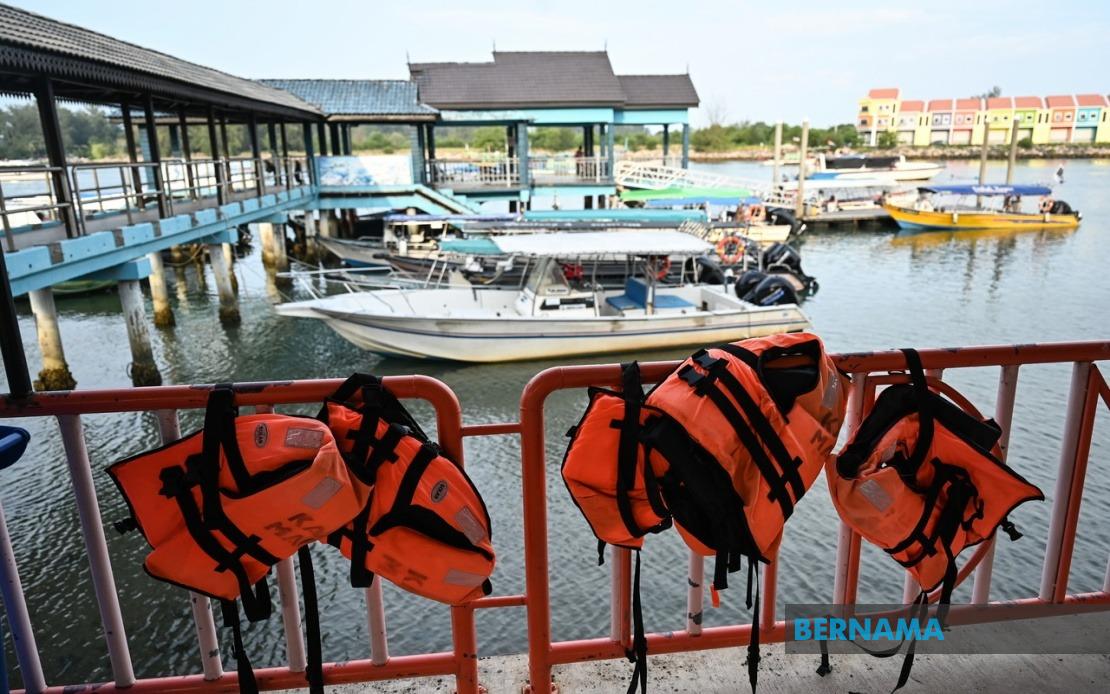
The Terengganu state government has issued a strong advisory requiring all participants in water-based recreational activities, particularly squid jigging expeditions, to maintain continuous use of life jackets from the moment they board vessels until they return safely to shore. This directive emerged following a tragic incident in which a squid jigging boat capsized approximately nine nautical miles off Dataran Kuala Nerus, resulting in one fatality and three injuries among the twelve people on board.
Datuk Razali Idris, the State Committee chairman overseeing Tourism, Culture, Environment and Climate Change, emphasized that life jacket compliance should extend to periods when participants are resting or sleeping aboard vessels. His comments underscore a broader concern within Malaysia's maritime safety framework regarding public awareness and adherence to preventive measures during leisure activities at sea. The capsize, which occurred around 9 pm on the evening in question, has reignited discussions about operational safety standards for commercial fishing and recreational marine activities across the region.
The incident claimed the life of Ahmad Nasaruddin Mohmad Jalil, 37, a crew member employed on the vessel. Three squid jigging participants—Faris Ibrahim, 33, Ahmad Danial Iman, 24, and Fatin Fariesya Rohaizan, 26—sustained injuries during the emergency. Two of the injured received outpatient treatment at Hospital Sultanah Nur Zahirah in Kuala Terengganu, while the third remained under continued medical observation. The police reported that eight individuals were successfully rescued from the water, highlighting both the tragedy and the role that life jackets played in preventing additional casualties.
Razali articulated a comprehensive framework for maritime safety that extends beyond individual protective equipment to encompass broader operational protocols. He stressed that every passenger-carrying vessel must be provisioned with life jackets, fire extinguishers, and comprehensive safety apparatus as a baseline requirement. The responsibility, he argued, rests with both vessel operators and maritime authorities to ensure that passengers—whether crew members, tourists, or recreational fishers—understand the non-negotiable nature of continuous safety precautions. This perspective reflects international maritime safety standards that have been established following decades of marine accident analysis.
Crucially, Razali advocated for mandatory pre-departure safety briefings conducted by boat skippers before passengers embark on journeys. These briefings should cover weather assessments, sea conditions, expected trip duration, and proper life jacket deployment procedures. He drew a parallel to tourist boat operations that routinely conduct such briefings before island transfers, suggesting that this best practice should become standardized across all recreational and commercial marine activities. The skipper, possessing intimate knowledge of local sea conditions and vessel capabilities, bears particular responsibility for communicating genuine hazard information to passengers.
The official acknowledged that while the capsized vessel had been maintained in good working condition and operated by an experienced skipper, water had accumulated in the engine compartment prior to the sinking. Investigation into the precise cause remains ongoing under relevant authorities. Notably, sea conditions at the time were described as rough but not storm-level, raising questions about how adverse environmental factors interact with vessel design, load distribution, and operational decision-making. The fact that all passengers were wearing life jackets at the time of the incident underscores how this single protective measure directly prevented a far larger loss of life.
Razali emphasized that squid jigging operations have been conducted in Terengganu waters for many years under existing standard operating procedures that he characterized as adequate for current purposes. The state government has concluded that regulatory revision is unnecessary; instead, the focus should remain on rigorous compliance with established safety measures. This perspective suggests confidence in the adequacy of Malaysia's existing maritime frameworks, provided that operators and participants faithfully adhere to prescribed protocols. The challenge, therefore, lies not in regulatory overhaul but in cultural and operational commitment to safety implementation.
The official reminded all marine participants and operators to observe warnings and directives issued by the Malaysia Marine Department, particularly advisories prohibiting vessel operations during periods of adverse weather conditions. This delineation of regulatory responsibility is significant for Malaysian context, as licensing authority for boats and operational approval authority rest exclusively with the Malaysia Marine Department rather than state governments. Terengganu authorities can only issue advisory guidance, creating a two-tier system where state governments advocate for safety practices while federal maritime agencies maintain enforcement power.
For squid jigging enthusiasts across Malaysia and Southeast Asia, this incident carries particular resonance given the activity's popularity and cultural significance in coastal communities. The practice, which involves night-time fishing expeditions using specialized lighting and baited hooks to attract squid, has expanded commercially across regional waters. Participants often travel considerable distances from shore, sometimes in aging vessels, creating compound risk factors. The incident demonstrates that experienced skippers operating well-maintained boats are not immune to maritime accidents, suggesting that environmental factors and operational contingencies can overwhelm even relatively well-managed vessels.
The broader implications for Malaysian maritime safety extend beyond individual incidents to encompass systematic questions about passenger risk communication and decision-making authority. Razali's comments imply that skippers should possess genuine power to cancel or postpone trips based on safety concerns, with a commitment to customer refunds rather than proceeding with questionable operations. This principle challenges economic incentives that might otherwise pressure operators to launch trips despite marginal safety conditions. Building a culture where safety cancellations are normalized rather than stigmatized remains a work in progress across Southeast Asia's maritime sector.
For regional travelers and recreational boaters, the incident reinforces fundamental principles that often receive inadequate emphasis: life jackets must be treated as non-negotiable protective equipment rather than optional precautions, continuous usage matters regardless of perceived risk levels during any given moment, and deference to skipper expertise regarding seaworthiness becomes particularly important when environmental conditions exceed calm parameters. The tragedy serves as a sobering reminder that the sea remains inherently unpredictable, and that preventive measures, though sometimes inconvenient, literally constitute the difference between survival and loss of life for maritime participants.

