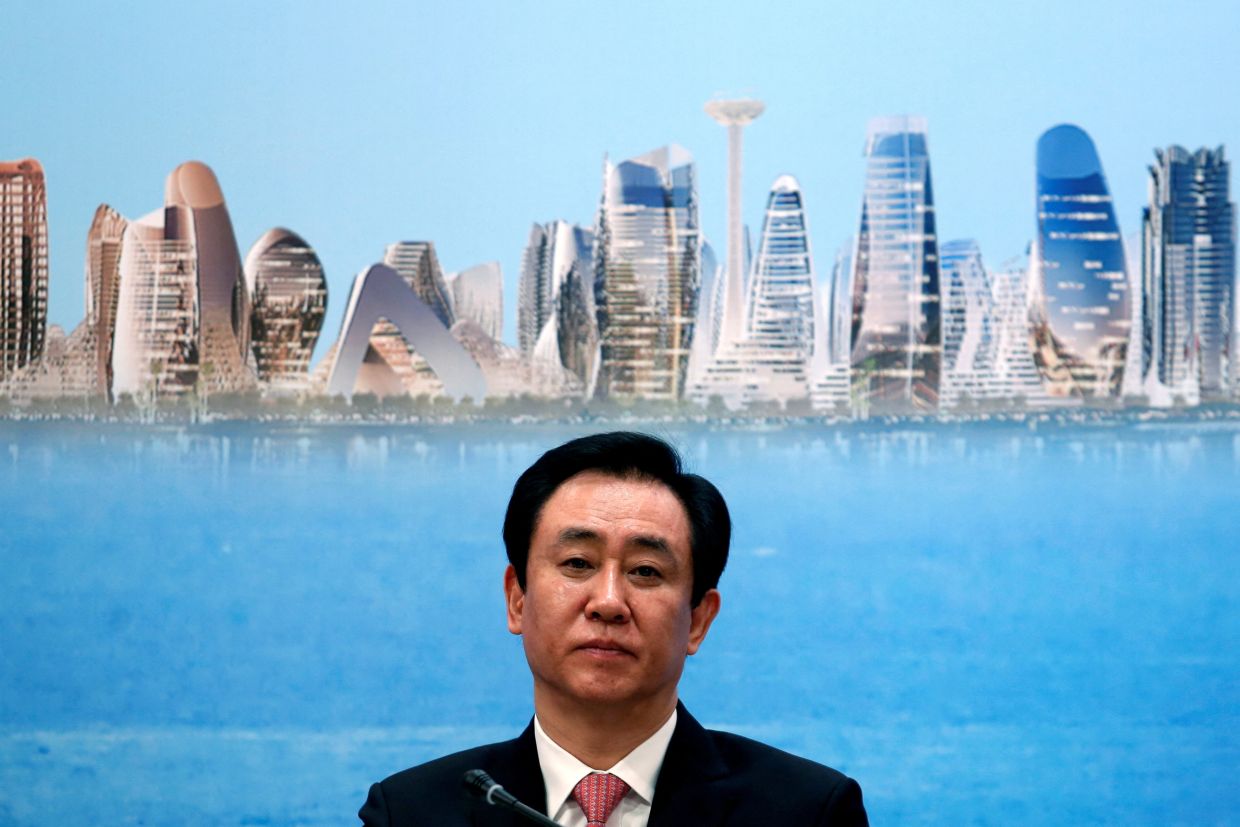
Hui Ka Yan, the former billionaire who built China Evergrande Group into the world's most-indebted property developer, has been sentenced to life in prison by a Shenzhen court following his guilty plea to eight serious criminal charges. The judgment delivered on Thursday represents the culmination of a spectacular downfall for a man who once ranked as Asia's wealthiest individual, and serves as the legal punctuation mark on a financial crisis that has reverberated across China's economy for nearly half a decade.
The founder faced conviction for misuse of funds, fraudulent fundraising, unlawfully soliciting public deposits, illegally dispensing loans, fraudulently issuing securities, and bribery—offences that collectively painted a portrait of systematic financial misconduct spanning years of corporate management. Beyond the custodial sentence, the court ordered confiscation of all Hui's personal assets, effectively stripping him of his wealth accumulation. Five other senior executives received sentences ranging from six to eighteen years imprisonment, while fifty-six individuals linked to Evergrande faced sentencing in the same judicial proceeding, according to state media reports.
Evergrande's trajectory from market darling to cautionary tale began with Hui's 1996 founding of the company in Henan province, where he rose from humble origins as a former steel technician raised by his grandmother in a rural village. Through aggressive debt financing strategies, he expanded the enterprise into China's largest property developer by contracted sales volume. At its zenith in 2017, Forbes valued Hui's personal fortune at $45.3 billion, positioning him atop the entire Asian wealth rankings. Yet this accumulation masked deepening financial instability that would eventually trigger economic shock waves far beyond the construction industry.
The company's collapse five years ago sent tremors throughout China's financial system and international markets. Evergrande had accumulated approximately $300 billion in liabilities, the vast majority of which remained unpaid. This default represented more than a corporate failure; it symbolised a structural crisis within China's property sector that has persistently constrained growth in the world's second-largest economy. For Malaysian investors and those across Southeast Asia with exposure to Chinese markets or property development finance, Evergrande's problems highlighted the systemic risks embedded within the Chinese real estate model.
The judicial outcome, whilst dramatic, offers limited practical relief to those harmed by Evergrande's implosion. Liquidators reported that as of August, only approximately $255 million worth of assets had been realised against total creditor claims exceeding $45 billion—a recovery rate that underscores the profound losses facing stakeholders. Domestically, millions of ordinary Chinese citizens invested in the company's wealth-management products, viewing them as safe vehicles for savings. Many individuals, particularly those from lower-income backgrounds, witnessed their life savings disappear entirely, sparking public protests that at times threatened social stability.
The human cost extends beyond financial accounting. Comments circulating in Evergrande homeowner social media groups reflected the bitter sentiment among victims: residents questioned whether their own deposits would ever be recovered, noting that ordinary citizens absorbed the financial consequences whilst corporate leadership faced delayed justice. Some observers darkly suggested that imprisonment itself might serve as protection for Hui against potential retribution from aggrieved investors had he remained free.
The court imposed additional financial penalties on the corporate entities themselves. Evergrande Group faced a fine of 8.82 billion yuan (approximately $1.31 billion), whilst its primary subsidiary Hengda received a separate penalty of 7 billion yuan. These institutional sanctions, though substantial by most measures, represented a fraction of the total defaults and represented primarily symbolic punishment against entities already in liquidation proceedings.
Hui's detention began in 2023 following Evergrande's default, marking his removal from public view for the intervening period. The judicial statement emphasised the gravity of the offences, describing the criminal conduct as involving "particularly huge amounts and egregious circumstances" that "caused particularly significant economic losses and particularly serious social harm." This language reflected official acknowledgment that Evergrande's failure transcended ordinary corporate fraud to constitute damage to China's broader social and economic interests.
The liquidation process itself has proven frustratingly protracted. A Hong Kong court ordered Evergrande's liquidation in 2024, followed by the Hong Kong Stock Exchange's delisting—both decisions crystallising the company's irreversible decline. Liquidators have struggled to recover value, facing resistance and complexity in realising assets. Beyond mainland jurisdictions, legal representatives have initiated court proceedings attempting to freeze offshore holdings controlled by Hui and his former spouse, specifically targeting approximately $6 billion in dividends and executive remuneration paid during periods of known financial distress.
For Malaysia and the wider Southeast Asian region, the Evergrande saga carries instructive lessons about exposure to Chinese real estate dynamics and the systemic risks inherent in property-dependent financial models. Malaysian banks and investors maintained varying levels of exposure to Chinese developers and real estate finance instruments, making the sector's structural vulnerabilities directly relevant to regional financial stability. Additionally, substantial numbers of Southeast Asian citizens purchased properties within Chinese developments or invested indirectly through regional financial institutions, connecting local prosperity to outcomes in distant Chinese courts.
The regulatory response in China has extended beyond criminal prosecution. In 2024, securities authorities fined Hui an additional $6.6 million and imposed permanent barring from securities markets after determining that Evergrande's flagship unit had systematically inflated reported earnings and engaged in securities fraud. This regulatory action addressed earlier schemes contributing to the empire's construction through deceptive disclosure practices.
Whilst Hui's life sentence provides symbolic closure to a dramatic corporate catastrophe, the practical recovery process for affected investors—both within China and internationally—will extend for years. The glacial pace of asset liquidation against mounting creditor claims suggests that most stakeholders will ultimately absorb significant losses. For Malaysian policymakers and investors, the Evergrande episode reinforces the imperative of rigorous due diligence regarding cross-border real estate exposure and the recognition that even apparently successful and well-connected developers operate within fragile systems vulnerable to spectacular collapse.

