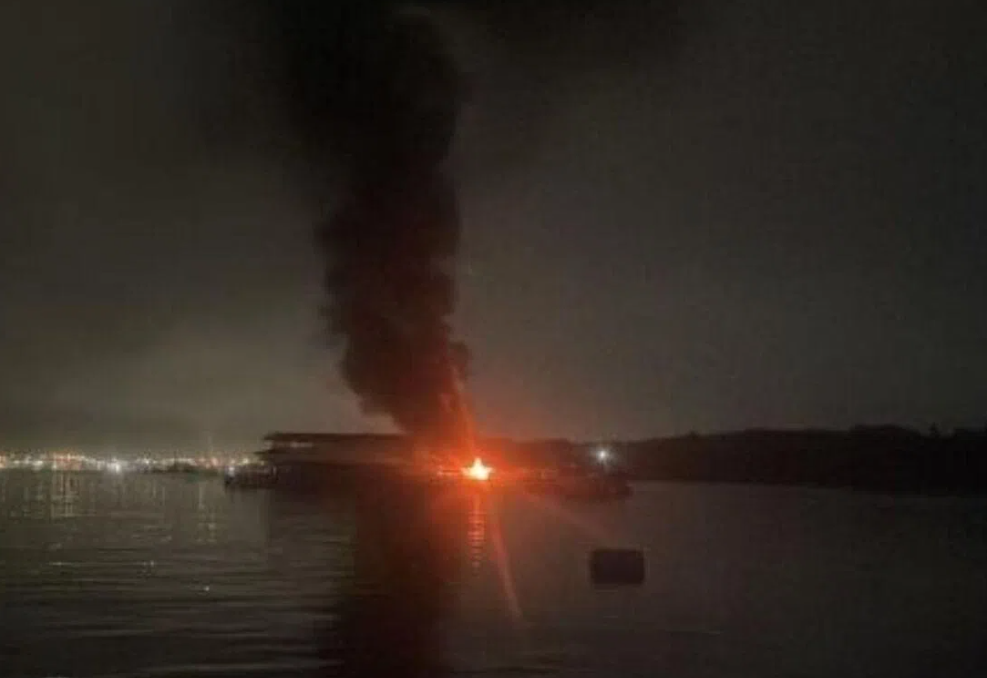
A major fire that engulfed at least two floating fish farms near Pulau Ubin on June 24 kept Singapore's emergency responders occupied for several hours as they worked to contain the blaze and prevent further damage to the aquaculture operations scattered across the waters near Pasir Ris. The incident, which began at one farm situated off the Lorong Halus jetty, subsequently spread to neighbouring facilities before firefighters managed to extinguish it completely, leaving behind considerable wreckage and financial devastation for the operators.
According to preliminary investigations, the fire was likely triggered when lightning struck the solar panel installation on one of the farms. The Straits Times reported that the Singapore Civil Defence Force received an alert at approximately 8.10pm and mobilised resources immediately. Remarkably, no injuries were sustained during the incident, though the absence of workers on the farms at the time may have both prevented casualties and allowed the fire to spread unchecked during the critical early minutes.
The floating aquaculture operations operate in a strategically important location sandwiched between Pulau Ubin and Pulau Ketam, two small islands that form part of Singapore's eastern seaboard landscape. This proximity to sensitive coastal areas means that accidents at these farms can have broader implications for the maritime environment and competing water-use interests in the region. The farms themselves represent a significant investment in Singapore's push toward greater food self-sufficiency through modern aquaculture techniques, making incidents like this particularly consequential for the nation's food security objectives.
One farm owner disclosed that his establishment sustained estimated damages approaching S$120,000, rendering the incident one of the costlier maritime accidents in the local fishing sector in recent memory. Beyond the immediate financial toll, the operator revealed a crucial constraint facing small-scale aquaculturists: he was unable to pursue an insurance claim for the fire damage. This revelation highlights the vulnerability of farming operations that may lack adequate coverage or find their insurers unwilling to cover weather-related incidents classified as acts of nature.
The infrastructure losses tell a sobering story of how rapidly a single incident can wipe out operational capacity. The fire consumed essential equipment including feed supplies, electrical generators, the solar panel array, a working fishing vessel, and multiple fish traps. Additionally, fishing nets sustained significant damage, which forced the operator to grapple with the secondary catastrophe of at least half the fish population escaping from compromised enclosures. The combined effect of destroyed infrastructure and lost inventory creates a compounding effect that extends recovery timelines far beyond simply replacing damaged equipment.
What emerged from the operator's account was a concerning pattern: this was not the first occasion that solar panels at the farm had been damaged by lightning. Previous incidents had been contained successfully because workers were present and could respond immediately, implementing emergency protocols that prevented small electrical fires from escalating into major conflagrations. The June 24 incident occurred when no personnel were stationed at the farm, eliminating the possibility of immediate human intervention that had previously proved effective in mitigating damage.
This gap in workforce presence raises broader questions about operational management at floating farms in Singapore. Most aquaculture facilities operate on relatively tight profit margins, and maintaining round-the-clock staffing becomes economically challenging for smaller operators. Yet the consequences of this practical constraint became evident when an unattended electrical fault developed unchecked until it achieved catastrophic proportions, underlining the tension between cost management and risk mitigation in the sector.
The response to the emergency demonstrated the coordination capabilities of Singapore's emergency services infrastructure. The Singapore Civil Defence Force collaborated with marine vessels deployed by the Maritime and Port Authority of Singapore and airport emergency services personnel to combat the flames. Beyond official resources, workers from adjacent fish farms voluntarily mobilised to assist in containment efforts, illustrating the mutual dependence and informal mutual-aid networks that characterise the farming community operating in these waters.
The incident carries implications extending beyond immediate commercial losses. Aquaculture operations in Southeast Asia have faced increasing scrutiny regarding environmental sustainability, with floating farms often perceived as potential sources of pollution and ecological disturbance. A major fire at such a facility could trigger regulatory review or heightened oversight from Singapore's Food Agency and other relevant authorities, potentially affecting operational conditions for all operators in the region. The Fish Farmers Association of Singapore would likely face pressure to address safety standards and emergency preparedness across the sector.
For Malaysian observers, this incident offers instructive lessons as local aquaculture operations, particularly in Johor and other coastal states, similarly navigate risks associated with floating farm technology. Southeast Asian governments increasingly depend on aquaculture to meet protein demands for growing populations, yet incidents like the Pulau Ubin fire demonstrate how quickly external environmental factors can undermine these food production systems. The vulnerability of solar-powered systems to lightning strikes is a particularly relevant concern across the tropical region, where thunderstorms are frequent and intense.
The broader context involves Singapore's strategic push toward achieving 30 per cent food self-sufficiency by 2030, a target that places aquaculture expansion at the centre of national food security planning. Incidents that undermine investor confidence or highlight operational hazards risk slowing this transition. For the affected farm owner, recovery will depend on securing alternative financing, replacing damaged equipment, and potentially implementing enhanced safety measures such as improved lightning protection systems or upgraded insurance coverage.
Moving forward, the incident may catalyse industry-wide discussions regarding standardised safety protocols for floating farms operating in Singapore's waters. Enhanced lightning protection systems, improved emergency response capabilities at remote farm sites, and possibly mandatory staffing requirements during high-risk weather periods represent potential policy responses. The investigation's findings will likely inform future regulatory decisions affecting not only Singapore's aquaculture sector but potentially aquaculture operations throughout Southeast Asia that operate under similar environmental and technological conditions.

