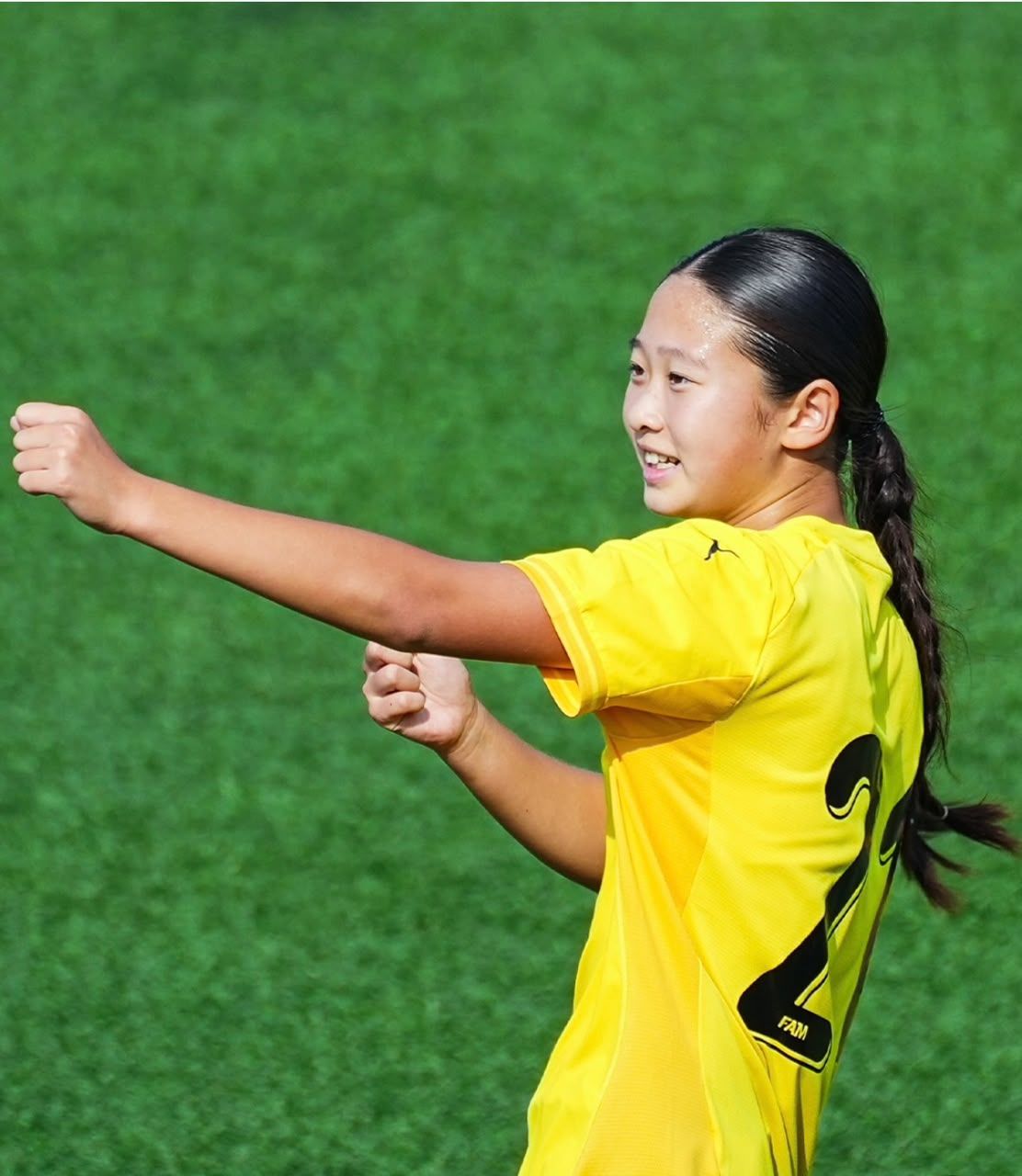
The Malayan Tigress Under-17 squad produced a commanding performance at the 2026 Srikandi Merdeka Cup in Kudus, Indonesia, dismantling Saudi Arabia with a 9-0 victory in their Group A encounter on Tuesday. The standout achievement of the match belonged to 14-year-old Lim You, who single-handedly contributed seven of Malaysia's nine goals, all struck with her naturally dominant left foot. This explosive debut for the national youth team has introduced Malaysian football enthusiasts to a prospect whose skill set has been deliberately cultivated from childhood through focused parental coaching.
The development of Lim You's left-footed technique traces back to her father's strategic vision regarding the sport. Recognising that left-footed players remain relatively uncommon in football at all levels, her father invested considerable time training her weaker foot from an early age, viewing this specialisation as a competitive advantage that could distinguish her from peers. This deliberate coaching philosophy diverges from conventional player development, which often emphasises balanced technical proficiency across both feet. The 2026 Srikandi Merdeka Cup encounter validated this unconventional approach, as Lim You found space and clinical finishing opportunities consistently available when operating from her left flank.
Lim You's seven goals came at varied intervals throughout the fixture, spanning from the eighth minute through to the closing stages. She opened her account early in the match, then added further strikes in the 22nd and 27th minutes to establish dominance. The second half witnessed additional finishes in the 57th, 75th, 83rd and 85th minutes, with one of these efforts arriving from the penalty spot. The regularity of her goal-scoring contributions across the match suggests not merely opportunistic striking but rather a sustained level of technical execution and positioning awareness throughout the encounter. Her teammates facilitated these opportunities effectively, with Lim You acknowledging their crucial role in creating the platform for her clinical finishing.
Despite the impressive statistical outcome, Lim You demonstrated remarkable composure and team-oriented perspective in her post-match reflections. Rather than claiming exclusive credit for Malaysia's thumping victory, she redirected attention to her teammates' delivery and movement creation, emphasising that her role involved completing chances initiated by colleagues. This measured response suggests maturity beyond her fourteen years and awareness of collective success rather than individual aggrandisement. The young striker's perspective reflects understanding that sustainable football achievements depend upon balanced team contribution rather than isolated brilliance.
Lim You's integration into the national squad presented immediate practical challenges despite her obvious technical capabilities. The player candidly acknowledged an initial language barrier, noting that her fluency in Malay required development upon joining the collective. Having been born in Taiwan, relocated to the United States, and based in Washington state, her primary linguistic environment had not prioritised Malay fluency. However, she reported successful adaptation with her teammates, indicating that the football environment transcended language complications and that her new colleagues facilitated smooth integration. This experience illustrates how sporting environments can facilitate cultural and linguistic exchange among young athletes from diverse backgrounds.
Lim You maintains meaningful connections to Malaysia despite her North American residence, thereby qualifying for representation of the national side. Her parents, both Johor-born, establish the player's Malaysian heritage foundation. She retains regular contact with extended family members based in both Johor and Kuala Lumpur, visiting Malaysia every two to four years to maintain these familial ties. This biographical context proves significant within the broader Southeast Asian football landscape, where diaspora talent increasingly represents opportunity for national programmes to access players developed in higher-resource sporting environments whilst maintaining cultural and familial bonds to their nations of origin.
The psychological dimension of sudden prominence following extraordinary performance received acknowledgment from Lim You, who admitted to experiencing some pressure resulting from her seven-goal achievement and the attention it generated. However, she emphasised that her fundamental passion for football supersedes external pressure considerations. Her statement that she approaches every match with excitement irrespective of opponent quality demonstrates psychological resilience and intrinsic motivation that coaches typically identify as prerequisite for sustained high-level performance. The combination of technical excellence and psychological grounding suggests development potential extending beyond immediate youth tournament success.
The additional Malaysian goals in the victory came from Putri Mia Alysa Ahmad Zakiyamani and Ku Nur Qaleysha Qaisara Ku Zainon, who converted opportunities in the closing stages of the match. Their contributions completed Malaysia's nine-goal scoring display, though Lim You's seven-goal haul dominated the match narrative. The 165-centimetre striker's physical profile—neither exceptionally tall nor diminutive—demonstrates that elite youth football success at the forward position does not necessarily correlate with particular height advantages, particularly when technical and tactical intelligence compensate for physical limitations.
Malaysia's commanding victory positioned them as Group A runners-up despite an inconsistent campaign that included a goalless stalemate against Hong Kong followed by a 3-0 reverse against host nation Indonesia. The 9-0 success yielded four match points, matching Hong Kong's tally but conferring advancement to the semi-finals through superior goal difference. This outcome illustrates how tournament progression frequently hinges upon late-stage match results that can dramatically alter group standings and create unequal progression scenarios. Malaysia's semi-final opponent would emerge from Group B, where Thailand, Jordan, and Singapore remained competing for top position heading into final group matches.
The Srikandi Merdeka Cup tournament structure emphasises regional youth football development across Southeast Asia and the broader Asian context, providing platforms for emerging talent to compete at elevated levels before transitioning to senior football structures. Lim You's performance within this context demonstrates that talent identification extends beyond traditional domestic league structures and increasingly encompasses diaspora communities. Her trajectory—from Taiwan-born American resident to Malaysian national squad member—reflects contemporary global sporting patterns where national teams actively recruit players with heritage connections and dual-residency capabilities.
Lim You's left-foot specialisation strategy emerging from paternal coaching guidance potentially offers template lessons for youth football development programmes. The deliberate cultivation of distinctive technical attributes rather than pursuit of generic all-round proficiency may generate competitive advantages in specific positions and contexts. As Malaysian football aspires toward regional and continental competitiveness, systematic identification and targeted development of distinctive technical strengths could complement conventional coaching methodologies. Lim You's seven-goal debut performance provides compelling evidence that such specialised approaches, when combined with psychological resilience and team orientation, can produce measurable competitive advantage at youth international level.

