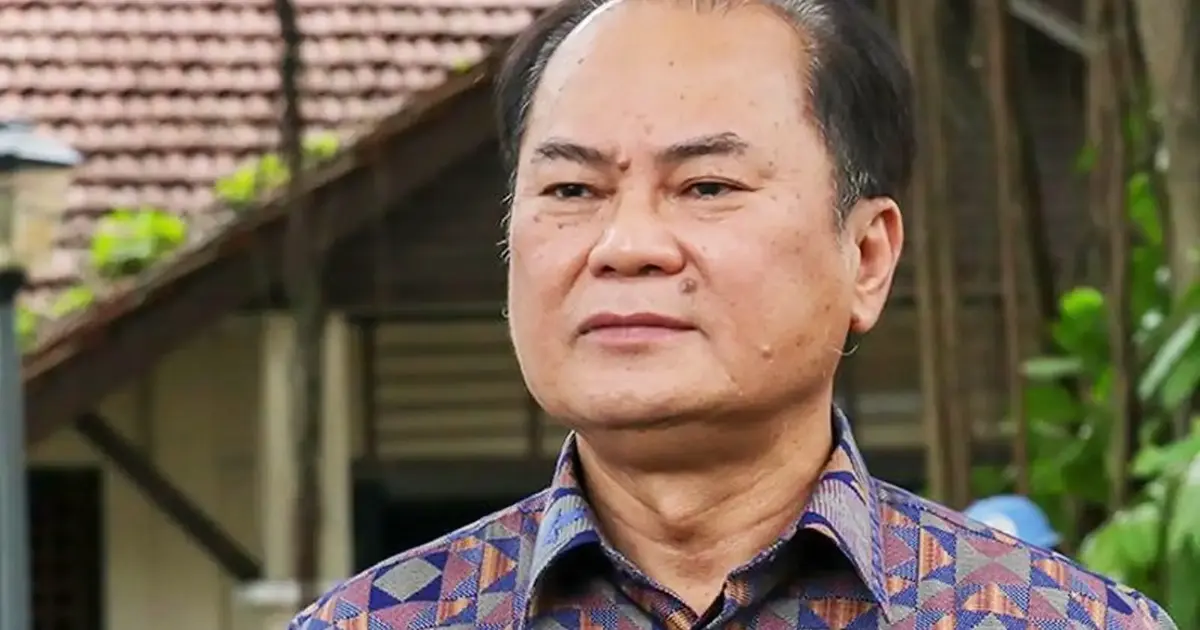
The political landscape heading into Malaysia's 16th general election appears increasingly unstable, according to former DAP leader Liu Tze Shao, who forecasts that the current coalition arrangement between Barisan Nasional and Perikatan Nasional will unravel before voters go to the polls. The rupture, Liu argues, stems from fundamental incompatibilities within the alliance rather than external pressures, threatening to transform the next election into a fractious, multi-sided contest.
Liu's assessment hinges on a critical observation about electoral mathematics: Umno and PAS, the dominant parties within their respective coalitions, increasingly compete for votes from nearly identical demographic groups. This overlap creates persistent tension regardless of how effectively coalition leaders manage public relations or backroom negotiations. Both parties draw heavily from Malay-Muslim constituencies, traditional rural areas, and urban Malay working-class voters—segments that typically decide tight contests in numerous parliamentary and state seats. When parties pursue the same electorate, short-term cooperation agreements struggle to contain the underlying competitive impulses.
The structural problem Liu identifies reflects a broader pattern in Malaysian politics: coalition arrangements often mask rather than resolve fundamental rivalries. Umno, historically the dominant Malay-based party, views PAS as an encroaching competitor that has steadily expanded its influence, particularly in northeastern peninsular states. Conversely, PAS, having tasted significant electoral success and governmental responsibility within the PN framework, increasingly resists subordinating its interests to a traditional power hierarchy. Neither party sees itself as subordinate or secondary, making equitable power-sharing arrangements inherently fragile.
The economic and institutional context amplifies these tensions. Both Umno and PAS possess robust party machinery, established legislative representation, and demonstrated capacity to mobilize supporters independently. This strength paradoxically destabilizes coalitions because parties confident in their individual viability become reluctant to compromise constituency allocations or policy priorities. A weaker partner might accept unfavorable terms to secure coalition protection; neither Umno nor PAS occupies such a vulnerable position, emboldening each to demand more favorable terms or pursue independent strategies.
Historical precedent supports Liu's prediction. Malaysia's coalition politics has repeatedly witnessed seemingly stable arrangements fracture when perceived opportunities arose. The 1998 split within the Alliance system, the fragmentation that preceded the 2020 election, and various state-level coalition collapses all demonstrate that institutional arrangements founder when component parties believe greater advantage awaits in alternative configurations or solo competition. The current BN-PN arrangement lacks the deep ideological commonality or organizational integration that might override competitive instincts.
From a Malaysian voter's perspective, such a collapse carries significant implications. A genuinely multi-sided GE16 contest would differ markedly from recent elections dominated by two major coalitions. Voters in many constituencies might face a genuinely open competition rather than essentially binary choices, potentially increasing the significance of local candidates, issue-based campaigning, and swing voter behavior. Alternatively, such fragmentation could complicate government formation, potentially necessitating post-election negotiations to construct governing coalitions that might prove unstable or poorly representative of voter intent.
The implications for coalition-building extend beyond the national level. State-level politics would likely experience cascading effects, with local party leaders reassessing their own coalition commitments in light of shifting national dynamics. Pahang, Terengganu, Johor, and other states where BN and PN maintain state-level cooperation might witness their own realignments if the federal coalition collapses. This vertical fragmentation could create inconsistent governance arrangements where state and federal configurations diverge sharply.
Liu's forecast also suggests that predicting election outcomes becomes substantially more difficult in a truly multi-sided contest. Polling and seat projections assume relatively stable coalition boundaries; a genuine free-for-all scrambles those calculations. Seats currently considered safe for coalition members might become vulnerable to well-organized opposition or rival coalition forces capitalizing on divided voter bases. Vote-splitting within Malay constituencies could particularly benefit non-Malay opposition parties that currently operate in a relatively crowded Malay political space.
The timeframe for such a collapse remains uncertain. Coalition agreements typically include provisions extending to specific election cycles, and both BN and PN leadership currently maintain public commitment to their arrangement. However, Liu's analysis suggests these commitments represent tactical positioning rather than structural consensus. As GE16 approaches and parties begin candidacy negotiations, fundamental disagreements about seat allocations and campaign strategies could trigger the unraveling he predicts. The closer to election day parties negotiate, the more acute tensions become.
For Malaysian observers monitoring political stability and institutional functionality, Liu's prediction warrants serious consideration precisely because it rests on structural analysis rather than personality-based speculation. The interests of Umno and PAS genuinely diverge regarding constituency representation, resource allocation, and strategic direction. Coalition longevity depends on managing these differences; history suggests Malaysian political parties often choose competition over compromise when genuine strength permits. Whether such a rupture materializes before GE16 or later remains to be seen, but the underlying dynamics Liu identifies seem unlikely to disappear through leadership appeals or renewed public pledges of solidarity.

