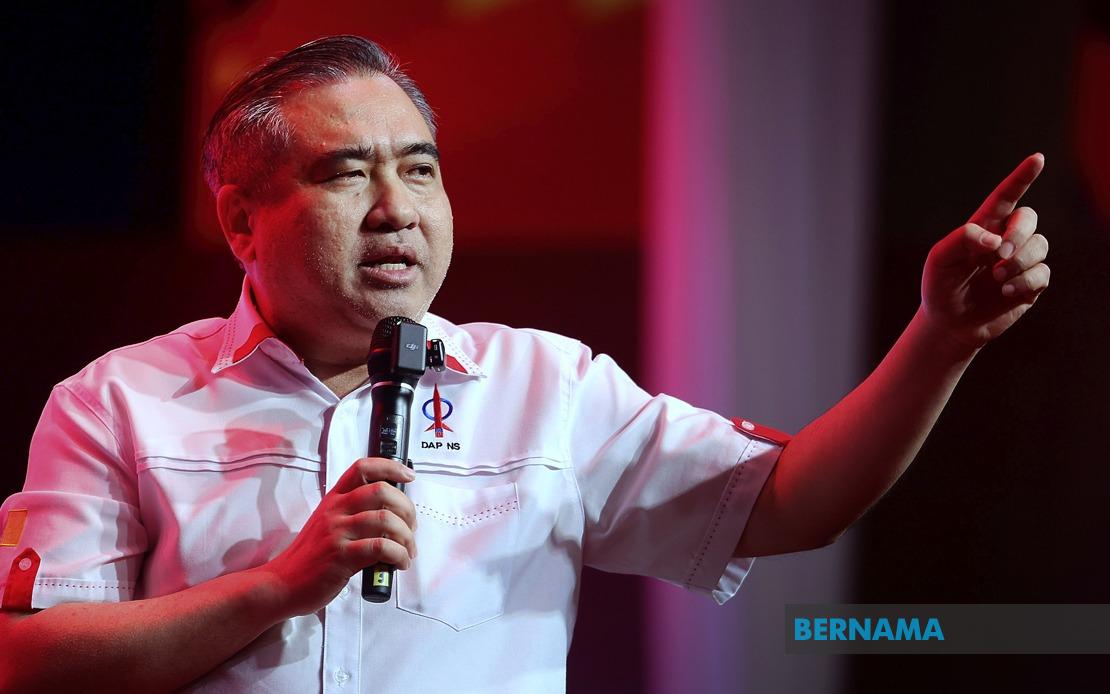
The 16th Negeri Sembilan state election campaign should centre on substantive policy commitments rather than personal criticisms, according to DAP secretary-general Anthony Loke, who outlined this principled approach while speaking in Seremban ahead of the state's crucial electoral contest. The Transport Minister's position reflects an emerging discipline within Malaysia's coalition government, where figures operating at both federal and state levels are navigating the tension between electoral competition and Cabinet-level cooperation.
Loke's decision to avoid personal attacks against any Cabinet member throughout the campaign period represents a calculated restraint in an increasingly competitive political environment. This commitment stems partly from the practical reality of Cabinet governance—Loke and his federal counterparts meet weekly to coordinate policy implementation and manage national responsibilities. The Transport Minister recognises that maintaining professional relationships within the Cabinet is essential for effective government functioning, particularly as Malaysia's Unity Government continues to manage diverse political interests across multiple ministerial portfolios. Such restraint becomes especially meaningful given the fractious nature of recent Malaysian politics, where coalition arrangements remain fragile and require constant tending.
The Transport Minister's stance aligns with guidance provided by Prime Minister Datuk Seri Anwar Ibrahim, who has articulated that government office holders should exercise discipline and refrain from attacking the Federal Government during election campaigns. This directive suggests a top-down effort to prevent campaigns from becoming flashpoints for broader coalition tensions. For Malaysian voters accustomed to robust—sometimes vitriolic—electoral competition, this messaging represents an attempt to establish new norms around how elected officials conduct themselves when contesting different levels of government. Whether such discipline proves sustainable across all coalition members remains an open question, particularly as state-level competitions often feature intense local rivalries.
Loke also announced his strategic decision not to campaign in the Rantau state constituency, despite its significance as the seat contested by Foreign Minister and Barisan Nasional deputy chairman Datuk Seri Mohamad Hasan. This abstention reflects a deliberate choice to preserve harmony within the Unity Government framework, even though Rantau represents a competitive opportunity that many politicians would pursue vigorously. The decision illustrates how Malaysia's coalition arrangement requires continuous mutual forbearance among political figures who might otherwise view each other as primary adversaries. By stepping back from Rantau despite personal ambitions or party interests, Loke demonstrates tactical understanding of how fragile political coalitions function when they unite parties with fundamentally different ideological orientations.
Instead, Loke has concentrated his personal campaigning efforts on the Chennah constituency, which he contests, alongside targeted support for DAP candidates across other seats and assistance for Menteri Besar Datuk Seri Aminuddin Harun's campaign in the Linggi seat. This allocation of effort reflects prudent use of his political capital and ministerial prominence. By focusing on winnable seats and prioritising DAP's broader electoral objectives, Loke can maximise his party's gains while maintaining the cross-coalition discipline he has publicly committed to upholding. The approach also allows him to deliver concentrated attention to constituencies where DAP has realistic prospects, rather than dispersing resources across marginal contests.
Addressing concerns that his position as Transport Minister might have created distance between himself and Chennah, Loke emphasised that ministerial office actually enhances his capacity to deliver benefits to constituents. His ability to channel allocations for Kampung MADANI projects—a federal community development initiative—demonstrates how national office can translate into tangible local advantages. This argument challenges a common Malaysian voter perception that politicians who achieve higher office become detached from grassroots concerns. Whether such arguments resonate with voters in Chennah will partly determine whether holding national office remains an electoral advantage in state campaigns, or whether it increasingly functions as a liability requiring active justification.
Loke underscored that beyond his ministerial responsibilities, he maintains a dedicated full-time constituency team focused specifically on assisting Chennah residents with local issues and bureaucratic matters. This infrastructure represents an investment in permanent constituency management that operates independently of his personal attention. For Malaysian constituents, the existence of such professional support structures often matters more than the frequency of a politician's personal appearances, though both dimensions contribute to constituent satisfaction. The Transport Minister's emphasis on institutional constituency support reflects evolving expectations about how modern elected representatives should operate, particularly at state level where constituencies often contain tens of thousands of voters.
The Negeri Sembilan election represents a significant test of the Unity Government's internal cohesion and its ability to present a unified face to voters across different levels of governance. With early voting scheduled for July 28 and polling day set for August 1, the state faces an intensive campaign period during which both coalition discipline and policy differentiation will require constant calibration. The state election serves as a barometer for whether Malaysian coalitions can manage competitive elections without descending into the acrimony that previously characterised government transitions. Negeri Sembilan voters will ultimately determine whether campaigns grounded in policy offerings rather than personal recriminations can effectively mobilise electoral support.
For Southeast Asian observers, Malaysia's attempt to establish campaign discipline within a fractious coalition offers lessons in how diverse political parties manage shared governance. The region has limited experience with broad-based coalitions that genuinely attempt to restrain personal attacks and focus on policy differentiation. If successful, Negeri Sembilan's campaign could provide a model—albeit an imperfect one—for how political rivals might compete more substantively. Conversely, if campaign discipline collapses and personal attacks dominate, it would suggest that Malaysian politics remains locked within adversarial patterns difficult to transcend, regardless of formal coalition arrangements or high-level directives.

