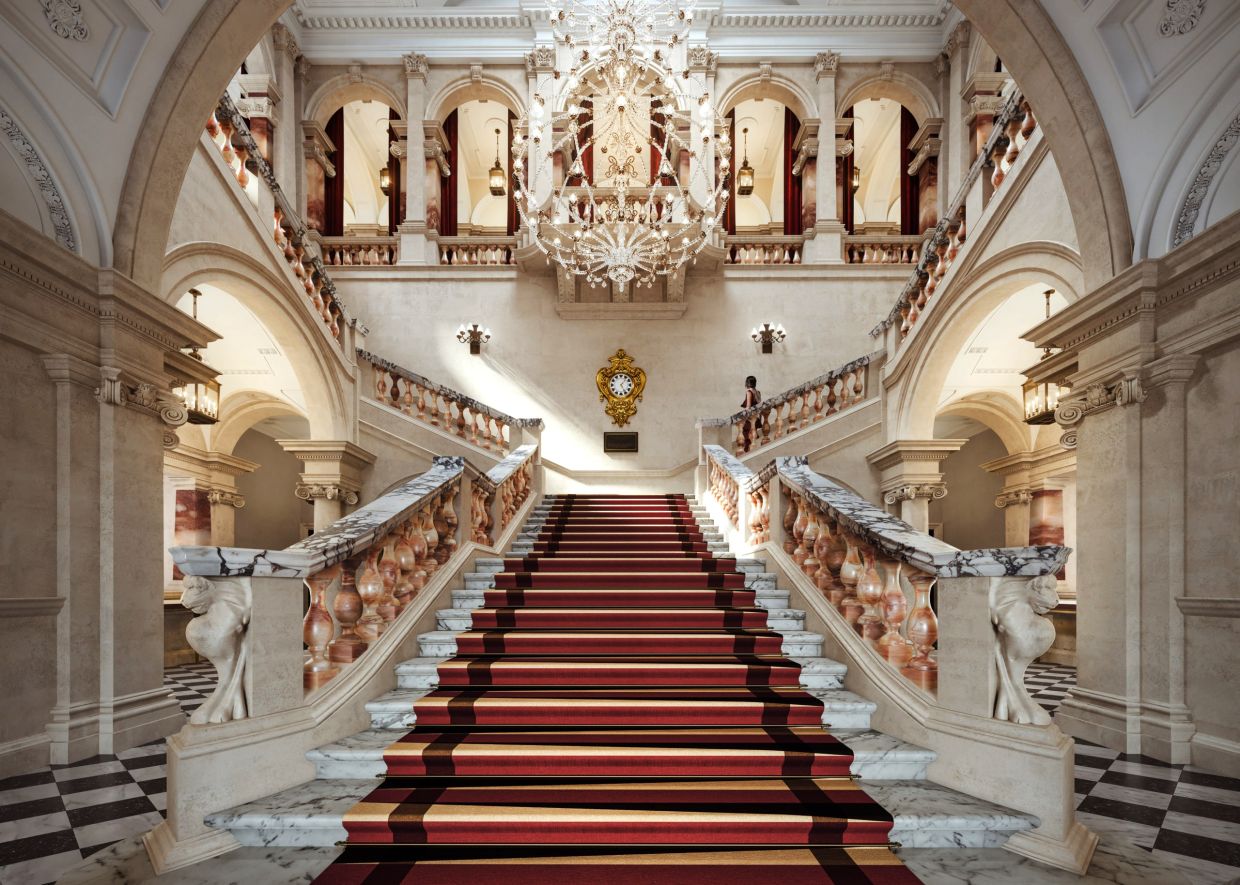
The conversion of Britain's mothballed government buildings into luxury hospitality venues represents a striking intersection of property economics, heritage preservation, and affluent consumer desire. From the basement bars of a former intelligence headquarters to suites within a decommissioned US Embassy, London's hotel industry is mining the city's institutional past as a marketable commodity. Guests at Raffles London at the Old War Office can now order cocktails in spaces where MI5 officers once conducted wartime surveillance operations. At NoMad London, situated in a former magistrates court in Covent Garden, visitors may explore prison cells associated with the trial of Oscar Wilde. These properties exemplify a broader European trend wherein surplus government real estate has found profitable second lives as hospitality venues, yet London's concentration of such conversions remains unparalleled.
The commercial logic underpinning these transformations is compelling for both sellers and developers. The British government, facing constrained budgets and evolving workplace practices, has divested strategically located properties no longer required for administrative functions. The Old War Office sold for £350 million in 2016, while Admiralty Arch fetched £60 million in 2012. Private developers, including the Hinduja Group and Reuben Brothers, possess sufficient capital to undertake the substantial renovations these century-old structures demand. The hotel sector, simultaneously seeking differentiation in a competitive market, recognizes that authentic architectural character and historical provenance cannot be fabricated in new construction. As one hospitality consultant observed, these buildings arrive as architectural gifts, complete with soaring ceilings, ornate period detailing, and dominating facades that sleek contemporary office blocks simply cannot replicate.
The appeal extends beyond aesthetic considerations into the realm of experiential luxury. Modern affluent travellers increasingly seek destinations offering narrative depth and cultural immersion rather than interchangeable resort amenities. A marble spa at one property differs little from countless others, yet the opportunity to sleep within spaces once reserved for prime ministers, ambassadors, and intelligence operatives carries psychological resonance. This represents what observers have termed a "strangely subversive" pleasure: ordinary citizens now granted access to institutions historically impenetrable to the general public. The pricing reflects this premium—rooms command nightly rates exceeding £1,000, with London maintaining its position among the world's strongest luxury markets despite post-Brexit headwinds including the elimination of tax-free shopping.
The practical conversion of government buildings into hotels requires navigating formidable technical and regulatory obstacles. The Old War Office underwent an eight-year redevelopment spanning £1.4 billion, involving not merely cosmetic updates but fundamental infrastructure overhaul. Ageing mechanical systems, outdated electrical installations, and deteriorated plumbing necessitated complete replacement. The architects responsible encountered byzantine approval processes, as even modest alterations such as doorway additions required consultation with Historic England and local planning authorities. The building's protected heritage status imposed constraints at every decision point. However, this regulatory architecture ultimately served preservation interests, ensuring that conversions maintain historical integrity rather than gutting interiors for sterile modernization.
From an urban planning perspective, these conversions address a genuine problem confronting contemporary Britain. The civil service has contracted significantly, reducing demand for expansive government office space. Hybrid work arrangements accelerated by pandemic disruption have fundamentally altered occupancy patterns. Modern commercial tenants gravitate toward purpose-built facilities offering superior environmental performance, efficient floor plates, and contemporary amenities capable of competing with remote work alternatives. Historical government buildings, however architecturally distinguished, frequently feature cellular office layouts, poor natural light distribution, and insufficient technical infrastructure that modern commercial operators reject. The conversion to hospitality proves mutually beneficial: hotels possess greater flexibility in spatial repurposing, utilizing peripheral perimeter rooms as guest suites while relegating interior spaces lacking windows to kitchens, spas, service corridors, and mechanical systems.
The Admiralty Arch project exemplifies the scale and ambition of these undertakings. This grand neoclassical Edwardian gateway, occupying one of London's most ceremonially significant locations between Trafalgar Square and Buckingham Palace, will reopen later this year as a Waldorf Astoria. The building's corridors once accommodated luminaries including Louis Mountbatten, Winston Churchill, and Ian Fleming. Its redevelopment represents an attempt to reintegrate a historically exclusive institutional monument into public life. The Reuben Brothers' vision positions the property as destination accessible to both international tourists and Londoners, fundamentally altering its relationship to the city's ceremonial geography. Standing astride the route of state processions including Trooping the Colour, Admiralty Arch will transform from administrative enclosure into a public-facing hospitality venue.
Developers and architects actively market these historical dimensions as core luxury amenities. Raffles London operationalizes its intelligence heritage through guided tours detailing the building's wartime role, including anecdotes about Boy Scouts cycling through corridors delivering dispatches during World War II. The basement Spy Bar explicitly references its previous operational purpose. NoMad London integrates the Bow Street Museum of Crime & Justice into its property, recounting the history of London's original law enforcement establishment. Online reviews consistently highlight guest enthusiasm for these historical dimensions, with travellers explicitly praising the authenticity and narrative richness unavailable in conventional hospitality establishments. This represents a deliberate strategic positioning: the buildings themselves become the product differentiation in an increasingly saturated luxury hotel market.
Yet this trend has not proceeded without controversy. The 2016 sale of the Old War Office provoked significant criticism, with Guardian commentary characterizing the transaction as "public theft." Concerns extended beyond mere nostalgia, encompassing broader questions regarding the appropriate stewardship of nationally significant architecture and whether such properties should remain in public ownership or control. The decision to privatize strategically located civic buildings entails genuine risks regarding public access and future disposition. However, as officials at Historic England acknowledge, the practical alternative—allowing landmark structures to deteriorate through vacancy and deferred maintenance—presents equally unpalatable outcomes. The organization's assessment prioritizes active utilization over abandonment, accepting the compromises involved in private ownership as preferable to architectural loss.
From a Southeast Asian perspective, London's model offers both inspiration and cautionary lessons. Regional cities including Bangkok, Jakarta, and Singapore possess substantial portfolios of aging government buildings facing similar utilization challenges. The successful conversion of such properties into premium hospitality could simultaneously address municipal property management burdens while capitalizing on regional luxury travel demand. However, the legal and regulatory frameworks enabling London's conversions—particularly Historic England's preservation oversight and planning authority consultation requirements—reflect institutional capacities not universally present across Southeast Asia. Additionally, the capital intensity of these projects demands developer sophistication and financing access exceeding local market capacity in many regional contexts. The strategic question becomes whether Southeast Asian governments and private developers can effectively replicate this model while maintaining equivalent heritage protections.
London's luxury hotel market continues demonstrating resilience despite multiple headwinds. Average daily rates and revenue per available room in the city's luxury segment have risen throughout the current year, with heritage properties commanding premium positioning. Real estate analytics firms identify these converted buildings as particularly valuable assets, offering the distinct market differentiation that contemporary luxury consumers increasingly demand. The buildings' architectural authenticity proves impossible to replicate through design alone, providing sustainable competitive advantage. As one hospitality director stated, contemporary travellers increasingly reject interchangeable cookie-cutter facilities, instead seeking locations imbued with genuine character and narrative authenticity reflecting their actual destination rather than generic luxury templates.
The transformation of Britain's government buildings into luxury hotels ultimately reflects broader cultural and economic shifts. The institutional architecture once projecting exclusivity and governmental authority now generates revenue by offering that very exclusivity to paying guests. This represents a profound reorientation of historic space, converting monuments to state power into consumption venues. The success of this model suggests that wealthy international travellers will sustain significant price premiums for authentic historical experience, institutional heritage, and access to spaces previously cordoned from public circulation. Whether this commercialization represents an appropriate stewardship of national heritage or merely another manifestation of capitalist commodification remains contested, yet the market has rendered its verdict decisively.

