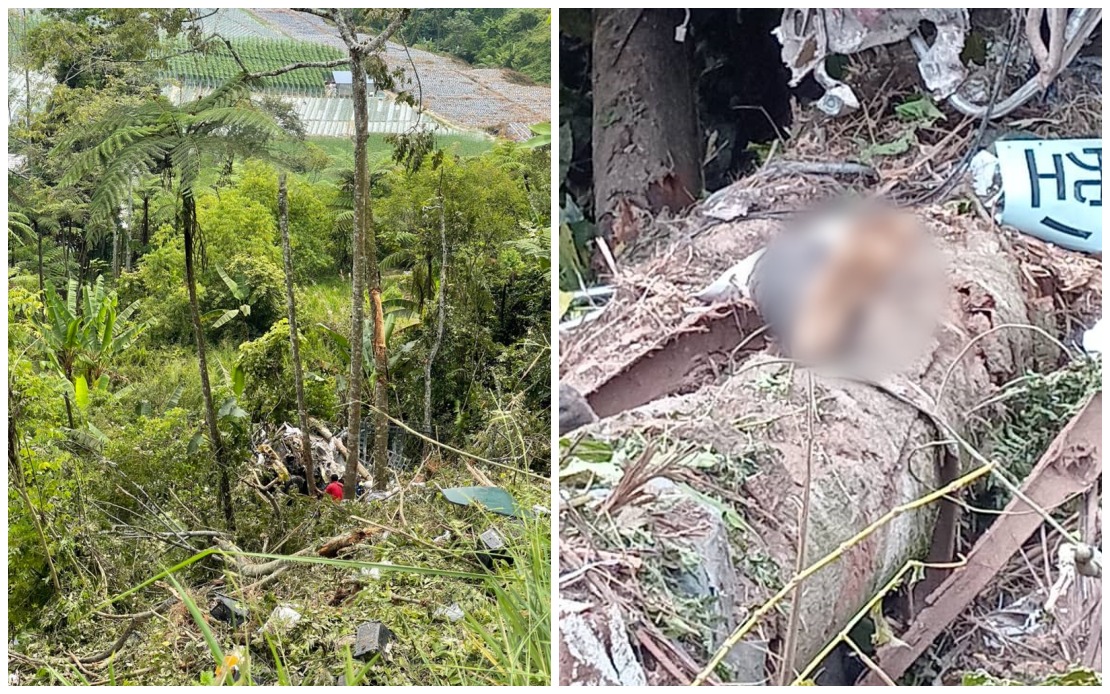
A man in his 40s lost his life when the 10-tonne lorry he was operating plummeted into a 150-foot ravine close to Pos Blau-Lojing Bridge in Gua Musang on Thursday. Emergency responders discovered the vehicle had descended steeply into a ravine situated near an orchard in the heavily forested region of Kelantan. The incident highlights ongoing road safety concerns in Malaysia's more remote and challenging terrain, where steep drops and narrow mountain passes present substantial hazards to commercial vehicle operators.
The initial distress call reached authorities at 11.58 am, but rescue personnel required considerable time to mobilise and travel to the remote location. Gua Musang Fire and Rescue Station dispatched a dedicated firefighting team that arrived at the scene approximately three hours later, at 1.59 pm. The station chief, Asst Senior Fire Supt Muhammad Azrul Izzham Zulkifli, explained that the extended response time reflected the geographical challenges inherent in reaching sites nearly 98 kilometres from the main station.
Upon arrival, rescue personnel assessed the situation and established that the driver had become trapped beneath a substantial tree trunk following the vehicle's descent. This complication necessitated a careful extraction operation, as firefighters needed to safely remove the heavy debris without causing further damage to the body. The operation required specialised equipment and trained personnel experienced in recovering individuals from confined spaces and challenging wreckage scenarios.
Firefighters executed the extraction by methodically removing the tree trunk that pinned the driver. Despite the rescue team's prompt and professional response once they reached the location, medical assessment determined the driver had already succumbed to injuries sustained during the crash. The body was pronounced dead at the scene, and fire and rescue personnel subsequently transferred it to police custody in accordance with standard procedures governing fatal traffic incidents.
Gua Musang district police chief Supt Sik Choon Foo acknowledged the fatality and confirmed that investigative work was underway to establish the precise circumstances leading to the accident. Initial details remained limited at the time of the incident's reporting, with police indicating they were still gathering evidence and witness statements. The investigation would typically examine factors such as vehicle mechanical condition, weather circumstances, driver fatigue, and road conditions at the time of the crash.
The incident underscores persistent safety challenges confronting Malaysia's commercial transport sector, particularly on routes traversing mountainous and forested regions. The Pos Blau-Lojing area, situated on a major route through Kelantan's interior, experiences regular traffic volumes from commercial vehicles serving logging, agricultural, and distribution operations. Steep gradients and sharp bends characterise sections of this corridor, creating demanding driving conditions that require heightened vigilance and vehicle maintenance standards.
Road fatalities involving heavy vehicles continue to represent a significant public health concern across Malaysia, with mountainous states like Kelantan experiencing disproportionately high incident rates. Factors contributing to such accidents typically include inadequate braking systems, driver inexperience or fatigue, excessive speed, and poor visibility during adverse weather. The lengthy response time on this occasion, while unavoidable given the location's remoteness, also raises questions about emergency service resource allocation in rural areas.
For commercial operators and transport companies, incidents of this nature underscore the importance of rigorous vehicle maintenance schedules, particularly brake system inspections on routes involving significant elevation changes. Driver training and fatigue management protocols become increasingly critical on extended routes through challenging terrain. Regulatory authorities periodically review safety standards applicable to heavy vehicle operations, considering evidence from accident investigations to identify preventive measures.
The recovery operation itself demonstrates the professional capabilities of Kelantan's emergency services, which must regularly respond to incidents across vast, sparsely populated areas with limited infrastructure. Firefighters trained in technical rescue procedures executed an efficient extraction despite the complications posed by the vehicle's location and the entrapment circumstances. Such incidents provide valuable training opportunities for emergency personnel while highlighting the need for continued investment in rescue capability and equipment, particularly in Peninsular Malaysia's more remote regions.

