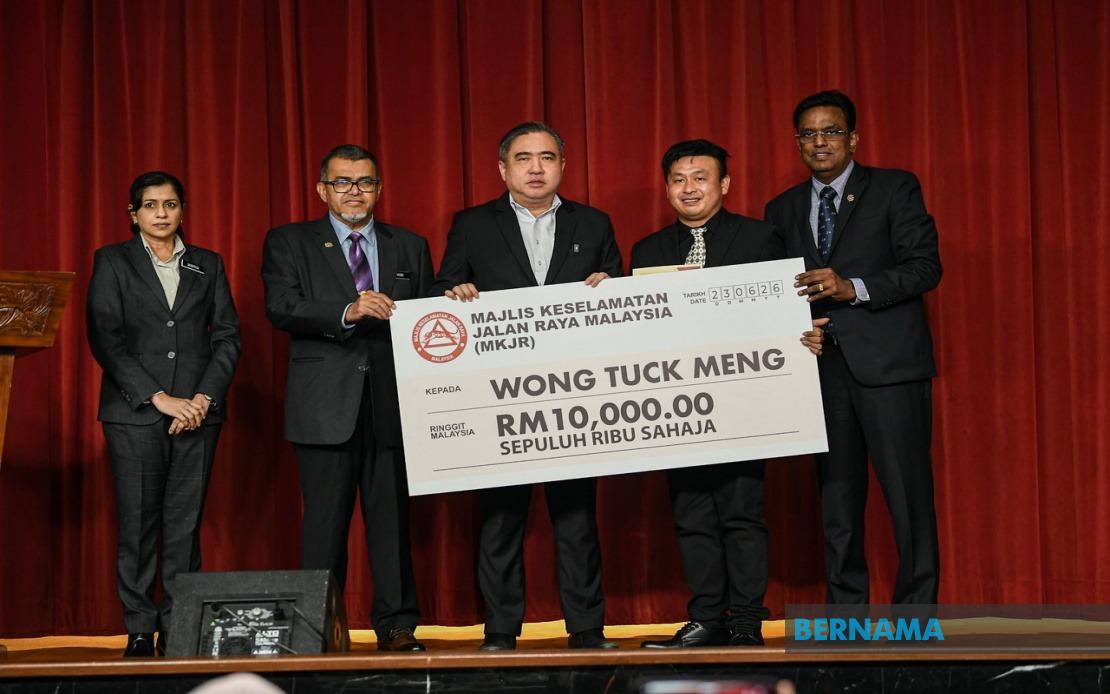
Wong Tak Ming, a quick-thinking lorry driver, has been honoured with a Special Certificate of Appreciation and RM10,000 in recognition of his courageous actions that prevented a potential catastrophe on the roads of Perak. The award ceremony, held at the Parliament building in Kuala Lumpur on June 23, brought formal recognition to an incident that had captivated public attention and demonstrated the impact of individual bravery in preventing road tragedies.
Transport Minister Anthony Loke presented the accolade to Wong, with the financial component funded through the Malaysian Road Safety Council (MKJR). The recognition specifically acknowledged Wong's heroic intervention during the June 15 incident, which resulted in the preservation of 21 lives aboard an express bus travelling from Kedah to Kuala Lumpur. Loke's remarks underscored the significance of Wong's contribution, characterising him as an exemplary figure whose composure under pressure prevented what could have been a devastating accident with severe consequences.
The chain of events that led to this recognition unfolded when the express bus encountered a technical malfunction while navigating the challenging downhill stretch adjacent to the Menora Tunnel. Losing hydraulic control on the descent, the bus began sliding dangerously toward vehicles ahead. Wong's presence of mind became the critical factor in this emergency scenario. Rather than simply attempting to evade the oncoming bus, he manoeuvred his lorry strategically to absorb the collision and serve as a braking mechanism. This decisive action slowed the bus's momentum considerably before Wong steered both vehicles toward the guardrail, bringing the situation under control and preventing the bus from potentially careening into other traffic or colliding with the tunnel infrastructure.
Wong's approach to his actions reveals a perspective grounded in instinctive responsibility rather than calculated heroism. When describing the moments immediately following the collision, Wong emphasised that his primary concern was averting loss of life. He noted that the spatial separation between his vehicle and the bus initially provided him with a crucial window to alert other road users through horn signals, allowing drivers ahead to create clearance before the situation deteriorated further. This sequence of decisions—from the initial warning to the deliberate repositioning of his lorry—demonstrated a safety-conscious mindset that extended beyond his own immediate circumstances.
The incident gained significant traction through social media when a video recording of the emergency sequence circulated online. The footage resonated with audiences nationwide, generating widespread commendation for Wong's quick reflexes and selfless intervention. The viral nature of the incident created broader awareness about road safety principles and individual responsibility in preventing accidents, transforming what could have been a local incident into a nationally significant moment highlighting the importance of driver awareness and decisive action during emergencies.
Parliament's involvement in formally recognising Wong underscored the national importance attributed to his actions. Deputy Speaker Datuk Dr Ramli Mohd Nor conveyed formal appreciation from the Dewan Rakyat, emphasising the legislative institution's gratitude for Wong's bravery. This parliamentary acknowledgement occurred during proceedings related to the Road Transport (Amendment) Bill 2025, which was being tabled for its second reading. The timing created a meaningful connection between Wong's individual heroism and broader governmental efforts to improve road safety frameworks and regulations.
The Road Transport (Amendment) Bill 2025 represents the government's commitment to enhancing safety standards across Malaysia's transportation networks. Wong's incident and subsequent recognition serve as a practical demonstration of why such legislative measures remain essential. While the amendments under consideration address systemic safety improvements, Wong's actions highlight the equally critical human element—the vigilance and decisive response of ordinary road users who can prevent disasters through quick thinking and responsible behaviour.
The award of RM10,000 to Wong carries symbolic weight beyond its monetary value. It represents official validation that individual acts of courage and responsibility merit recognition and reward within society. For Malaysian road users, the case demonstrates that maintaining alertness while driving and having the capacity to respond quickly to emergencies can make the difference between tragedy and safety. The funding mechanism through the Malaysian Road Safety Council further emphasises that prioritising and honouring road safety champions reflects institutional commitment to building a culture where safe driving practices and emergency response capabilities are valued and encouraged.
Wong's case also offers important lessons for commercial drivers operating heavy vehicles on Malaysian highways. Lorry drivers frequently navigate challenging routes and weather conditions, managing vehicles that require specialized handling skills. Wong's situational awareness and controlled response under pressure exemplify the professional standards that contribute to safer road environments. His willingness to place his own vehicle and safety at risk to protect strangers demonstrates an ethical framework that transcends minimum legal compliance and ventures into genuine community responsibility.
The recognition ceremony at Parliament signified official acknowledgement that road safety is not merely a technical or regulatory matter but a social imperative that depends significantly on the character and judgment of individual citizens. As Malaysia continues developing its transportation infrastructure and updating safety regulations, stories like Wong's provide powerful reminders that effective road safety emerges from the intersection of good policy, proper vehicle maintenance, and the everyday decisions made by alert, conscientious drivers navigating shared roads.