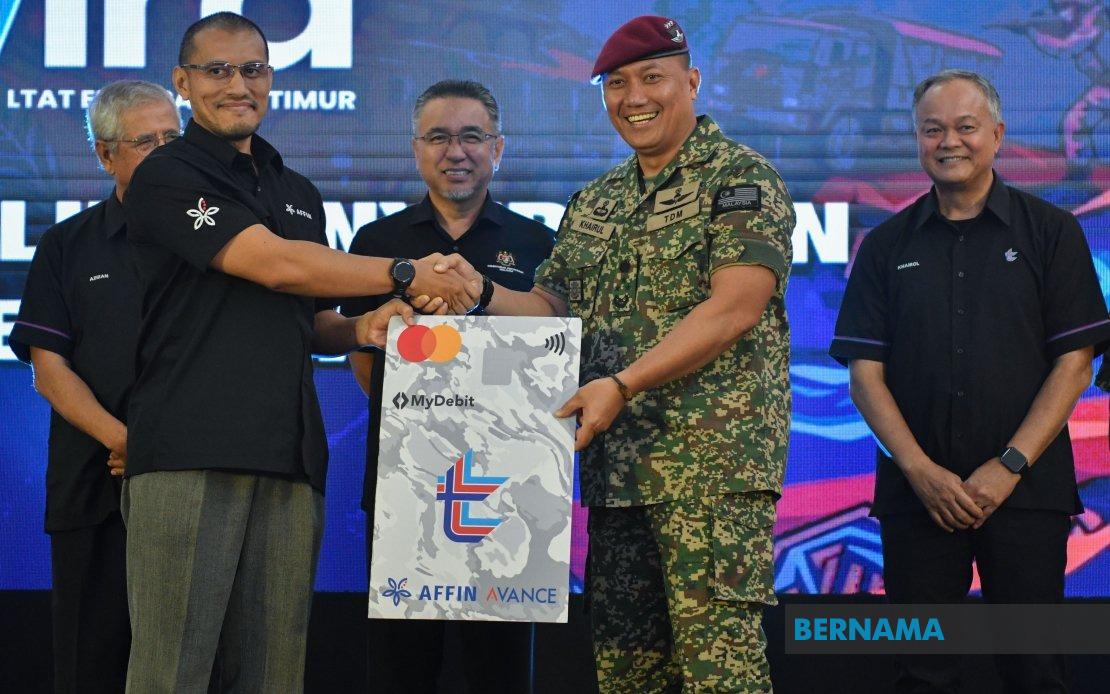
The Armed Forces Fund Board (LTAT) has taken a significant step in modernising its engagement with Malaysian military personnel by launching the East Coast Edition of Jelajah Wira LTAT 2026, a hybrid initiative that blends traditional roadshow visits with digital accessibility. Unveiled at Desa Pahlawan Camp in Kota Bharu on July 2, this initiative marks a departure from conventional outreach methods, recognising that defence personnel stationed across remote and dispersed locations require flexible access to financial services and support programmes.
Deputy Defence Minister Adly Zahari officiated the launch, signalling government backing for the modernised approach. The roadshow will continue its physical presence at Sri Pantai Camp in Kuala Terengganu on July 9 and Kuantan Air Base in Pahang on July 13, with projections indicating direct attendance of over 3,600 armed forces members across the East Coast corridor. However, the inclusion of live-streaming capabilities transforms the event into something far more expansive, with potential reach extending to more than 10,000 personnel nationwide who can participate remotely from their various postings.
This digital expansion reflects broader strategic thinking within LTAT about how to serve its constituency more effectively. The fund's leadership frames the initiative as an evolution in service delivery that acknowledges contemporary realities—military personnel are geographically dispersed, often stationed in locations far from major urban centres, and maintaining regular communication channels with all contributors presents genuine operational challenges. By incorporating digital components, LTAT positions itself as responsive to the needs of modern defence forces while maintaining the personal touch that roadshow engagements provide.
The programme's alignment with national economic frameworks is noteworthy. LTAT explicitly connects Jelajah Wira to both the MADANI Economy framework and PuTERA35 aspirations, suggesting that military personnel financial wellbeing forms part of Malaysia's broader economic participation strategy. This framing elevates what might otherwise seem a narrowly focused benefit administration exercise into a component of national economic empowerment, particularly for a demographic that forms a significant portion of Malaysia's organised workforce.
Beyond basic financial services information, the roadshow introduces tangible benefits designed to address multiple dimensions of military family welfare. The distribution of the AFFIN LTAT Affiliate Debit Card represents practical financial inclusion, while the 2026 SPM e-Perkasa programme addresses educational access for children of armed forces members. By offering free online tuition classes through distributed smart devices, LTAT targets generational advancement—ensuring that military families can provide their children with educational opportunities that might otherwise be limited by geographic or economic constraints.
One of the most compelling elements involves the LTAT Wira Entrepreneur Empowerment Programme, which demonstrates measurable impact on veteran economic participation. The second series of this six-month intervention has reportedly generated average monthly business income increases of 162 percent among participants. These figures, if accurate, represent extraordinary economic transformation and suggest that structured mentoring combined with financial literacy education creates powerful outcomes for veterans transitioning to entrepreneurship. The East Coast edition will launch the programme's third iteration, specifically targeting the veteran community in the region.
The broader financial literacy initiative deserves attention as well. Since December 2023, LTAT's Contributors' Briefing and Financial Literacy Programme has reached over 68,000 armed forces personnel through on-site sessions at military camps. This sustained engagement reflects recognition that financial education constitutes essential support infrastructure for military communities, where compensation structures and retirement planning often differ markedly from civilian employment patterns. By conducting ongoing sessions rather than one-time events, LTAT builds cumulative knowledge among personnel.
For Malaysian policymakers and defence administrators, this initiative offers several relevant lessons about serving dispersed professional communities. The hybrid physical-digital model demonstrates that modernisation need not mean abandoning face-to-face engagement; rather, thoughtful integration of both modalities can dramatically expand programme reach. This approach may prove applicable to other government agencies managing constituencies across Malaysia's diverse geography.
The Southeast Asian context adds another dimension to this initiative. Regional militaries increasingly recognise that personnel retention and satisfaction depend on comprehensive support systems extending beyond compensation. By positioning financial empowerment, family welfare, and entrepreneurial development as core military benefits, Malaysia's LTAT establishes a model that other ASEAN defence establishments might study. As militaries across the region face recruitment and retention challenges, demonstrating commitment to personnel holistic wellbeing becomes strategically significant.
Looking ahead, the success of this East Coast iteration will likely influence how LTAT structures similar engagements in other regions. If the digital components prove effective in reaching dispersed personnel and generating meaningful engagement, the model could become standard across all future roadshow editions. The combination of measurable economic outcomes from entrepreneurship programmes, documented reach through financial literacy initiatives, and explicit connection to national economic frameworks suggests LTAT is building a comprehensive ecosystem for military personnel financial empowerment rather than providing isolated benefit distributions.

