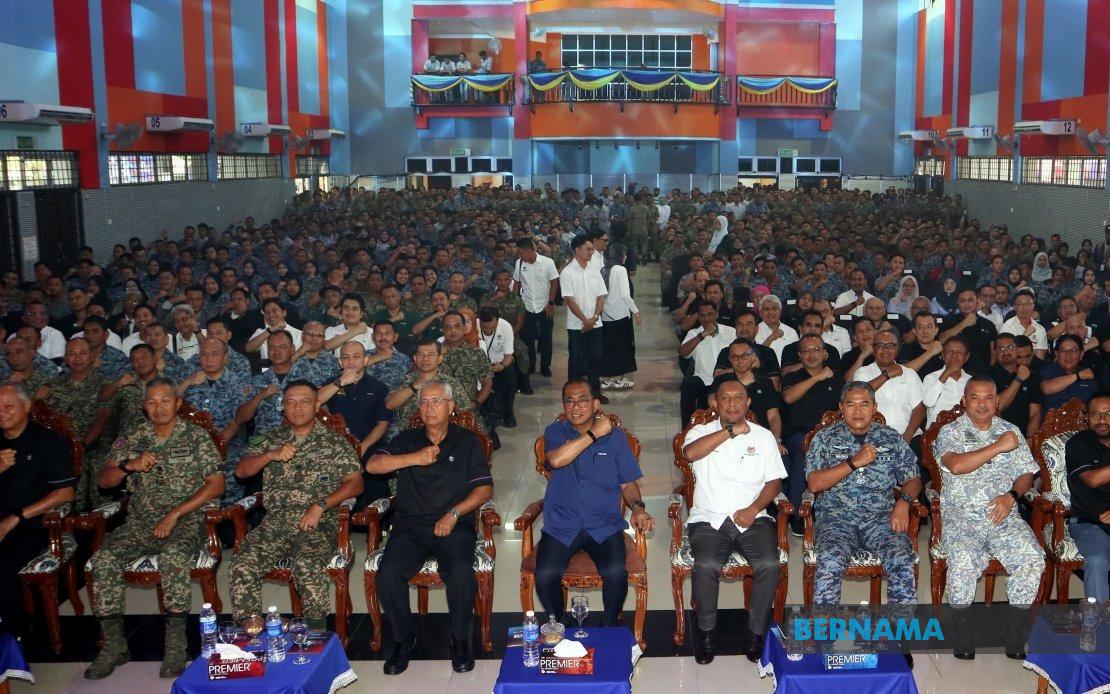
The Armed Forces Fund Board (LTAT) has successfully reached 28,500 military personnel across Malaysia's East Coast through its nationwide Jelajah Wira engagement initiative, underscoring the organisation's commitment to deepening its relationship with contributors who sustain the fund through regular deductions from their service salaries.
The multi-phase tour represents a strategic shift towards ground-level engagement, allowing fund management to interact directly with armed forces members and their dependants across different operational bases. LTAT Chief Executive Mohammad Ashraf Md Radzi explained that the initiative transcends traditional administrative communication channels, instead facilitating meaningful dialogue between the institution and the personnel whose 10 per cent monthly salary contributions form the backbone of the fund's investment portfolio.
Central to the tour's messaging is recognition of military service and its broader societal value. During the Kuantan event, LTAT unveiled the LTAT-Affin Debit Card, positioning it as tangible acknowledgment of the armed forces' "unwavering loyalty to the nation." This move carries symbolic weight beyond banking convenience—it represents an attempt to consolidate military identity with financial benefits, creating a visible marker of LTAT membership that extends into everyday transactions. For personnel earning comparatively modest salaries, such branded financial tools can reinforce a sense of institutional belonging and value.
The tour's geographic scope reflects strategic importance given Malaysia's security infrastructure. Participating bases include Kem Desa Pahlawan in Kelantan, Kuantan Air Force Base, Kem Seri Pantai housing the 16th Royal Malay Regiment in Terengganu, Kem Sungai Udang in Melaka, KD Sultan Ismail in Johor, and Kem Mahkota Kluang also in Johor. This coverage pattern demonstrates deliberate coordination with major military concentrations, particularly in peninsular Malaysia where naval, air force, and army installations coexist.
Contributor testimonials reveal nuanced understanding of LTAT's value proposition beyond immediate financial returns. Airman I Muhammad Syahmi Mohd Shobri, 23, emphasized the fund's competitive annual dividends relative to civilian savings schemes, highlighting how younger service members compare returns across available options. His perspective suggests LTAT successfully markets itself as delivering superior long-term wealth accumulation compared to commercial alternatives. This competitive positioning matters considerably within military ranks where financial literacy and retirement planning awareness have increased substantially over recent decades.
Retirement security emerged as a critical theme in personnel responses. Airman I Muhammad Izzuddin Mohd Hanapi, 25, articulated how LTAT benefits crystallise particular value upon military discharge, when accumulated savings and annual dividends provide financial scaffolding during career transition. For mid-career service members anticipating civilian life within 10-20 years, such reassurance addresses legitimate concerns about post-service financial stability. The fund essentially becomes a de facto occupational pension, though with more direct connection between contribution discipline and eventual returns.
Incorporating entertainment elements through prize draws and community activities reflects contemporary stakeholder engagement strategies. Royal Malaysian Air Force Air Sergeant Haidil Jafar's prize motorcycle win illustrates how LTAT combines financial messaging with tangible rewards, making participation memorable and generating positive word-of-mouth within military communities. Such tactics prove effective in reinforcing fund awareness among personnel who might otherwise regard salary deductions as bureaucratic inevitability rather than beneficial investment.
Mohammad Ashraf's emphasis on LTAT's "holistic approach to welfare, encompassing the families and communities" signals institutional expansion beyond individual contributor focus. This framework acknowledges that military service carries household-level implications—dependants depend on service member income security, and broader community stability depends on personnel satisfaction and financial security. By positioning LTAT as a family-oriented benefit rather than individual savings mechanism, the fund appeals to personnel concerned about dependant welfare and long-term household financial planning.
The presence of Defence Ministry Secretary-General Datuk Lokman Hakim Ali, LTAT Chairman General Tan Sri Azizan Ariffin, and LTAT Investment Panel Chairman Datuk Khairol Anuar Mohamad Tawi signified high-level institutional endorsement. Such participation elevates the tour beyond routine administrative exercise, framing it as strategic defence ministry priority. For service members, senior leadership visibility communicates that fund management enjoys genuine governmental support and operational importance.
From Southeast Asian perspectives, LTAT's engagement model provides instructive lessons about sustaining occupational pension schemes within military frameworks. As other regional armed forces grapple with recruitment and retention challenges amid competing private sector opportunities, institutional initiatives demonstrating tangible financial commitment and recognition resonate powerfully. Malaysia's approach of combining competitive returns, branded benefits, and sustained senior leadership engagement offers template elements applicable across defence establishments confronting demographic and economic pressures.
The tour's phased nationwide implementation suggests LTAT anticipates sustained resource allocation toward ground engagement—a notable commitment given competing budgetary priorities within defence and public administration sectors. This strategic investment implies institutional assessment that direct member engagement produces returns through improved contribution discipline, reduced disputes, and enhanced fund legitimacy among the armed forces personnel who comprise its financial foundation.

