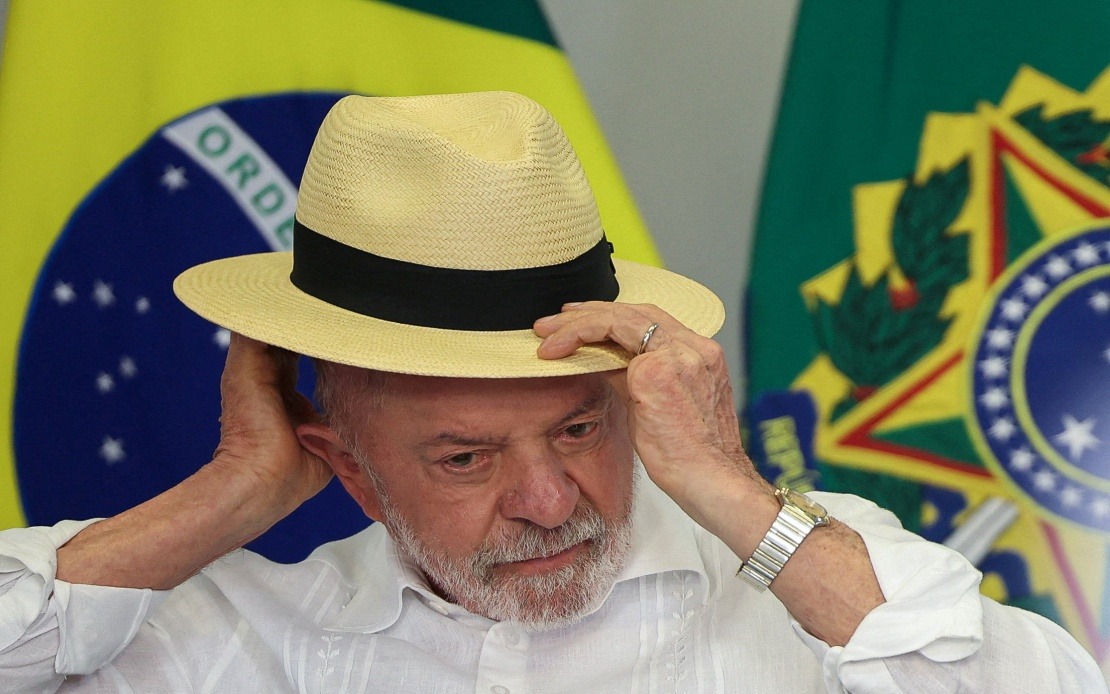
Brazilian President Luiz Inacio Lula da Silva is clinging to a slender advantage over Senator Flavio Bolsonaro as both camps prepare for the October presidential election, with the latest Quaest poll suggesting the race remains highly competitive. The survey, commissioned by major broadcaster Globo and conducted between August 10 and 13 among 2,004 respondents, reveals Lula leading 43 per cent to Bolsonaro's 40 per cent in a simulated second-round runoff—a margin so thin that it falls within the poll's two-point error threshold, indicating genuine uncertainty about the eventual outcome.
The polling results from early August show only marginal movement in the two months since Lula formally launched his re-election campaign. A previous Quaest survey conducted on August 5 had registered Lula at 44 per cent against Bolsonaro's 39 per cent, suggesting the president's support has softened slightly while the challenger has consolidated backing among conservative voters. In a first-round scenario where all candidates remain in the race, Lula's advantage expands considerably, commanding 38 per cent of support compared with Bolsonaro's 31 per cent, with other candidates struggling to gain traction. Former governors Renan Santos and Ronaldo Caiado each register just four per cent support, while fellow contender Romeu Zema trails at two per cent, illustrating how the race has effectively crystallized into a two-person contest.
Under Brazil's electoral framework, if no candidate secures an outright majority of valid votes in the first round, the top two finishers advance to a runoff ballot, where Lula currently holds only a marginal edge. This structural reality has shaped campaign strategies, with both camps focused on maximizing turnout and persuading the substantial number of undecided voters who remain uncommitted. The tightening of Lula's position from his August 5 performance suggests momentum may be shifting, potentially reflecting growing enthusiasm among Bolsonaro's base or some erosion of the president's coalition.
Flavio Bolsonaro, the eldest son of former President Jair Bolsonaro, has emerged as the dominant right-wing candidate precisely because his father was disqualified from contention. Brazil's superior electoral court declared the former president ineligible following rulings that he abused his political authority, and he subsequently faced conviction in connection with an alleged scheme to reverse his electoral defeat to Lula in 2022. This legal disqualification left the conservative movement searching for an alternative standard-bearer, and Flavio Bolsonaro has successfully consolidated the family's political machine and extensive donor networks behind his candidacy, transforming himself into the principal challenger to the incumbent.
The younger Bolsonaro's rise marks a significant development in Brazilian politics, effectively freezing out other potential right-wing contenders and concentrating opposition resources. While several establishment figures, including governors with executive experience, remain nominally in the race, they have been unable to gain meaningful ground, suggesting that voters on the right either support Bolsonaro directly or are waiting to coalesce around him if he faces Lula in the runoff. This dynamic underscores how family brands and political dynasties continue to dominate Brazilian electoral competition despite the formal disqualification of Jair Bolsonaro.
Lula's campaign messaging has deliberately shifted toward nationalist themes and economic sovereignty, framing the election as a choice between Brazilian independence and foreign interference. In his August 2 campaign launch speech at the Workers' Party convention in São Paulo, he emphasized protection of Brazil's strategic assets, particularly its mineral wealth and rare earth deposits that have attracted intense international competition. The president explicitly warned that China, the United States, and France should not expect unfettered access to Brazil's critical minerals without respecting the nation's sovereignty and decision-making authority. This positioning reflects anxiety among Brazilian political elites about resource nationalism and the vulnerability of developing economies to external pressure from powerful nations.
The sovereignty framing also represents a deliberate contrast with Flavio Bolsonaro, whose family has traditionally maintained closer ties with the United States and Donald Trump's administration. Lula pointedly invoked Trump's documented support for Jair Bolsonaro and reminded the American president in June that Brazilian elections remained Brazil's concern, not Washington's business. This messaging resonates particularly in Southeast Asia and across the Global South, where anxieties about great power competition, resource sovereignty, and the protection of national interests against external pressure remain potent political themes. For Malaysian observers, Lula's emphasis on defending mineral wealth and resisting foreign interference offers parallels to regional discussions about commodity security and economic independence.
The two-month runway to October's election provides substantial time for the campaign narrative to shift and voter preferences to crystallize. While Lula's current advantage appears genuine, the statistical tie in runoff scenarios means that turnout variation, candidate campaign performance, and unexpected events could easily determine the outcome. The relatively high share of undecided voters in both first-round and runoff scenarios suggests many Brazilians remain genuinely uncertain about their choice, creating opportunities for both camps to expand their coalitions. Economic conditions, corruption allegations, and demographic shifts in voter enthusiasm could all influence final tallies.
The election's outcome carries significance beyond Brazil's borders, particularly for Southeast Asian countries navigating complex relationships with multiple great powers. A Lula victory would reinforce a more autonomous approach to resource management and international relations that prioritizes national interests over external pressure. Conversely, a Bolsonaro family return to power would likely signal a recalibration toward closer alignment with Washington and potentially a more accommodating stance toward foreign investment and influence in Brazilian strategic sectors. For regional policymakers monitoring global alignments and commodity markets, the October result will offer important signals about the future direction of one of the world's largest economies and a leading supplier of critical resources.

