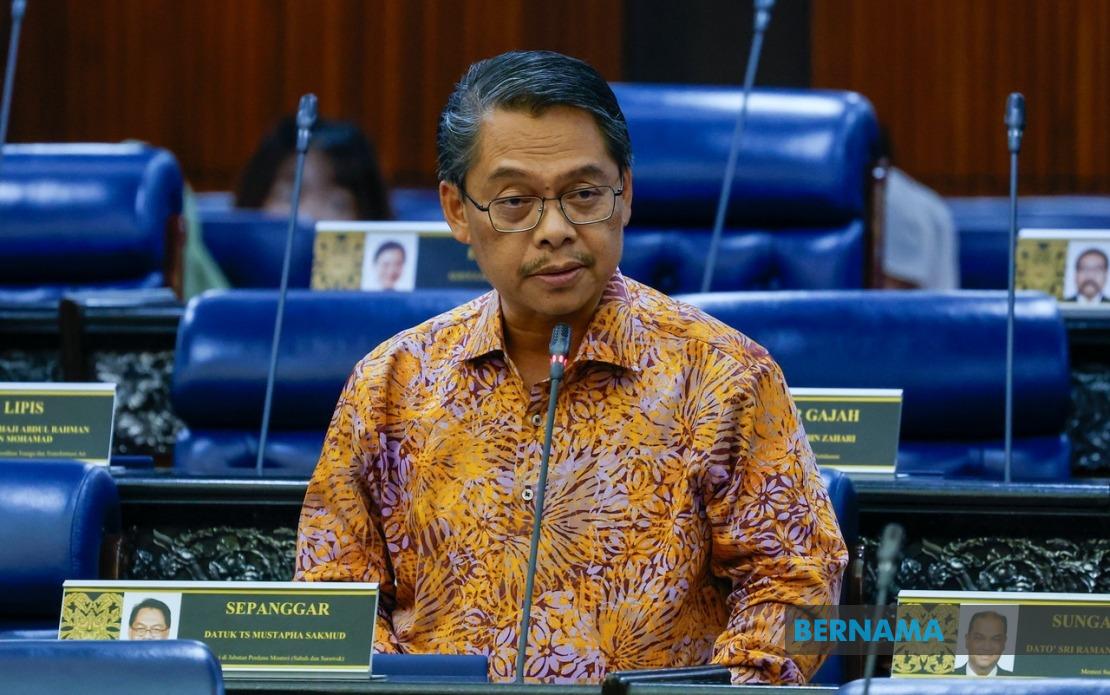
The Malaysia Agreement 1963 (MA63) negotiation process has reached a milestone, with 13 of 29 key matters now fully settled through official discussions, according to Datuk Mustapha Sakmud, the Minister in the Prime Minister's Department responsible for Sabah and Sarawak Affairs. His statement in Parliament on June 25 reveals the incremental progress of a complex constitutional and administrative undertaking that remains central to East Malaysian political discourse and federal-state relations.
Beyond the fully resolved matters, five additional issues have achieved what officials describe as partial or interim resolution following a March 2 meeting of the MA63 Technical Committee. This categorisation indicates that while consensus has been reached on certain aspects, complete implementation or final settlement remains contingent on further negotiations or procedural steps. The interim classification suggests a nuanced negotiating landscape where agreement on principles may differ from agreement on practical application and timelines.
Four of the five interim matters pertain directly to state-level administration and federal integration. The expansion of state public service positions under Article 112 of the Federal Constitution represents a longstanding concern in Sabah and Sarawak, where leaders have advocated for greater control over their civil service recruitment and advancement. Alongside this sits the question of Borneonisation, the policy principle ensuring that federal public service positions in the two states are filled predominantly by local citizens. These measures touch on fundamental questions of administrative autonomy and representation that resonate throughout East Malaysia's governance structures.
The health and education sectors comprise the remaining interim matters, underscoring the importance both states place on jurisdictional clarity in service delivery. For Malaysian readers in Peninsular Malaysia, these negotiations may seem arcane, yet they reflect constitutional provisions unique to Sabah and Sarawak that were guaranteed at federation in 1963. The ongoing discussion of how healthcare systems and educational standards operate—and who bears responsibility for their improvement—directly affects the quality of services available to millions of East Malaysians and determines whether federal or state governments remain accountable to constituents.
The remaining 11 outstanding matters continue under the watch of the Sabah and Sarawak Affairs Division (BHESS), which functions as the secretariat for these negotiations. The persistence of nearly half the original agenda items reflects the complexity inherent in renegotiating constitutional and administrative arrangements that have evolved over six decades. These matters likely encompass everything from revenue-sharing arrangements to immigration protocols and the scope of state legislative authority—issues that carry substantial financial and political implications for both states and the federation as a whole.
A particularly contentious unresolved issue concerns parliamentary representation. Sabah and Sarawak have long sought an increase in their combined parliamentary seats to achieve a 35 per cent quota of the Dewan Rakyat, reflecting demographic growth and what leaders argue is their rightful voice in national affairs. Mustapha acknowledged that this demand remains unresolved and continues as an active point of discussion. The matter's sensitivity lies not merely in electoral mathematics but in the fundamental question of federal balance and East Malaysian influence over national decision-making.
The technical obstacles to expanding parliamentary representation highlight the constitutional complexity involved. Any redelineation of electoral boundaries falls exclusively within the Election Commission's purview, and the constitutional framework permits such exercises only after an eight-year cycle has elapsed. This requirement, enshrined in the 13th Schedule and Article 113 of the Federal Constitution, creates a structural delay mechanism that has frustrated East Malaysian advocates pushing for swift change.
Beyond these procedural hurdles lies a more demanding constitutional requirement. Altering the composition of the Dewan Rakyat under Article 46 demands a two-thirds parliamentary majority—a threshold that has proven difficult to achieve on matters affecting power distribution between regions. For Malaysia's diverse political landscape, securing such overwhelming support for any change that might strengthen East Malaysian representation requires consensus that has eluded policymakers. This explains why negotiations continue in parallel tracks rather than producing definitive outcomes.
The context of these discussions becomes clearer when considering that MA63 negotiations occur within a broader conversation about federalism, constitutional interpretation, and the balance between centralisation and state autonomy in Malaysia. For Southeast Asian observers watching Malaysia's political development, these negotiations demonstrate how constitutional frameworks crafted in the 1960s continue shaping modern governance challenges. The 1963 agreement itself represented a remarkable constitutional achievement, bringing three previously distinct territories into a federal union, yet its precise provisions remain subject to contemporary reinterpretation.
For Malaysian readers, particularly those in Sabah and Sarawak, the pace of resolution carries both practical and symbolic weight. Each resolved matter represents concrete progress toward securing commitments made during federation negotiations, while each outstanding issue represents unfulfilled expectations. The interim categorisation of matters—neither fully resolved nor completely stalled—suggests patient diplomacy that respects complexity while maintaining momentum.
The division of labour between the Technical Committee and BHESS, along with federal and state stakeholders, reflects an institutional commitment to managing these negotiations systematically. Yet the public reporting of progress through parliamentary questions indicates that political pressure remains a feature of these discussions. Elected representatives, particularly from East Malaysia, use parliamentary platforms to maintain focus on unresolved demands and to signal to constituents that their interests remain under active pursuit.
Moving forward, the remaining 11 matters will likely require sustained engagement between technical experts, political leaders, and constitutional specialists. Some issues may prove amenable to administrative solutions requiring no constitutional amendment, while others will inevitably demand the painful political consensus necessary for constitutional change. The trajectory of MA63 negotiations thus offers insight into how modern Malaysia manages complex constitutional relationships in an evolving political and demographic landscape.

