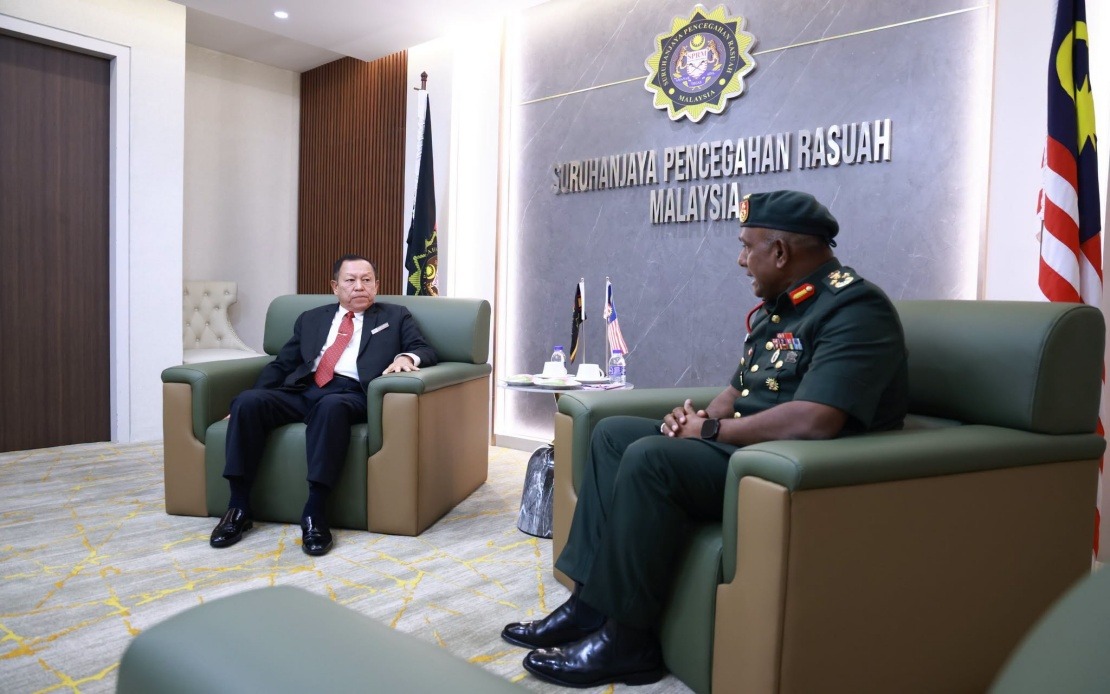
The Malaysian Anti-Corruption Commission and the Malaysian Armed Forces have moved to deepen their institutional partnership, signalling a coordinated approach to rooting out corruption across government and defence operations. The commitment was reaffirmed during a meeting at MACC headquarters in Putrajaya, where senior leaders from both organisations underscored their resolve to work more closely on matters spanning intelligence coordination, information exchange, and structural governance improvements.
The initiative reflects growing recognition within Malaysia's anti-corruption architecture that no single agency can effectively combat systemic dishonesty without coordinated effort across multiple sectors of government. The Armed Forces, as a major employer and custodian of substantial national resources, represents a critical domain for integrity oversight. Any weakening of internal controls within military and defence structures can undermine public confidence and create vulnerabilities that corrupt officials might exploit for personal gain or, in extreme cases, to compromise national security.
MACC Chief Commissioner Datuk Seri Abd Halim Aman highlighted that the Commission places significant value on its existing relationship with the Armed Forces, and expressed optimism that collaboration between the two bodies will intensify in the coming period. He stressed that enhanced synergy across intelligence sharing, data exchange, and governance frameworks would enable anti-corruption operations to function with greater precision and impact. The emphasis on these specific areas suggests both agencies recognise that corruption detection increasingly depends on connecting disparate information sources and identifying patterns that isolated investigations might miss.
The timing of this formal reaffirmation is notable, arriving during a period when Malaysia has sought to strengthen its institutional defences against graft. The courtesy visit that prompted the statement was occasioned by the official appointment of Lt Gen Datuk Fazal Abdul Rahman as director-general of the Malaysian Defence Intelligence Organisation, a position he assumed on May 21. His elevation to this sensitive post underscores the defence establishment's commitment to placing experienced leaders in roles that intersect with national security and integrity concerns.
For Malaysia's defence sector, maintaining high governance standards carries implications beyond simple ethical compliance. The Armed Forces manages procurement contracts, overseas deployments, training programmes, and classified operations involving substantial public expenditure and sensitive strategic matters. Any corruption within these domains can compromise operational effectiveness, waste resources intended for national defence, and potentially expose vulnerabilities to hostile actors. By strengthening coordination with the MACC, the defence leadership signals that integrity and discipline are non-negotiable operational imperatives rather than peripheral administrative concerns.
Lt Gen Fazal articulated the Armed Forces' commitment to sustaining robust governance protocols and ensuring that discipline permeates all levels of military operations. He emphasised that closer coordination with the MACC would reinforce this agenda, anchoring the defence establishment's contributions to the broader national integrity framework. This rhetoric suggests that military leadership views anti-corruption not as external scrutiny imposed upon the Armed Forces, but as an integral component of military effectiveness and professionalism.
The practical mechanisms through which this collaboration will function remain to be fully detailed, but the emphasis on intelligence sharing and information exchange points toward establishment of systematic channels through which the two organisations can cross-reference findings, identify corruption risk factors specific to military operations, and coordinate investigations where misconduct spans both defence and civilian domains. Such coordination can prevent corrupt individuals from exploiting gaps between institutional mandates or migrating illicit activities to whichever sector offers temporary advantage.
For Malaysia's regional standing, this institutional development carries significance in the broader context of Southeast Asian governance. As regional powers increasingly compete on dimensions including institutional effectiveness and rule of law, Malaysia's demonstrated capacity to coordinate anti-corruption efforts across major government sectors contributes to its credibility as a functional state with serious commitment to combating systemic corruption. Countries in the region that struggle to establish such cooperation frequently experience cascading institutional weakness as corruption spreads across sectoral boundaries.
The involvement of MACC Intelligence Division senior director Datuk Saiful Ezral Arifin and MAF Security and Counter Intelligence Directorate director Lt Col Muhamad Zainol Md Yusof in the meeting signals that both organisations are positioning their intelligence and security functions as primary vehicles for deepening cooperation. This placement reflects understanding that corruption detection and prevention increasingly depend on sophisticated intelligence gathering, pattern analysis, and classified information handling rather than reactive investigations of reported complaints alone.
Moving forward, success in translating these commitments into tangible outcomes will depend on establishing clear protocols for information sharing that balance transparency with legitimate classified information protection, ensuring adequate resources are allocated to joint investigations, and maintaining institutional independence so that either agency can pursue leads without political interference. The challenge for both organisations will be advancing anti-corruption effectiveness while respecting operational security requirements unique to the defence establishment.
The partnership also carries implications for private sector entities dealing with government procurement or defence-related contracts. Enhanced MACC-Armed Forces coordination will likely result in more comprehensive scrutiny of contracting practices, supplier relationships, and financial flows within defence acquisition programmes. Companies operating in Malaysia's defence procurement space should anticipate more rigorous integrity vetting and documentation requirements as a consequence of this deepened institutional cooperation.

