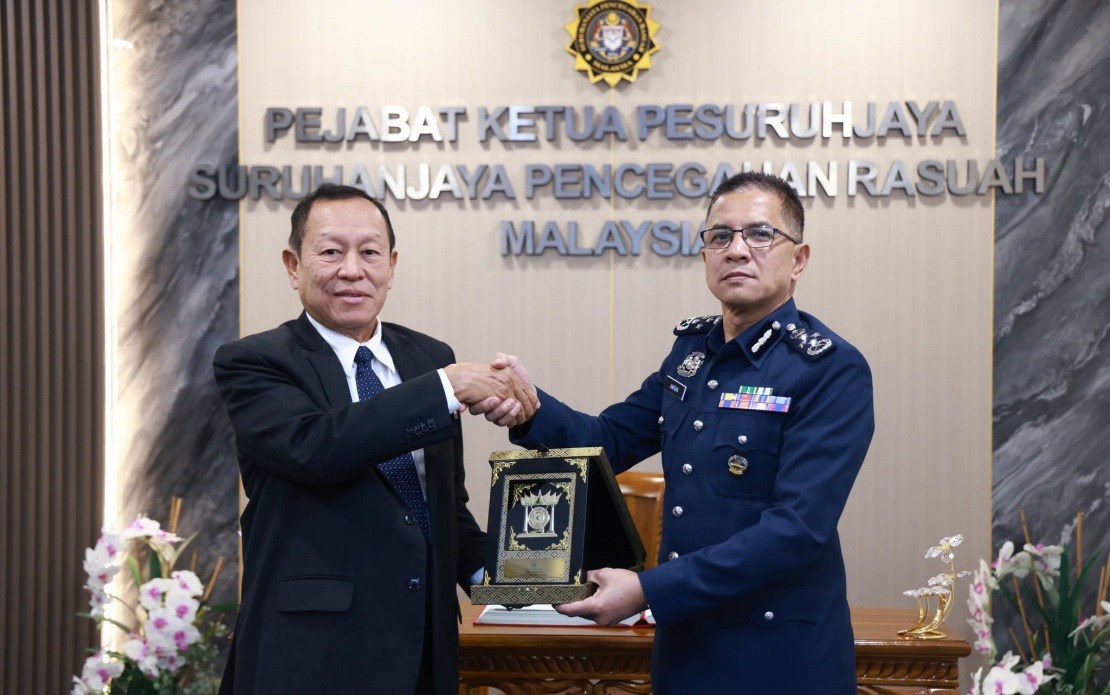
Malaysia's two leading enforcement agencies are joining forces to combat rising smuggling and revenue leakage at the country's critical maritime gateways. The Malaysian Anti-Corruption Commission (MACC) and the Royal Malaysian Customs Department (JKDM) have proposed establishing a dedicated task force focused on monitoring and tightening enforcement procedures at strategic ports nationwide. The initiative emerged from high-level discussions held in Putrajaya on July 15, signalling a coordinated approach to tackling corruption and contraband that has long plagued Malaysia's customs infrastructure.
MACC Chief Commissioner Datuk Seri Abd Halim Aman described the meeting with JKDM Director-General Datuk Amran Ahmad as a significant moment for inter-agency cooperation. During the hour-long strategic session, officials from both organisations reviewed the specific operational challenges they face when carrying out their separate mandates. The conversation extended beyond general administrative matters to focus on the mechanics of customs inspection at ports, acknowledging that bureaucratic obstacles and procedural gaps have historically hindered the effectiveness of enforcement efforts. By identifying these friction points together, the agencies hope to streamline processes and create clearer pathways for detecting illicit activity.
The JKDM has become increasingly aware of sophisticated techniques employed by criminal syndicates to circumvent tax obligations and import regulations. During the meeting, customs officials detailed various methods used to evade payment and exploit container management systems under their jurisdiction. These schemes have become more elaborate in recent years, suggesting that traditional enforcement approaches may be outpaced by organised criminal networks. The task force is being positioned as a more agile, intelligence-driven mechanism that can adapt to emerging threats more quickly than conventional departmental structures.
One particularly prevalent smuggling tactic involves the deliberate misrepresentation of currency entering Malaysia. Customs authorities have detected multiple cases where individuals declare cash amounts significantly below their actual value, allowing large sums to slip through border controls without proper scrutiny or documentation. This specific modus operandi represents both a revenue loss for the government and a potential vulnerability for money laundering activities. The false declaration of funds raises questions not only about tax compliance but also about the movement of proceeds from illicit sources, making it a concern for financial crime investigators as well as revenue authorities.
Beyond currency manipulation, syndicates have refined their approach to documentation fraud. Falsified information and forged approvals have become commonplace in container shipments, enabling smugglers to misclassify goods, conceal prohibited items, or understate their value. These document-based deceptions exploit the reliance that customs inspectors place on paperwork, particularly when processing large volumes of cargo at busy ports. The JKDM's willingness to share intelligence about these tactics with MACC reflects a recognition that corruption and criminal syndicate activity are interlinked—corrupt officials may facilitate smuggling operations, and smuggling networks may attempt to bribe enforcement personnel.
The proposed task force represents a shift toward preventive and intelligence-based enforcement rather than purely reactive investigations. By pooling expertise from an anti-corruption body with specialised investigators and a customs authority with direct knowledge of port operations, the team can identify patterns, track repeat offenders, and develop targeted interventions. MACC's experience in uncovering corrupt relationships within government agencies complements JKDM's operational knowledge of where vulnerabilities exist in the supply chain and documentation process.
Datuk Amran Ahmad expressed the customs department's openness to MACC's broader mission of promoting integrity within the civil service. Customs personnel, who work at the frontline of Malaysia's border security and revenue collection, are particularly vulnerable to corruption attempts by smugglers and traders seeking to circumvent regulations. By engaging MACC in integrity-building initiatives and anti-corruption awareness programmes, JKDM aims to strengthen the ethical foundation of its workforce and reduce the prospect of internal compromise. This cultural dimension of the partnership acknowledges that enforcement tools are only effective when the personnel operating them remain incorruptible.
The initiative carries significant implications for Malaysia's economic interests. Port-related smuggling and tax evasion represent direct losses to government revenue at a time when fiscal pressures are acute. Beyond the immediate financial impact, uncontrolled smuggling distorts competition in domestic markets, undermining legitimate businesses that comply with tax and regulatory requirements. Consumer safety is also at stake, as smuggled goods often bypass quality and safety inspections. For Malaysia's reputation as a regional trade hub, demonstrating robust enforcement at ports is essential for maintaining the confidence of legitimate traders and international partners.
For Southeast Asian readers, the MACC-JKDM cooperation offers a regional perspective on combating transnational smuggling networks. Contraband flows across maritime boundaries, and syndicates operating in the region often shift routes and tactics based on enforcement patterns in individual countries. A more effective Malaysian port system makes the region less attractive for smuggling operations and potentially diverts illicit activity elsewhere, creating indirect benefits for neighbouring nations. Conversely, weak enforcement in any major regional port can attract organised crime and undermine efforts across the broader maritime domain.
The task force also addresses a longstanding tension between security and facilitation in customs operations. Ports must process enormous volumes of cargo efficiently to support economic activity, yet this efficiency cannot come at the cost of allowing smuggling and revenue loss. The MACC-JKDM partnership seeks to resolve this tension through smarter enforcement—using data analysis, intelligence sharing, and coordinated investigation to identify high-risk consignments while accelerating clearance for legitimate trade. This balance is crucial for Malaysia's competitiveness as a regional logistics centre.
Also present at the July 15 meeting were MACC Investigation Division Senior Director Datuk Mohd Hafaz Nazar and JKDM Integrity Branch Head Azian Umar, indicating that both operational and integrity-focused units within each agency are aligned on the initiative. The involvement of senior leadership from both organisations suggests that the task force will have adequate institutional support and access to resources required for effective implementation. The next phase will involve finalising the task force's mandate, structure, and operational procedures—a process that will likely take several months but is essential for ensuring the new body functions cohesively and delivers tangible results in reducing smuggling and corruption at Malaysia's ports.

