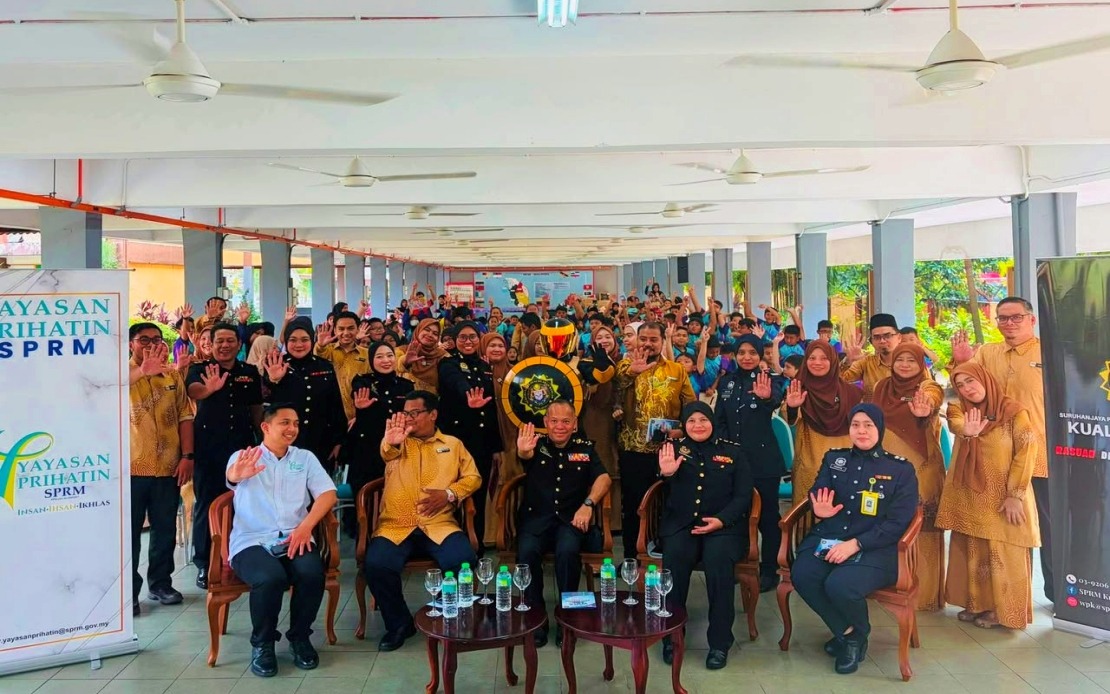
The Kuala Lumpur office of the Malaysian Anti-Corruption Commission has intensified its anti-corruption work at the community level, rolling out the Wira Antirasuah (WAR) programme at Sekolah Kebangsaan Jalan Pasar 1. This initiative reflects a strategic shift towards engaging younger generations on integrity issues, recognising that values instilled during formative years can shape attitudes and behaviour well into adulthood. By targeting primary school pupils, the MACC is attempting to establish anti-corruption principles as a foundational element of civic education rather than treating integrity merely as a compliance concern for working adults.
Modelling its approach on the principle that ethical behaviour begins with small daily choices, MACC Kuala Lumpur director Mohamad Zakkuan Talib stressed that true integrity does not require heroic gestures but rather consistent commitment to doing what is right. His framing moves beyond abstract concepts of morality, instead emphasising practical manifestations of honesty that pupils encounter regularly—avoiding cheating in schoolwork, respecting others' possessions, keeping promises, and maintaining trust. This pedagogical strategy acknowledges that young people learn better through relatable examples and concrete situations rather than lectures on ethical philosophy, making the message more digestible and actionable for the target audience.
The programme's interactive components represent a departure from traditional compliance education, incorporating engagement strategies designed to hold pupils' attention and create memorable learning experiences. The involvement of Kapten MACC, the commission's mascot, demonstrates recognition that primary school children respond more effectively to visual characters and entertaining formats than to formal presentations. Pairing entertainment with education through this mascot allows the MACC to deliver its core message about integrity and resistance to corruption in a manner that feels like engagement rather than instruction, potentially fostering more genuine buy-in from participants.
Beyond the educational core, the MACC's Kuala Lumpur Community Education Branch conducted specialised briefings at the school, creating an opportunity for pupils to ask questions and interact directly with anti-corruption professionals. This direct engagement helps demystify the MACC's work and positions anti-corruption agents not as distant enforcers but as accessible advocates for ethical conduct. For pupils, meeting these professionals in their school environment—a safe and familiar setting—can make anti-corruption principles feel more locally relevant and less purely governmental.
The establishment of an Anti-Corruption Corner at SKJP1 serves as a permanent fixture extending the programme's influence beyond a single event. This dedicated space functions as an ongoing resource for both staff and pupils, providing accessible information about integrity and anti-corruption principles. Such embedded installations within schools help normalise anti-corruption messaging as part of the school's physical environment, potentially creating cumulative exposure that reinforces lessons over time rather than relying on singular awareness events that pupils might forget.
Complementing the educational objectives, the MACC addressed broader pupil welfare through donations and support mechanisms. Yayasan Prihatin SPRM provided a smart television to enhance the school's teaching resources, while 29 pupils from asnaf (low-income) families received school aid. This multi-dimensional approach acknowledges that integrity education is more effective when pupils' basic needs and material circumstances are addressed; children facing significant economic hardship may struggle to internalise messages about honesty if they lack secure foundations. By coupling values education with tangible welfare support, the programme demonstrates commitment to holistic development.
The programme's connection to the Keep Malaysia Clean campaign and National Month celebrations situates anti-corruption work within broader patriotic and environmental concerns. By having the school's special education pupils plant hibiscus as a symbolic gesture, the MACC links integrity with national pride and environmental consciousness. This integrated framing suggests that fighting corruption is not an isolated bureaucratic function but part of a comprehensive national agenda encompassing environmental stewardship, inclusivity, and collective responsibility.
For Malaysian society more broadly, this grassroots initiative addresses a persistent challenge: building a culture of integrity that extends beyond institutional compliance frameworks. Corruption in Southeast Asia often flourishes because it becomes normalised through widespread practice and cultural acceptance, making top-down enforcement insufficient without accompanying shifts in social values. By targeting primary school pupils, the MACC is investing in long-term cultural change, recognising that adults formed in an environment that values integrity are more likely to resist corrupt practices in their professional and public lives.
The inclusion of special education pupils in the planting activity underscores commitment to inclusivity in anti-corruption messaging. Rather than designing programmes for hypothetical average pupils, the MACC's approach accommodates diverse learning needs and abilities. This signals that integrity and anti-corruption principles are universal values applicable to all segments of society, not exclusive concepts for certain populations. Such inclusive programming also models for pupils the importance of ensuring that anti-corruption principles extend equitably across different communities.
From a regional perspective, Malaysia's structured approach to youth-focused anti-corruption education can serve as a model for other Southeast Asian nations grappling with corruption challenges. By combining mascot-driven engagement, interactive activities, permanent educational infrastructure, and welfare integration, the MACC develops a replicable template that other anti-corruption agencies might adapt. The programme's emphasis on starting with school-age children recognises that entrenched corruption in adult institutions becomes easier to maintain when younger generations have never experienced alternative norms, making early intervention a cost-effective long-term strategy.
The success of such programmes ultimately depends on sustained implementation and measurement of outcomes beyond immediate participation metrics. Whether pupils exposed to the Wira Antirasuah programme actually demonstrate increased integrity in their school conduct, carry these values into their teenage years, and maintain them into adulthood requires longitudinal assessment that extends far beyond the initial programme launch. The MACC's challenge now involves ensuring that single school visits translate into systemic change within educational institutions and, more ambitiously, into generation-wide shifts in how Malaysians approach ethical conduct and public responsibility.

