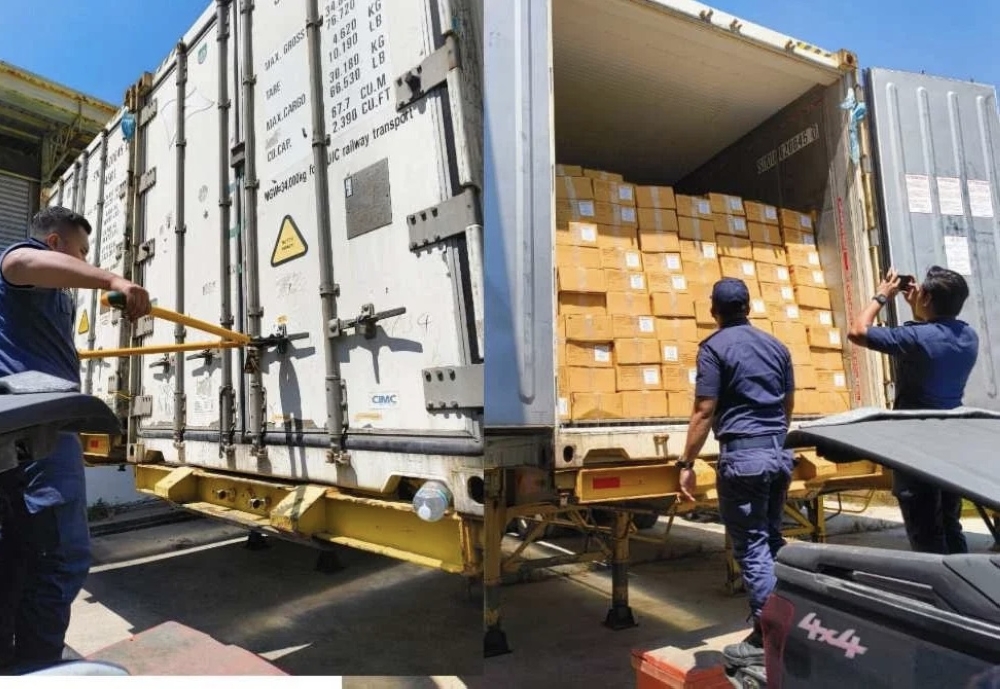
The Malaysian Anti-Corruption Commission (MACC) has successfully dismantled what authorities describe as a sophisticated smuggling ring involved in the illegal importation of frozen chicken from China into Sabah. The operation, dubbed Op Chick, culminated in the arrest of three individuals suspected of orchestrating the contraband scheme, marking another significant enforcement action against illicit food imports flowing through Malaysian ports.
This takedown underscores a persistent vulnerability in Malaysia's food security architecture. Illegal poultry imports represent more than a customs violation—they circumvent health inspections, undercut legitimate domestic producers, and potentially expose consumers to foodstuffs of unknown origin and safety status. The Sabah operation taps into deeper concerns about how smuggled goods penetrate distribution networks, eventually reaching retailers and consumers unaware of their provenance.
Sabah's geographic position as a major transhipment hub makes it particularly susceptible to smuggling operations. Its proximity to the Philippines and its maritime trade routes provide natural conduits for contraband. Port vulnerability has long been a structural challenge for Malaysian enforcement agencies, who must contend with limited resources and the sheer volume of legitimate cargo transiting through Sabah's facilities. The MACC's success in identifying and disrupting this particular ring suggests enhanced coordination between customs authorities and anti-corruption investigators.
The intersection of corruption and food smuggling reveals systemic weaknesses that extend beyond individual criminal actors. Such operations typically require complicity at multiple levels—from port officials and logistics operators to retailers willing to stock illicit goods. The involvement of corruption elements is implicit in any major smuggling venture; bribes must be paid to enable contraband passage through checkpoints and inspection stations. MACC's involvement reflects recognition that combating these networks demands investigation into financial flows and collusive arrangements, not merely seizure of goods.
China has long been identified as a significant source of frozen poultry entering Malaysia through both legal and illegal channels. The cost advantages of Chinese production mean smuggled chicken can severely undercut locally produced alternatives, creating powerful commercial incentives for importers willing to bypass regulatory frameworks. This dynamic threatens the viability of domestic poultry farms, particularly smaller operations unable to compete with artificially cheap contraband supplies.
The broader implications for Malaysia's agricultural sector warrant attention. The national poultry industry, which supplies domestic demand and generates rural employment, faces constant pressure from unregulated imports. Illegal chicken shipments deprive the government of import duties and quarantine fees while simultaneously allowing unscrupulous traders to capture market share through prices they could never offer while observing legal compliance costs. This creates an uneven commercial battlefield where rule-followers are disadvantaged.
Consumer safety dimensions cannot be overlooked. Frozen poultry lacking documented provenance and health certification poses potential microbiological and chemical hazards. Without traceability through legitimate supply chains, contaminated products become difficult to identify and remove once distributed. Recent regional food safety incidents have demonstrated how compromised imports can propagate through retail networks before detection, affecting thousands of households.
The arrest of three individuals marks a tactical victory, yet success in dismantling a particular syndicate often merely disrupts operations temporarily rather than eliminating underlying demand drivers. Smuggling networks frequently reconstitute under new management or adjust routes and methods to evade enforcement. Sustained progress requires sustained operational pressure coupled with more fundamental corrections to the economic incentives that motivate illegal importing.
From a regional perspective, this operation reflects enforcement capacity that other Southeast Asian nations struggle to match. Coordinated port monitoring and intelligence-led investigations targeting corruption-facilitated smuggling represent evolving best practices. However, the persistence of such rings across the region indicates that solutions implemented in isolation prove insufficient. Cross-border coordination mechanisms and harmonized enforcement standards would strengthen collective ability to disrupt smuggling networks operating across multiple jurisdictions.
Looking forward, the effectiveness of this intervention will depend partly on prosecutorial follow-through and penalty severity. If convictions result in meaningful sentences and asset forfeiture, deterrent effects may extend beyond these three individuals to others evaluating entry into similar illicit ventures. Conversely, lenient outcomes risk signaling that the risk-reward calculus favours participation.
The MACC's operational success also highlights the importance of inter-agency coordination. Breaking smuggling rings requires seamless information-sharing between customs authorities, health regulators, and anti-corruption investigators. Siloed enforcement efforts often fail to uncover the full scope of operations or identify all participating conspirators. Integration of investigative capabilities has demonstrably improved outcomes.
For consumers and legitimate businesses, continued enforcement against illegal poultry imports offers modest reassurance. Yet the periodic announcement of busted smuggling operations should prompt questions about how many similar networks continue operating undetected. Resource constraints likely mean authorities apprehend a fraction of actual smuggling activity. Sustainable improvement demands investment in port infrastructure, inspection capacity, and intelligence capabilities proportionate to the scale of the problem.

