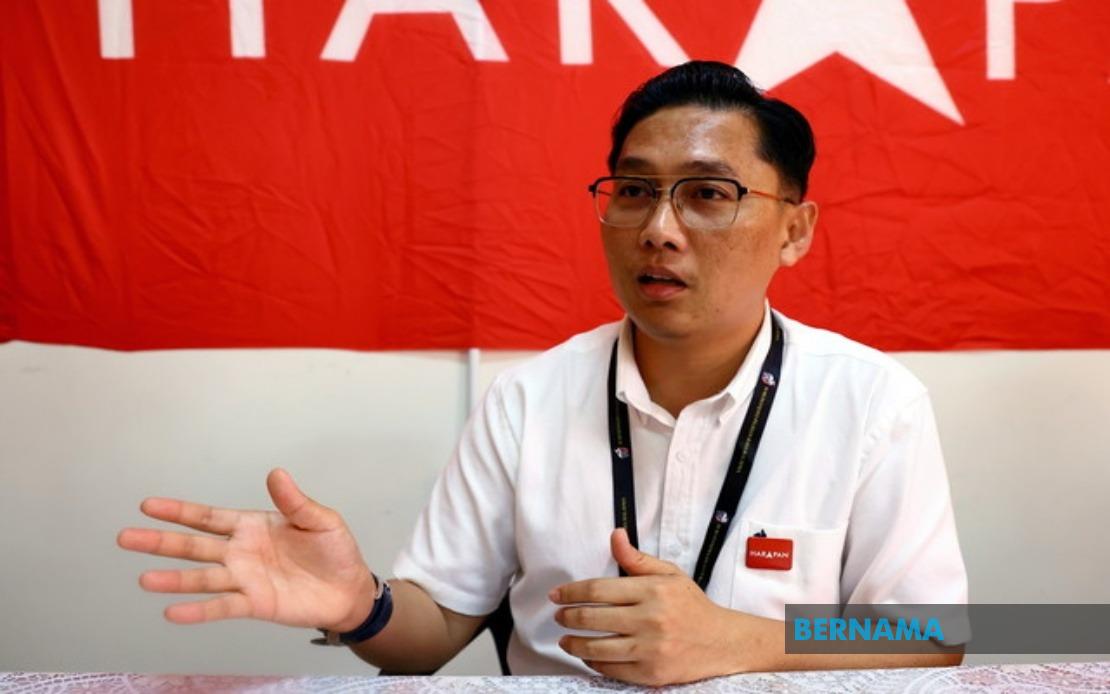
Nur Hafiz Roslan, the Pakatan Harapan candidate for the Machap state seat, enters the upcoming Johor election unintimidated by his opponent's incumbent status and previous electoral dominance. Speaking at the PH operations room in Simpang Renggam, the legal practitioner dismissed concerns that facing Johor Menteri Besar Datuk Onn Hafiz Ghazi—who won the seat with a 6,543-vote majority in 2022—would prove insurmountable, citing his two decades of courtroom experience as grounding for the electoral challenge ahead.
The Machap constituency has long been a reliable Barisan Nasional stronghold, yet Nur Hafiz argues that electoral history offers encouragement to challengers. He pointed to the careers of former Johor chief ministers Tan Sri Abdul Ghani Othman and Datuk Seri Khaled Nordin, both of whom suffered electoral defeats despite their previous dominance, to illustrate that no seat remains impregnable indefinitely. This historical perspective underpins his belief that Machap's BN voting patterns need not determine July's outcome, provided PH presents compelling alternatives to voters.
Central to Nur Hafiz's campaign pitch is a rejection of what he characterises as exhausted political strategies. He has explicitly distanced himself from campaigns rooted in fear-based messaging, personal attacks, or appeals to divisive identity politics centred on race, religion and royalty—the so-called 3R sentiments that have long dominated Malaysian electoral discourse. His framing suggests that such approaches, whatever their historical effectiveness, are increasingly misaligned with voter expectations, particularly among constituencies seeking practical governance.
Instead, Nur Hafiz is positioning PH's Machap effort around substantive policy discourse and concrete solutions to constituents' lived concerns. This rhetorical shift reflects broader strategic calculations within the opposition coalition: that electoral competitiveness increasingly depends on demonstrating competence and offering tangible benefits rather than relying on identity-based or emotive appeals. For a candidate facing a 6,500-plus-vote deficit from 2022, mobilising voters around issue-based politics becomes both necessity and potential advantage, particularly if segments of the electorate feel neglected by incumbent governance.
The candidate expressed confidence in PH's organisational readiness for the contest. He described the party's electoral machinery as cohesive, well-structured, and notably free from the internal fractures that have periodically weakened opposition efforts in other constituencies. This emphasis on institutional discipline and unity suggests PH leadership believes Machap represents a genuine opportunity, rather than a symbolic challenge or merely token resistance to an entrenched BN seat.
Nur Hafiz has also flagged his intention to serve as a facilitating bridge between state and federal government levels, positioning himself as capable of representing Machap residents' interests across political divides. This messaging strategy acknowledges a political reality in Johor: the state government operates under BN control, yet federal authority rests with a coalition government of different composition. A PH state assemblyperson would navigate this institutional complexity, and Nur Hafiz's framing suggests he would prioritise constituent service over partisan friction in that role.
The straight contest in Machap—a two-way race between Nur Hafiz and the incumbent—removes the complication of three-cornered fights that have scattered opposition votes in other constituencies. This binary structure theoretically improves PH's chances of consolidating anti-BN sentiment, though Datuk Onn Hafiz's incumbency and ministerial position grant significant organisational and resource advantages. The July 11 polling date, with early voting set for July 7, provides a compressed campaign window in which both candidates must crystallise voter sentiment.
Machap's political economy differs notably from urban-centred Malaysian constituencies where swing-voter demographics and issue-responsiveness often prove decisive. As a seat within greater Johor's predominantly Malay-Muslim electorate, religious and communal considerations invariably factor into voter calculations, notwithstanding Nur Hafiz's stated commitment to transcending such frameworks. Managing this tension—between his aspirational messaging around mature, technocratic politics and the communal realities shaping voter preferences in his constituency—will test both his campaign strategy and his broader political philosophy.
PH's willingness to contest Machap seriously, rather than ceding it to BN without contest, reflects the coalition's post-2022 recalibration toward competitive multi-front electoral strategies. Whether Nur Hafiz's legal credentials and policy-focused messaging prove sufficient to dent BN's traditional dominance in Johor's state assembly will emerge from July's voting. His campaign nonetheless signals a broader Malaysian opposition effort to reframe electoral competition around governance competence and issue-responsiveness, a shift that could reshape voter expectations and campaign norms across the country's competitive constituencies.

