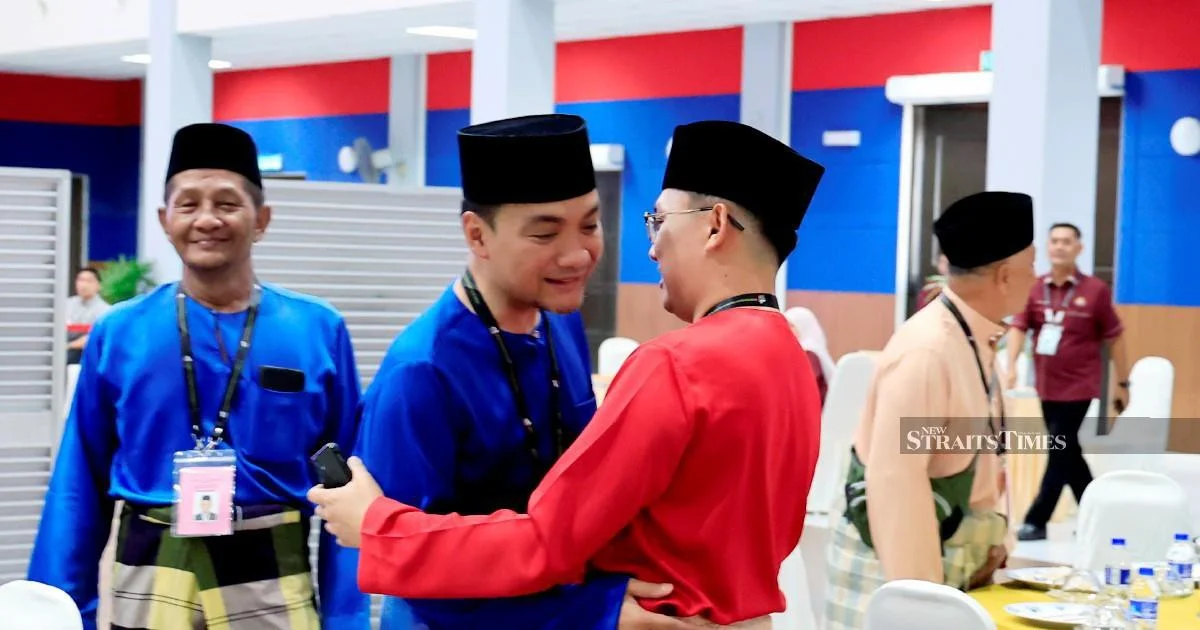
The Machap state constituency in Johor has been confirmed for a straight fight between Datuk Onn Hafiz Ghazi, the caretaker Menteri Besar, and his opponent Nur Hafiz. This two-way contest eliminates the complexity of a multi-candidate race and narrows the battleground to a direct clash between the ruling coalition's representative and the opposition candidate. The confirmation came as electoral machinery across Johor continues to take shape ahead of the state election.
For Onn Hafiz, the Machap seat represents a crucial political test. As caretaker Menteri Besar, he carries the weight of Barisan Nasional's leadership in the state and will need to leverage his administrative position to consolidate support among local voters. His political standing depends significantly on retaining this seat, which serves as a barometer for broader sentiments toward his administration and the wider coalition. The absence of a third candidate simplifies the narrative but intensifies the direct comparison between his governance record and the opposition's alternative vision.
The straight contest format offers distinct strategic advantages and challenges for both camps. In a two-way race, both candidates must compete directly for every swing voter, leaving little room for vote-splitting scenarios that might have benefited either side in a crowded field. This dynamic requires both camps to sharpen their messaging and ground operations to appeal to the broadest possible spectrum of Machap voters.
Nur Hafiz enters the contest as the opposition standard-bearer, positioning himself as an alternative to the incumbent administration. The opposition's candidate selection reflects their confidence in challenging Barisan Nasional in this particular seat. His campaign will likely focus on presenting a contrasting vision for local development and governance, while attempting to capitalize on any voter dissatisfaction with the current administration's performance in Machap.
The Machap constituency carries significance beyond its individual representation. As one of Johor's state seats, it forms part of the broader electoral puzzle that will determine the composition of the state assembly and, consequently, who leads the government. The outcome here will contribute to understanding voter sentiment across different regions of the state and whether the ruling coalition maintains its dominance or faces erosion of support.
From a Malaysian electoral perspective, Johor contests have historically attracted national attention due to the state's political weight and economic importance. The Machap race, while local in nature, reflects broader national political trends and coalition dynamics. How voters in this constituency respond to contemporary political messaging will offer insights into the effectiveness of both Barisan Nasional and opposition strategies as they prepare for future electoral contests.
The confirmation of a straight fight also indicates that both major political formations have invested their resources strategically. The absence of third-party candidates suggests that smaller parties either lack competitive presence in this seat or have chosen to concentrate efforts elsewhere. This consolidation around two main candidates reflects the maturation of Johor's electoral landscape, where competition increasingly revolves around the two major coalitions.
For Malaysian observers watching Johor's political evolution, Machap represents a microcosm of contemporary state politics. The constituency's demographic composition, economic conditions, and voter preferences will determine whether traditional coalition support holds or whether the opposition has gained ground. The straight contest format ensures that the winner will have a clear mandate without ambiguity from vote-splitting patterns.
The election mechanics surrounding Machap highlight how Malaysia's electoral system functions at the state level. With a direct two-candidate contest, voters face a binary choice between competing visions and leadership styles. This clarity can either strengthen democratic accountability or, conversely, oversimplify complex policy differences into personality-driven competitions, depending on how both camps choose to conduct their campaigns.
Looking ahead, the Machap contest will serve as an important data point for political analysts assessing coalition strength in Johor. Whether Onn Hafiz successfully defends the seat or loses ground to the opposition will carry implications for the broader state electoral landscape and may influence strategies in other constituencies. The straight fight format ensures that whichever candidate prevails can claim a decisive mandate from local voters.

