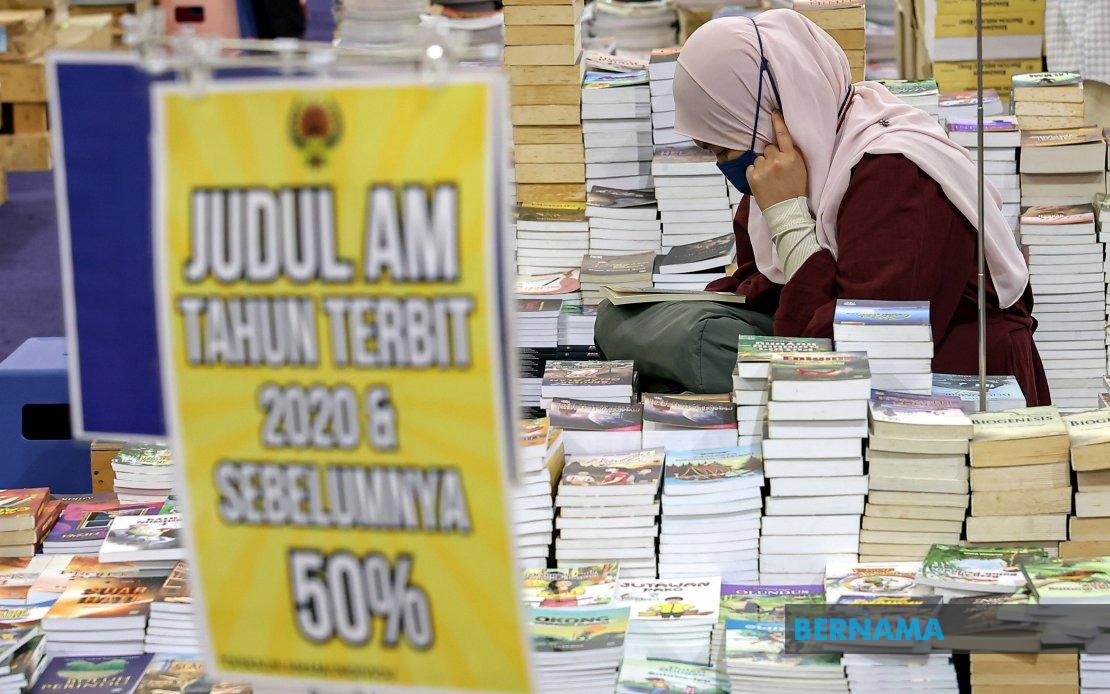
The government's MADANI Book Voucher Programme is set to benefit more than 2.2 million students across Malaysia starting tomorrow, marking a significant expansion of literacy support in the education system. Deputy Education Minister Wong Kah Woh confirmed in parliament that the initiative, underpinned by RM221.6 million in public funding, will see students receive RM100 e-vouchers redeemable through the BookCapital digital platform until October 31. The voucher period commences at 11 am tomorrow, with the entire redemption process conducted online to ensure equitable access regardless of geographical location.
The participant pool encompasses a diverse cross-section of Malaysia's student population, including 2,217,579 learners spanning Remove Class through Form Six, students enrolled at vocational colleges and matriculation institutions, and future educators undergoing training at the Malaysian Institute of Teacher Education. This breadth of coverage underscores the government's commitment to democratising access to reading materials across all secondary and tertiary educational pathways. By including vocational and teaching colleges alongside traditional secondary schools, the programme recognises that literacy and intellectual development extend beyond conventional academic tracks.
The digital delivery mechanism via BookCapital represents a crucial architectural feature of the programme's design. The platform currently partners with 1,238 registered booksellers nationwide, a network that has proven instrumental in reaching remote communities where physical bookshops may be scarce or nonexistent. This infrastructure ensures that students in rural Sabah, Sarawak, and peninsular outback regions enjoy identical purchasing opportunities to their urban counterparts, addressing a persistent educational equity challenge. The previous iteration of the programme achieved a remarkable 100 per cent redemption rate in 2024, suggesting that the digital-first approach has successfully overcome logistical barriers that might otherwise hinder participation among geographically dispersed populations.
A notable departure for the 2026 iteration is the introduction of the MADANI Special Title Focus category, which mandates that each recipient purchase at least one book from a curated selection of literary works, classical texts, and general non-fiction spanning history, philosophy, economics, geopolitics, and human capital development. This guided curation reflects a deliberate policy shift toward shaping reading habits in directions aligned with national priorities. The emphasis on future-oriented subjects—particularly artificial intelligence, information technology, STEM disciplines, and digitalisation—signals government recognition that Malaysia must cultivate a generation equipped with technological literacy to compete in rapidly evolving global economies. By embedding these priorities within the voucher structure, policymakers hope to influence consumption patterns toward books that prepare students for emerging career landscapes.
Independent evaluation provides empirical support for the programme's effectiveness in serving its intended beneficiaries. Research conducted by the Darul Ehsan Institute found that 97.5 per cent of surveyed recipients agreed the voucher scheme substantially assisted their educational pursuits, with particular benefits accruing to students from lower-income households. Furthermore, 92.2 per cent of respondents reported that the vouchers enhanced their examination preparation capabilities. These findings suggest that book access functions as a meaningful academic support mechanism, particularly for economically disadvantaged learners who might otherwise struggle to afford supplementary reading materials. The data validates the government's investment thesis that targeted subsidisation of educational resources yields measurable returns in student outcomes.
Transparency and fiscal integrity have emerged as defining characteristics of the programme's operation. Wong emphasised that the scheme has achieved not only universal redemption but also complete transparency and zero leakages, meaning no funds have been diverted through corruption, misallocation, or fraudulent claims. In a Southeast Asian context where public spending integrity frequently invites scrutiny, this achievement merits particular recognition. The completely digital architecture eliminates opportunities for cash-based kickbacks or under-the-counter dealings that might plague paper-based voucher systems. Every transaction leaves an electronic trail, enabling authorities to detect anomalies and hold bad actors accountable.
The programme's emphasis on universal access carries profound implications for Malaysia's long-term human capital development. By ensuring that all secondary and tertiary students—regardless of family income or residence—gain equal exposure to books on science, technology, and critical thinking, the government creates conditions for merit-based rather than wealth-based educational stratification. A student in a rural kampung reading about artificial intelligence and geopolitics possesses intellectual resources comparable to affluent peers in Kuala Lumpur, theoretically enabling competition based on aptitude rather than parental purchasing power. This democratisation of intellectual capital represents a form of social mobility engineering, though its ultimate effects depend on what students do with these opportunities.
The programme also addresses a secondary but significant objective: cultivating reading cultures among young Malaysians. Survey evidence suggests that many students, once given vouchers, gravitate toward academic support materials and exam-focused texts. However, the mandate to purchase books from the MADANI Special Title Focus category introduces exposure to broader intellectual traditions encompassing philosophy, history, and geopolitics—subjects that might not feature prominently in commercial bookstore displays driven by bestseller economics. This gentle nudge toward classical and development-focused literature may broaden intellectual horizons among students whose prior reading has been narrowly focused.
The scaling of the programme to 2.2 million students represents a substantial commitment of public resources, consuming RM221.6 million in the current fiscal year. For perspective, this translates to RM100 per student annually, a meaningful but not transformative amount in absolute terms. However, the aggregate effect across millions of learners creates substantial demand stimulation within Malaysia's book publishing and retail sectors. Publishers may respond by increasing local print runs, potentially reducing per-unit costs and making books more affordable for non-voucher consumers. Independent bookstores, particularly outside major urban centres, gain guaranteed customers through the BookCapital platform partnership. These indirect economic effects extend the programme's impact beyond individual student literacy into the broader cultural and commercial ecosystems surrounding publishing.
The parliamentary discussion surrounding the programme also illuminated areas for future refinement. Questions from opposition lawmakers regarding post-implementation assessments and improvements suggest that ongoing feedback mechanisms remain active. The government's willingness to conduct impact studies and adjust course demonstrates responsiveness to evidence, though the speed of programme iteration—moving from 2024 implementation to 2026 expansion—indicates either strong political commitment or genuine recognition of demonstrated success. As the 2026 redemption period unfolds over the coming months, ministry officials will likely monitor take-up patterns, identify popular titles and categories, and document any logistical challenges that emerge at scale.
For Malaysian families, particularly those of modest means, the voucher programme represents tangible government investment in their children's educational prospects. While books alone cannot eliminate achievement gaps rooted in resource inequality, they constitute essential infrastructure for learning. A student granted RM100 to purchase books on artificial intelligence or philosophy experiences expanded intellectual possibility relative to peers without such resources. Aggregated across 2.2 million recipients, this expanded access reshapes the distribution of educational opportunity within the population. Whether this reshaping translates into measurable improvements in examination performance, tertiary enrolment, or career outcomes remains a question for future longitudinal research, but the foundational investment in literacy access represents a sound public expenditure aligned with human capital objectives essential for middle-income Malaysia's continued development.

