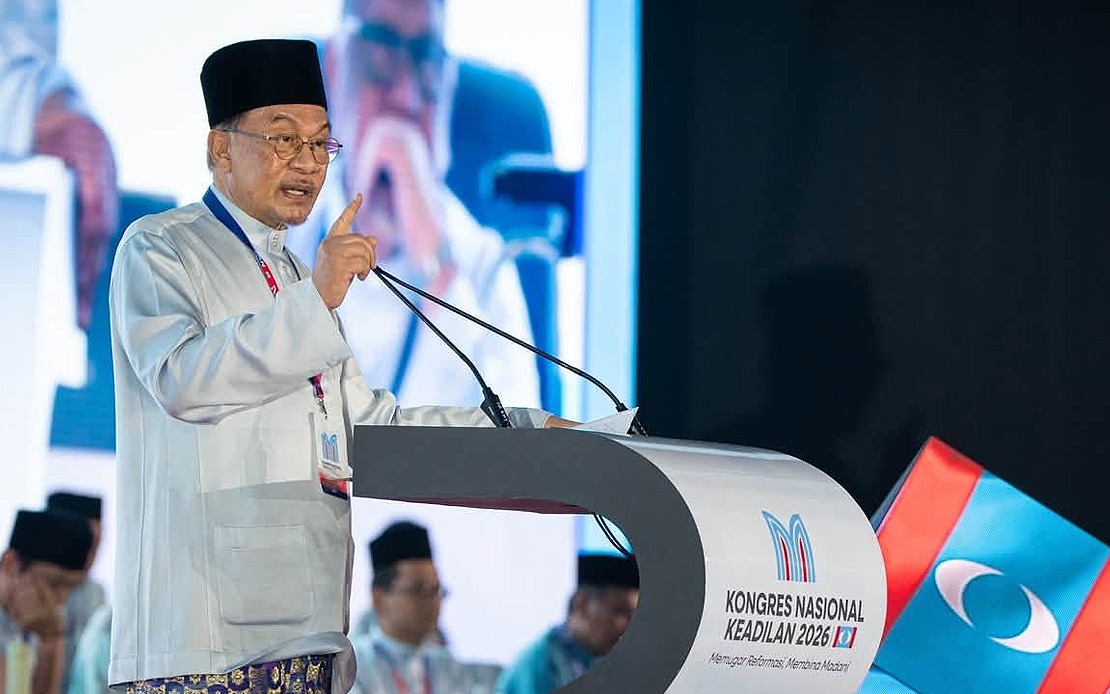
The success of Malaysia's reform agenda ultimately depends on whether ordinary Malaysians can see and experience genuine improvements in their daily lives, according to Tengku Datuk Seri Zafrul Tengku Abdul Aziz, the Prime Minister's Senior Political Advisor. Speaking during the ongoing PKR National Congress in Melaka, Tengku Zafrul emphasised that while the MADANI Government has rolled out numerous initiatives, considerably more work remains to ensure these programmes reach and benefit all segments of society.
The 2026 PKR National Congress, themed "Reviving Reform, Building MADANI", is unfolding this week at the Melaka International Trade Centre in Ayer Keroh. The two-day gathering has become a platform for evaluating the coalition government's performance and charting its future direction. Tengku Zafrul noted that debate sessions during the congress have largely reflected the substantive message articulated by PKR President Datuk Seri Anwar Ibrahim in his policy address, suggesting a degree of alignment within the party on government direction.
Malaysia's economic expansion at six percent represents a significant achievement, surpassing independent forecasts and contradicting earlier scepticism about the economy's trajectory under the current administration. However, Tengku Zafrul stressed that headline growth figures alone are insufficient without corresponding improvements in citizens' purchasing power and living standards. The disconnect between macroeconomic performance and household welfare remains a critical challenge across developing economies, particularly when cost-of-living pressures persist alongside expansion.
A persistent weakness identified by the advisor concerns the government's communication infrastructure. Despite implementing numerous policy measures and economic initiatives, the MADANI Government has struggled to ensure public awareness of its achievements. Tengku Zafrul was unusually candid in acknowledging this failing, stating that responsibility for public ignorance lies with government communicators rather than citizens themselves. This transparency about administrative shortcomings differs markedly from standard political messaging and suggests internal recognition that perception management requires fundamental improvement.
Among the significant policy achievements highlighted by Anwar Ibrahim during the congress were the abolition of the Universities and University Colleges Act, commonly known as AUKU, which had restricted campus political activity for decades. This represented a landmark reversal of post-1975 restrictions on student activism and reflected broader commitments to liberalisation. Simultaneously, the government has prioritised rehabilitation of struggling state institutions, notably the Federal Land Development Authority, which has faced sustained economic and governance challenges over recent years.
Upcoming budget allocations will further test the government's commitment to translating reform rhetoric into concrete economic benefit. Several initiatives announced during parliamentary budgeting discussions are designed to address cost-of-living concerns, labour market vulnerabilities, and entrepreneurial development. For Malaysian households already grappling with elevated living expenses, the credibility of these schemes depends upon swift, effective implementation rather than announcements alone.
Tengku Zafrul's remarks reflect broader tensions within coalition politics between ambitious reform agendas and the grinding machinery of bureaucratic delivery. PKR, as the largest party within the coalition and driver of the reform narrative, faces particular pressure to demonstrate that its ideological commitments translate into measurable outcomes. Party solidarity and improved internal coordination, he suggested, are prerequisites for delivering on these promises and maintaining electoral viability.
The government's capacity to strengthen its party machinery and listening mechanisms will determine whether reform becomes embedded institutional practice or fades into rhetorical flourish. Malaysian voters have historically punished administrations perceived as disconnected from grassroots concerns, and the coalition cannot assume continued electoral favour absent demonstrated delivery. The emphasis on listening better signals awareness that the MADANI Government's legitimacy rests upon responsiveness to citizen feedback rather than ideological positioning alone.
For Southeast Asian observers, Malaysia's experience underscores recurring challenges facing reform-oriented governments: the difficulty of converting policy change into lived experience, the critical importance of institutional capacity, and the necessity of bridging communicative gaps between government and governed. As regional economies navigate post-pandemic adjustments and cost-of-living pressures, the Malaysian government's success in translating six-percent growth into household welfare improvements will carry lessons for neighbouring nations pursuing similar reform trajectories.
The acknowledgment that much work remains, despite two years of MADANI governance, suggests realistic assessment of reform timescales. Institutional change, particularly at entities like FELDA, typically requires sustained effort extending across electoral cycles. However, pressure for visible gains will intensify as Malaysia approaches the next electoral cycle, making the acceleration of programme delivery increasingly urgent. The coming months will test whether improvements in communication and coordination mechanisms can narrow the gap between government action and public perception.

