Malaysia's MADANI Government remains steadfast in its commitment to the Ziarah Kasih programme, an initiative designed to deliver tangible assistance directly to citizens facing financial and health hardships. The political secretary to the Communications Minister, Abdullah Izhar Mohamed Yusof, underscored this resolve during a community engagement event in Mersing last week, emphasising that the government views sustained support for disadvantaged groups as integral to its foundational governance philosophy.
Ziarah Kasih operates through a systematic identification process involving the Department of Information and Komuniti MADANI, ensuring that assistance reaches those genuinely struggling with adversity. Rather than adopting a one-off charity model, the government has positioned the initiative as a recurring intervention programme embedded within its regular operations. This approach reflects an understanding that vulnerability requires sustained, not sporadic, attention. The distribution of resources extends beyond monetary aid to encompass healthcare equipment and other practical support tailored to individual circumstances, addressing immediate needs that often receive insufficient attention in broader social safety nets.
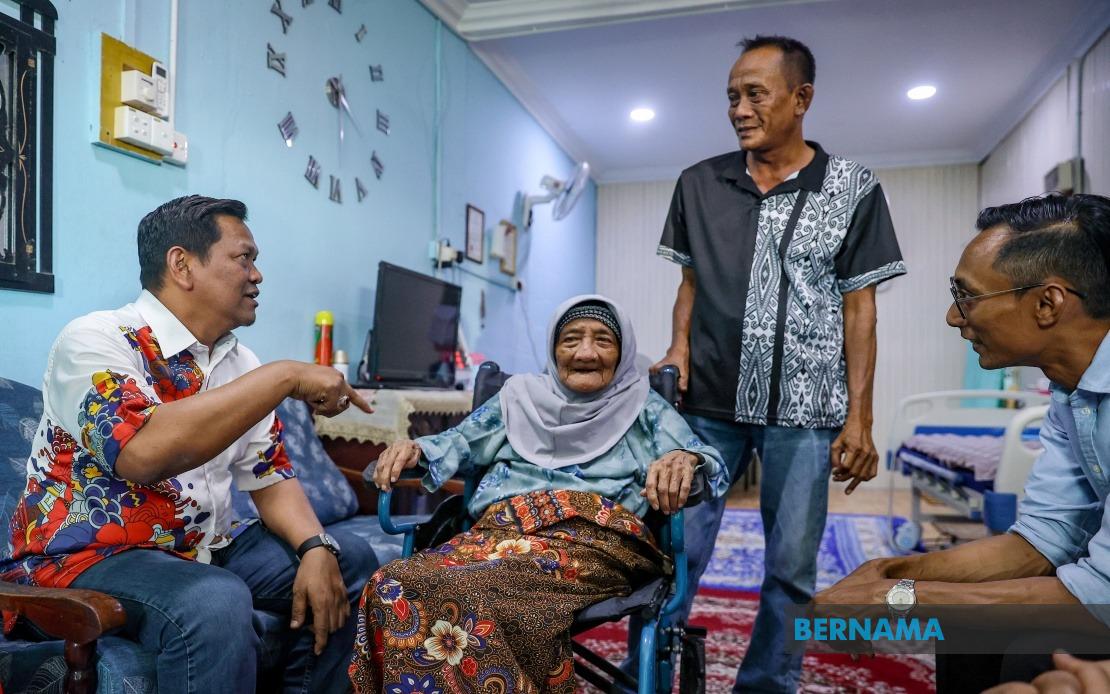
The programme exemplifies how Malaysia MADANI translates its people-centric aspiration into concrete action. Unlike purely rhetorical governance frameworks, Ziarah Kasih demonstrates an administrative mechanism through which federal intentions reach household level. During the Jiwa@Komuniti MADANI Sembang Santai World Cup Edition event in Endau, Abdullah Izhar personally visited residents receiving support, a gesture reflecting both genuine engagement and an effort to understand lived experiences of hardship that statistics alone cannot capture.
Among recent beneficiaries was 71-year-old Hamdan Abd Latif, whose life trajectory illustrates the often-arbitrary nature of misfortune. Once a productive member of society, Hamdan's circumstances transformed dramatically when an accident occurred just weeks before his anticipated retirement in 2011. What began as a fishing mishap revealed an underlying brain tumour, necessitating surgery. Though initially successful, the tumour's aftermath triggered progressive health deterioration culminating in a stroke sustained during a domestic accident. His wife, Meriam Abd Wahab, aged 66, abandoned her own income-generating sewing activities to provide full-time care, a sacrifice that underscores how individual health crises cascade into household economic collapse for working-class Malaysians without substantial savings or insurance protection.
The Hamdan family's situation resonates across Malaysia's lower-income demographics, where medical emergencies frequently precipitate financial catastrophe. The assistance provided through Ziarah Kasih offers modest but meaningful relief to families where caregiving responsibilities prevent employment and medical costs accumulate relentlessly. For Meriam, the government's contribution materially reduces pressure on an already stretched household, enabling her to sustain her husband's care without resorting to debt or compromising basic needs.
Another programme recipient, 91-year-old Zainon Ibrahim, represents an increasing demographic phenomenon in Malaysia's ageing society. Her son, Jamaluddin Ismail, made the difficult decision to resign from employment approximately two years ago to become his mother's primary caregiver. Such decisions, while driven by filial duty and love, carry severe economic consequences for households already limited in earning capacity. Jamaluddin's siblings provide support, yet the arrangement places substantial burden on a family unit without substantial resources. The government assistance helps bridge gaps that informal family arrangements cannot fully address, particularly as Zainon approaches her tenth decade of life with presumably increasing medical and personal care needs.
These individual narratives illuminate broader structural vulnerabilities within Malaysia's social fabric. The nation has achieved considerable economic development, yet pockets of precarity persist where illness, disability, or advanced age quickly exhaust household reserves. For families without professional income, health insurance, or substantial asset accumulation, dependence on government assistance becomes not merely desirable but essential for survival. Ziarah Kasih acknowledges this reality rather than pretending Malaysia's prosperity has uniformly translated into security for all citizens.
The initiative's emphasis on regular implementation signals an important philosophical shift. Rather than treating poverty assistance as emergency response to acute crises, the government frames it as ongoing welfare provision requiring institutional commitment and budgetary allocation. This permanence distinguishes Ziarah Kasih from ad-hoc relief efforts launched during election cycles or natural disasters. Institutionalised support suggests acknowledgement that vulnerability is not temporary aberration but structural feature requiring consistent attention.
For Malaysian policymakers, the Ziarah Kasih model offers valuable lessons about translating governance aspirations into practising reality. While Malaysia MADANI rhetoric emphasises people-centricity and shared prosperity, effective translation requires mechanisms like Ziarah Kasih that create direct contact between government representatives and vulnerable citizens. Such engagement serves multiple functions: it delivers material assistance, gathers grassroots intelligence about hardship patterns, and builds political legitimacy through demonstrated responsiveness.
Regionally, Malaysia's experience with targeted assistance programmes like Ziarah Kasih may inform neighbouring countries grappling with similar questions about social safety net design. As Southeast Asian economies diversify and mature, ensuring that prosperity benefits reach all demographic segments remains a governance challenge. The MADANI Government's commitment to regular, direct assistance suggests recognition that market mechanisms alone insufficient protect vulnerable populations from healthcare emergencies, caregiving obligations, and age-related vulnerability.
Looking forward, sustained commitment to Ziarah Kasih requires consistent budgetary allocation, effective identification systems, and regular programme evaluation. The initiative's success depends on government's ability to maintain focus on vulnerable populations even as political attention shifts toward competing priorities. For recipients like Hamdan and Zainon, however, such sustained commitment makes tangible difference in daily quality of life, transforming abstract governance aspirations into concrete assistance that eases material hardship.