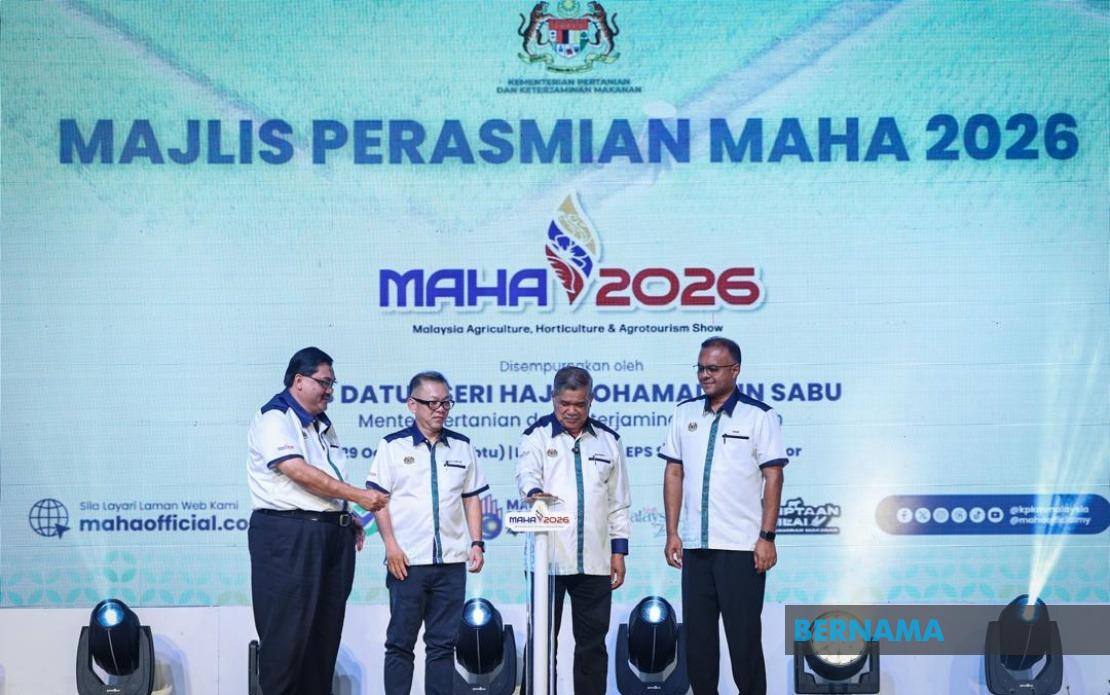
Malaysia's agricultural sector is entering a transformative phase as the Malaysia Agriculture, Horticulture and Agrotourism Show (MAHA) 2026 opens its doors at the Malaysia Agro Exposition Park Serdang (MAEPS) this week. Agriculture and Food Security Minister Datuk Seri Mohamad Sabu has signalled that this edition represents a watershed moment, one where the industry must fundamentally shift towards environmentally sustainable practices that address contemporary challenges ranging from climate change to dwindling natural resources.
The timing of Mohamad's emphasis on sustainability carries particular weight for Southeast Asia, where agricultural sectors across the region grapple with mounting pressure to reconcile productivity with environmental stewardship. Malaysia, as a major agrifood producer and exporter, faces the dual imperative of maintaining its competitive edge while meeting increasingly stringent international standards on carbon emissions and ecological impact. By championing sustainable practices at MAHA 2026, the ministry is signalling to the global market that Malaysian produce meets evolving consumer expectations around environmental responsibility—a positioning that could unlock premium market segments both domestically and internationally.
The minister outlined a comprehensive vision for sustainability that extends across multiple operational dimensions. Efficient energy consumption, streamlined waste management protocols, and the phased elimination of single-use plastics represent the practical foundation of this shift. Beyond these baseline measures, the showcase will highlight regenerative agriculture techniques and recycling initiatives, demonstrating to farmers and agribusinesses that environmental compliance need not sacrifice profitability. This framing is crucial: by presenting sustainability as a catalyst for market access and premium pricing rather than merely a regulatory burden, the ministry addresses a persistent hesitation among smaller producers who view green practices as cost impediments.
Underlying the sustainability narrative is a broader strategic pivot towards national food self-sufficiency, a principle rooted in Malaysia's historical Green Book Policy introduced in 1974 by the late Tun Abdul Razak. Mohamad's invocation of this legacy is deliberate, seeking to revive what he characterizes as a neglected imperative in an era when global food price volatility and supply chain disruptions have demonstrated the vulnerabilities of import-dependent food systems. For Malaysian households already contending with elevated living costs, domestic production expansion offers potential relief through stable, locally-sourced food supplies that are insulated from international price shocks.
The government's modernization agenda for fisheries and livestock sectors provides the operational backbone for this self-sufficiency drive. Investment in updated fishing vessel technology, enhanced farm infrastructure, and the cultivation of high-value aquaculture industries signal a recognition that sustainability and productivity are mutually reinforcing objectives. The adoption of technology in animal feed production and fortified biosecurity measures against disease outbreaks represent concrete steps towards resilience. Such interventions are particularly significant for Malaysia, where aquaculture exports contribute substantially to national revenue and where disease outbreaks can trigger cascading losses across supply chains affecting neighbouring countries.
MAHA 2026 extends beyond domestic agricultural renewal to position Malaysia as a regional and global agricultural hub. The participation of delegations from fourteen countries underscores the international dimension of the showcase. More ambitiously, Mohamad has indicated that multiple cooperation agreements between nations are expected to be finalized during the event, suggesting that MAHA functions as a platform for bilateral and multilateral negotiations on agricultural trade and technology transfer. This geographical reach is significant for Southeast Asian readers: partnerships forged at MAHA invariably influence regional agricultural standards, market access protocols, and technology dissemination patterns that ripple across the region's interconnected food systems.
Critically, the minister has expressed dissatisfaction with memoranda of understanding (MoUs) that terminate upon signature, a pointed critique of international agricultural cooperation mechanisms that frequently result in modest tangible outcomes. By insisting that international agreements must translate into substantive commercial arrangements—increased export sales, capital injections for agritech startups, and technology partnerships—Mohamad is establishing accountability benchmarks for the current engagement cycle. For Malaysian agribusinesses and emerging agricultural entrepreneurs, this position potentially unlocks pathways to foreign direct investment and market entry opportunities that might otherwise remain theoretical.
The scale of MAHA 2026 underscores its significance within Malaysia's agricultural calendar. Approximately two thousand exhibitors are participating in the exhibition, which runs from August 28 through September 6 at MAEPS. The organizers project attendance exceeding four million visitors, a figure that reflects the deep interconnection between agriculture and Malaysian society. This mass engagement creates a rare opportunity for knowledge transfer between industry practitioners, policymakers, researchers, and consumers, facilitating the dissemination of sustainable practices across heterogeneous agricultural scales and regions. For subsistence farmers in rural Malaysia and sophisticated agribusiness operators alike, the show offers exposure to innovations and peer networks essential for sectoral transformation.
The delegation of senior ministry officials to the opening ceremony—including Deputy Minister Datuk Chan Foong Hin and Secretary-General Datuk Seri Isham Ishak—reflects the political priority attached to MAHA 2026. This high-level representation signals governmental commitment to translating ministerial directives into institutional action, ensuring that sustainability and self-sufficiency messaging permeates ministry operations and downstream implementation by field agents and local authorities. For Malaysian farmers, such visibility indicates that government support structures will align with the sustainability agenda articulated at MAHA, potentially improving access to technical assistance, subsidized green technologies, and certification programs.
The broader context for MAHA 2026 encompasses Malaysia's international commitments on climate action and the domestic imperatives of rising agricultural input costs. By positioning sustainability as both an environmental necessity and an economic opportunity, the ministry is attempting to reconcile potentially competing priorities. The nexus between reduced carbon emissions, enhanced export market access through premium positioning, and domestic food security creates a compelling narrative framework. However, the practical realization of these objectives depends substantially on support mechanisms reaching smallholder farmers, the segment most resistant to technological adoption and most vulnerable to transition costs.
For neighbouring Southeast Asian nations, Malaysia's agricultural sustainability pivot carries implications for regional trade, standards harmonization, and technology adoption trajectories. Countries throughout the region are confronting comparable pressures to enhance productivity while addressing environmental degradation, suggesting that successful Malaysian innovations could establish demonstration effects or provide templates for policy adaptation. Conversely, regional competitive dynamics may intensify as countries vie for premium market positioning based on sustainability credentials, potentially reshaping agricultural trade flows within ASEAN and with major trading partners globally.
The ten-day duration of MAHA 2026 and its positioning as a biennial event establish continuity for agricultural sector engagement and evolution tracking. By anchoring sustainability within Malaysia's premier agricultural showcase, policymakers are institutionalizing environmental considerations within regular industry dialogue cycles. This temporal regularity permits monitoring of sectoral progress towards self-sufficiency targets and sustainability benchmarks, creating accountability mechanisms beyond ministerial rhetoric. For stakeholders ranging from farmer associations to multinational agricultural corporations, MAHA now functions as a regularized checkpoint for alignment with evolving national agricultural priorities and international market expectations.

