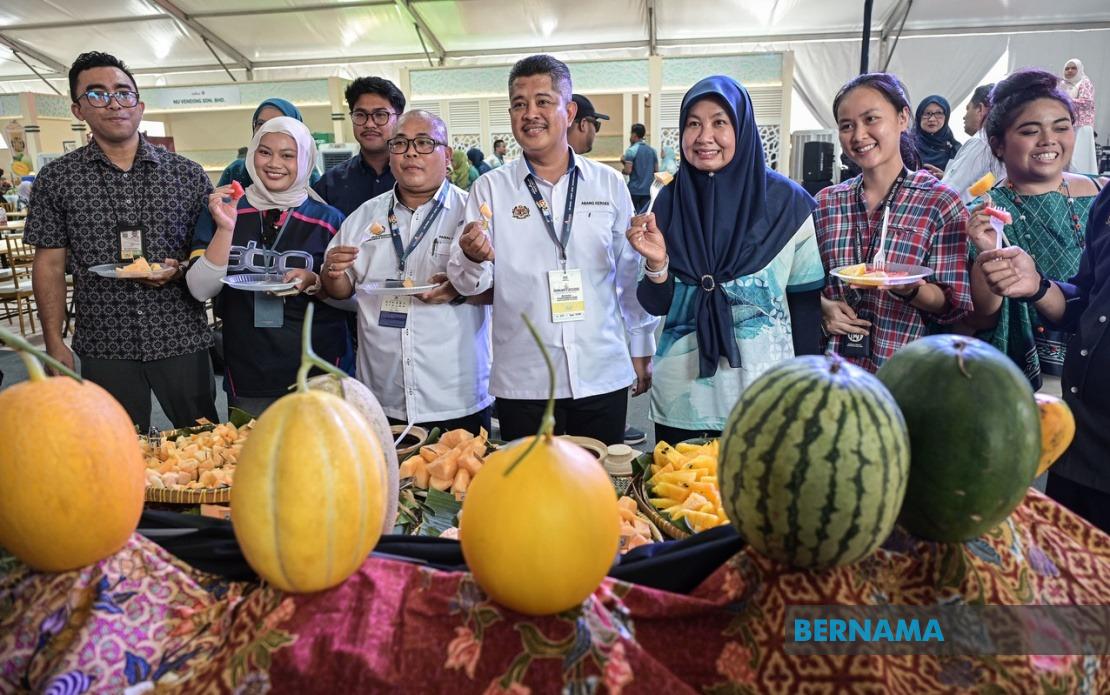
Malaysia's horticultural sector is poised to gain a significant boost with the unveiling of an innovative melon variety set to take centre stage at the Malaysia Agriculture, Horticulture and Agrotourism Exhibition (MAHA) 2026. The new cultivar will be formally presented at the opening ceremony tomorrow, with Agriculture and Food Security Minister Datuk Seri Mohamad Sabu presiding over the launch and announcing its official designation. The melon has been selected as the symbolic fruit for this biennial gathering, positioning it as a flagship representation of agricultural advancement in the country.
The development of this melon represents a substantial collaborative effort spanning three years, undertaken jointly by the Federal Agricultural Marketing Authority (FAMA) and domestic entrepreneurs. This extended research phase underscores the level of rigour applied to developing a product that could meet contemporary market demands whilst supporting the commercial viability of local farming operations. FAMA chairman Abang Ahmad Kerdee Abang Masagus emphasised the significance of having a distinctive fruit icon for MAHA, noting that such symbols are integral to the event's identity and its capacity to energise industry stakeholders and consumer interest.
The new variety demonstrates several distinctive attributes tailored specifically to Malaysian market preferences. Most notably, it achieves a Brix level—a measure of sugar content—of 18, substantially higher than many conventional varieties currently retailing in Malaysian supermarkets and wet markets. This sweetness concentration directly addresses consumer expectations for premium taste quality. Equally important is the texture profile, which offers a crunchier bite compared to existing commercial options, appealing to those who value organoleptic satisfaction alongside nutritional value.
Portability and household convenience have been central to the product design philosophy. Weighing approximately 1.3 kilogrammes, the melon fits comfortably within ready-to-eat consumption patterns increasingly favoured by Malaysian households, particularly in urban and suburban settings where space constraints and smaller family units are common. The anticipated retail price of around RM15 per unit positions the melon as an accessible premium product rather than a luxury commodity, balancing quality aspirations with affordability expectations. The distinctive netting pattern adorning the skin adds aesthetic appeal whilst potentially serving functional purposes in marketing and consumer recognition.
FAMA director-general Faisal Sulaiman contextualised the development within broader consumer behaviour shifts observed across Southeast Asia. Contemporary Malaysian shoppers, particularly those in metropolitan areas, increasingly gravitate towards portion-controlled produce that minimises waste, aligns with individualised consumption patterns, and supports health-conscious purchasing decisions. The three-year research initiative enabled FAMA and entrepreneurial partners to crystallise these preferences into a tangible product offering. This alignment between supply-side innovation and demand-side reality positions the new melon as more than a novelty; rather, it represents genuine market-responsive agricultural development.
The practicality dimensions cannot be overstated for the regional context. A melon of this size and weight can be easily transported by consumers without requiring vehicular assistance, remains manageable within domestic refrigeration spaces that are often limited compared to Western standards, and maintains freshness longevity suitable for typical household consumption cycles. These attributes collectively address logistical pain points that often deter Malaysian consumers from purchasing whole fruits, particularly among younger demographics accustomed to individually packaged or pre-portioned produce.
The scale of MAHA 2026 itself amplifies the significance of this launch. Throughout the ten-day festival running at Malaysia Agricultural Expo Park Serdang (MAEPS), FAMA plans to present more than 150,000 melon units encompassing nearly 100 local and international varieties. This massive presence transforms MAHA from a showcasing platform into a substantive marketplace, enabling consumers to experience the new variety whilst facilitating direct sales transactions. The exhibition structure—incorporating agrotech displays, state-level pavilions, and farm-direct sales channels—creates multiple touchpoints through which both retailers and consumers can engage with the product and its promotional narrative.
For Malaysian farmers and agricultural entrepreneurs, this initiative carries considerable economic implications. The development of domestically-created varieties reduces dependency on imported cultivars and associated royalty payments, enhancing profit margins across the value chain. By collaborating with local growers in product development, FAMA has ensured that farmers possess both proprietary knowledge and production capacity for the new melon from the outset, positioning them competitively relative to importers. The strategic marketing framework emphasised by FAMA—focused and systematic rather than opportunistic—suggests a commitment to sustained market cultivation beyond the immediate excitement of the launch event.
The horticultural sector's modernisation trajectory reflects broader agricultural policy imperatives across Malaysia and Southeast Asia. As regional economies develop and urbanisation accelerates, traditional farming communities must transition toward value-added production, differentiated products, and market-responsive innovation rather than competing solely on commodity production volumes. This melon variety exemplifies that transition, marrying scientific research capabilities with entrepreneurial acumen and consumer insight. The three-year development timeline, while substantial, demonstrates appropriate investment in agricultural innovation rather than superficial product rebranding.
International variety presence at MAHA 2026 also merits consideration. By showcasing nearly 100 imported melon varieties alongside the new domestic cultivar, FAMA creates competitive benchmarking opportunities visible to consumers and industry participants alike. This transparent comparison framework allows the new variety to establish its market position through direct sensory evaluation rather than marketing assertion alone. Such confidence in product quality sufficient to invite direct comparison suggests genuine competitive advantages rather than protectionist positioning.
The announcement timing—strategically anchored to MAHA's opening ceremony—ensures comprehensive media coverage and consumer awareness from the festival's inception. Agriculture Minister Datuk Seri Mohamad Sabu's personal involvement in the naming ceremony elevates the initiative's political salience, signalling government commitment to agricultural sector development and entrepreneurial support. This ministerial endorsement carries particular weight in Malaysian policy circles, potentially facilitating future research funding and regulatory support for this product category.
Looking forward, this melon launch may establish a template for future Malaysian agricultural innovation initiatives. Successfully commercialising a domestically-developed variety through coordinated public-sector research, private entrepreneurial partnership, and strategic marketing could encourage additional collaborative projects across fruit, vegetable, and specialty crop categories. The emphasis on consumer preference research as the foundation for product development, rather than developing varieties and subsequently seeking markets, represents a refreshing departure from traditional agricultural extension approaches that have sometimes struggled with adoption rates. For Malaysian agriculture to remain competitive within an increasingly integrated Southeast Asian market, such consumer-centric innovation frameworks may prove increasingly essential.

