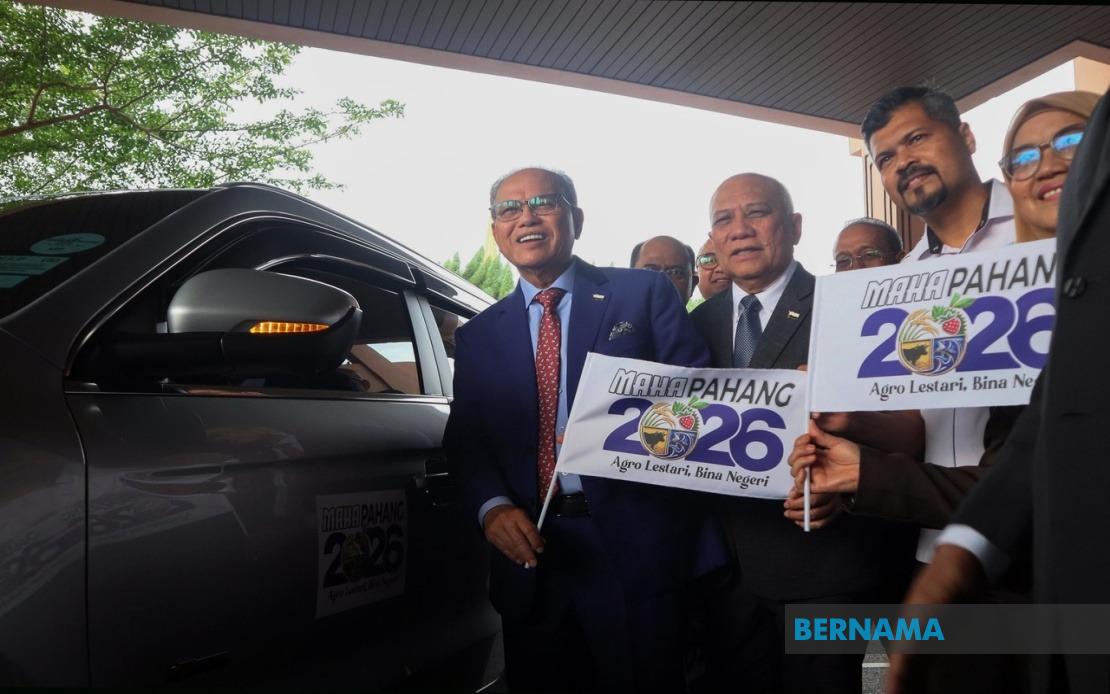
The Pahang state government has announced ambitious targets for the upcoming MAHA Pahang 2026 agricultural showcase, expecting to welcome more than 100,000 visitors and generate RM1.3 million in commercial transactions during the four-day event. Menteri Besar Datuk Seri Wan Rosdy Wan Ismail disclosed the projections during an official flag-off ceremony for the festival, signalling strong confidence in the event's ability to attract both rural and urban crowds interested in agricultural innovation and farming products.
Scheduled to run from July 30 to August 2 at Dataran Raub, the event represents a significant showcase for Pahang's agricultural sector and a platform for entrepreneurial engagement across the state. The four-day duration provides exhibitors and vendors with ample opportunity to connect with customers, demonstrate their products, and establish business relationships. By concentrating the event in Raub, organisers are positioning the gathering as a major regional attraction that extends beyond the immediate locality to draw visitors from neighbouring districts and states seeking exposure to farming innovations and agricultural commerce.
To boost visitor engagement and encourage wider participation, the Pahang state government has crafted an attractive incentives programme featuring substantial prizes. The lucky draw component includes a Wagyu cow and a Perodua Bezza vehicle as headline prizes, complemented by numerous secondary rewards designed to maintain visitor interest throughout the festival duration. Such incentives serve a dual purpose: they motivate attendance and create memorable experiences that enhance the event's reputation for future iterations.
The participation of 100 entrepreneurs across various agricultural sectors demonstrates the breadth of commercial interest in the platform. This volume of business operators provides visitors with diverse product offerings spanning livestock breeding, crop technology, agricultural equipment, and value-added food products. For entrepreneurs operating in rural or semi-rural contexts, MAHA Pahang 2026 offers a concentrated market opportunity to reach hundreds of potential customers over a compact timeframe, reducing the need for continuous individual marketing efforts.
Wan Rosdy's remarks emphasised the educational dimension of the festival, noting that attendees would gain access to valuable information regarding novel crop varieties and contemporary agricultural practices. This knowledge-sharing component distinguishes MAHA from purely commercial trade fairs, positioning it as an institution for agricultural advancement within Pahang. Farmers and agricultural enthusiasts can interact directly with extension officers, researchers, and industry specialists, facilitating technology transfer and best-practice dissemination across the farming community.
The Menteri Besar publicly acknowledged Agriculture and Food Security Minister Datuk Seri Mohamad Sabu's contribution to the festival's development and the efforts of the event's committee leadership. This intergovernmental coordination reflects recognition that agricultural promotion requires collaboration across state and federal policy spheres. By publicly crediting federal ministerial involvement, Wan Rosdy demonstrated alignment with national agricultural objectives and secured continued support from federal agencies responsible for farming subsidies, extension services, and market development programmes.
A convoy comprising 20 vehicles from various government departments and agencies was dispatched from the Bera District and Land Office to commemorate MAHA Pahang 2026's commencement. This procession symbolised institutional mobilisation around the event and served as a visible manifestation of governmental commitment to agricultural sector development. The involvement of multiple departments—likely spanning agriculture, commerce, infrastructure, and local administration—underscores the event's significance as a multifaceted initiative requiring coordinated resource allocation and operational support.
For Malaysian policymakers and agricultural stakeholders, MAHA Pahang 2026 represents a strategic intervention in regional food security and rural economic development. Agricultural festivals function as visible symbols of government priority toward farming communities and demonstrate tangible support for agribusiness entrepreneurs. In a Malaysian context where agricultural productivity faces mounting pressures from climate variability, labour shortages, and market volatility, such showcases provide platforms for disseminating adaptive technologies and connecting producers with supportive ecosystems.
The RM1.3 million sales target, while modest relative to Malaysia's broader agricultural trade volumes, carries symbolic weight within Pahang's rural economy. Achieving this revenue threshold would validate the commercial viability of the event format and potentially justify expansion in subsequent years. For participating entrepreneurs, particularly smaller-scale operators, even modest individual sales across the four-day window can meaningfully impact annual income and provide cash flow crucial for seasonal input purchases and business reinvestment.
Visitor targeting beyond 100,000 participants suggests organisers envision MAHA Pahang as a regional draw capable of attracting traffic from neighbouring states and urban centres. This outward projection indicates confidence in Raub's accessibility and the event's inherent appeal to agricultural constituencies and general consumers interested in farm-to-table product acquisition. For Malaysian consumers increasingly conscious of agricultural origins and farming practices, such events provide transparency and direct engagement with producers.
The festival's timing during the July-August school holiday period may strategically enhance family visitation rates, as domestic travel patterns typically concentrate around these months. This scheduling choice broadens the demographic appeal beyond farmer-to-farmer commercial interactions toward general public participation, amplifying the event's mass-market dimensions and community engagement potential.
Looking forward, MAHA Pahang 2026 exemplifies how state governments can leverage agricultural commodity strengths to generate economic activity, distribute knowledge, and reinforce rural institutional capacity. The event's success metrics—visitor numbers, sales volumes, and stakeholder satisfaction—will likely inform blueprint decisions for subsequent iterations and potentially inspire similar initiatives across Malaysia's other agricultural-dependent states seeking mechanisms to enhance farmer prosperity and sectoral visibility.

