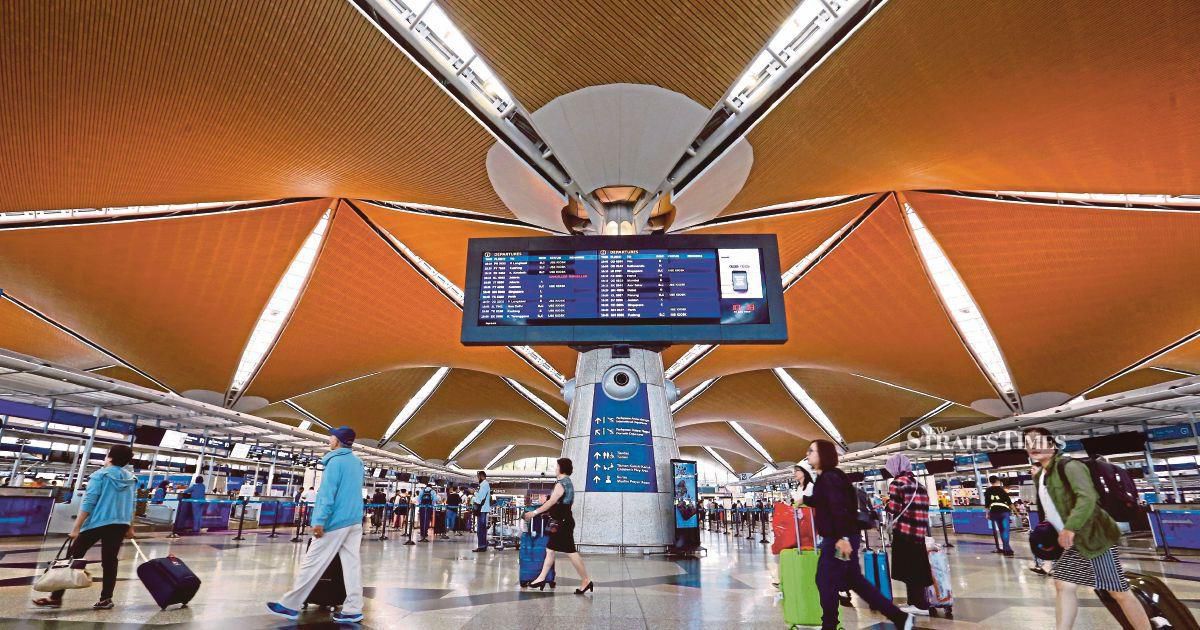
Malaysia Airports Holdings Bhd (MAHB) has confirmed that a technical failure disrupted the baggage handling system serving Terminal 1 at Kuala Lumpur International Airport (KLIA) earlier today, prompting swift remedial action by the airport operator. The company stated that the problem was successfully resolved by 5.30pm, allowing normal operations to resume across the terminal's departure and arrival functions.
Terminal 1, the older of KLIA's two main passenger terminals, handles a significant proportion of the airport's daily traffic and serves as a base for numerous airlines operating both regional and international routes. Any disruption to its baggage infrastructure carries immediate implications for passenger throughput, aircraft turnaround times, and overall operational efficiency across Malaysia's primary international aviation hub. The system failure would have created bottlenecks in the movement of checked luggage, potentially affecting hundreds of passengers on multiple flights.
MAHB's acknowledgement of the issue and timeline for resolution suggests the airport management maintained communication with affected airlines and ground handling partners throughout the disruption. The 5.30pm restoration indicates the problem persisted for a period extending across multiple flight waves, a critical window during which afternoon and early evening departures would typically peak at the airport. Airports in Southeast Asia have increasingly experienced pressure on baggage handling infrastructure due to rising passenger volumes, making system reliability a key operational concern.
The technical nature of the fault was not elaborated upon in MAHB's statement, though baggage system failures at major hubs typically involve either mechanical conveyor breakdowns, scanning technology malfunctions, or control system software issues. Modern airports depend heavily on integrated baggage management systems that automatically sort, route, and track luggage from check-in through to aircraft loading. When such systems fail, manual workarounds become necessary, significantly slowing throughput and creating congestion at the terminal's loading areas.
For Malaysian passengers, such disruptions represent a frustrating but increasingly familiar aspect of modern air travel, where technological complexity creates vulnerability to system failures. Airlines operating from KLIA would have needed to communicate delays to their operations teams and potentially to passengers already at the airport, managing expectations around departure times while baggage clearing processes resumed. The afternoon timeframe of the restoration meant that evening flights—typically the busiest departure period—would have been most significantly affected.
Terminal 1 has undergone various modernisation initiatives in recent years as MAHB works to maintain competitiveness with other Southeast Asian aviation hubs and improve passenger experience. Baggage handling infrastructure represents one of the more challenging technical systems to maintain, requiring coordination between airport operators, multiple airlines, and specialist engineering contractors. The rapid resolution of today's issue suggests MAHB maintains adequate technical support resources, though it also highlights the importance of preventive maintenance and system redundancy in critical airport infrastructure.
From a regional perspective, Malaysia's position as a major aviation hub serving Southeast Asia means that disruptions at KLIA can have cascading effects across the region's airline networks. Connecting passengers transiting through Kuala Lumpur and travelling on to other Southeast Asian destinations would have experienced knock-on delays if baggage handling problems prevented timely aircraft turnarounds. This interconnectedness underscores why operational reliability at major hubs attracts regulatory attention and influences airline route planning decisions.
MAHB's transparency in confirming the incident and providing resolution timing demonstrates a shift toward more open communication with stakeholders compared to historical airport industry practice in the region. Passengers and travel media now expect immediate acknowledgement of such problems rather than speculation or delayed statements. This expectation reflects broader changes in how aviation businesses interact with public audiences through digital channels and news media.
Looking forward, the incident invites questions about whether KLIA Terminal 1's baggage infrastructure requires further investment to ensure sustained reliability as passenger numbers continue rising. The airport has seen steady growth in traffic over recent years, driven by both Malaysia's own tourism development and its function as a connection point for regional travel. Terminal 1 faces particular pressure given its role in serving budget carriers and regional operators who depend on rapid turnarounds to maintain their scheduling efficiency.
For travellers passing through KLIA in coming days, today's incident may prompt conversations about contingency planning and whether the airport's systems possess adequate redundancy to prevent future disruptions from cascading into passenger-facing delays. MAHB will likely conduct internal reviews to identify root causes and implement preventive measures, a standard practice across major international airports following technical failures.

