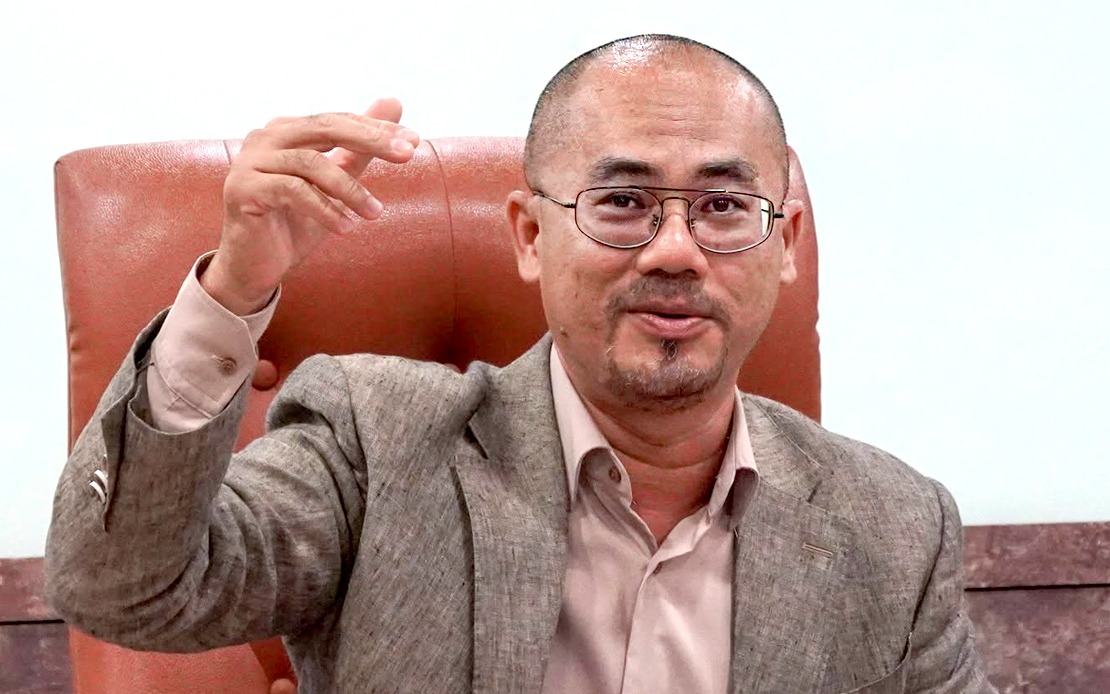
The Perak Islamic Religious and Malay Customs Council (MAIPk) has moved to quash allegations circulating on social media that it forcibly shut down trader operations along Jalan Panglima Bukit Gantang Wahab in Ipoh, clarifying instead that recent notices addressed longstanding infrastructure and financial complications rather than eviction procedures. Syamsul Hazeman Md Salleh, the council's chief executive officer, characterized the social media narrative as inaccurate, emphasizing that no directive was issued requiring traders to abandon their commercial activities at the premises.
The core issue stems from a deteriorating water distribution system and accumulated unpaid bills totalling approximately RM100,000, matters that surfaced only after MAIPk formally assumed ownership of the property in 2024. During a July 14 consultation with affected traders, officials disclosed the necessity of temporarily halting water connection services to enable repair work on the compromised pipeline infrastructure. Syamsul Hazeman explained that the notice issued by MAIPk served primarily to establish institutional clarity regarding the council's position and responsibilities, thereby shielding the organization from potential legal or financial liability arising from misunderstandings about the situation.
A critical distinction that Syamsul Hazeman emphasized concerns the origin of the substantial arrears. The outstanding charges accumulated not from excessive consumption by individual traders, who already remit payment based on their actual water usage patterns, but rather from systemic faults embedded within the main supply pipeline serving the entire location. This distinction proves significant for traders who might otherwise face accusations of contributing to the financial burden. MAIPk's discovery that it had inherited these pre-existing complications underscores the challenges faced by organizations managing properties with undisclosed liabilities and technical deficiencies.
The financial and operational constraints facing MAIPk have proven substantial. The council cannot unilaterally resolve the arrears situation through its conventional revenue streams, namely zakat and waqf allocations, as these religious endowments carry specific usage restrictions that preclude them from settling ordinary utility debts. Consequently, MAIPk has initiated dialogue with the Perak Water Board to devise collaborative solutions addressing both the physical deterioration of the pipeline and the mounting financial obligations. This collaborative approach reflects acknowledgment that the problem transcends institutional boundaries and requires coordinated intervention from water authorities and potentially state government involvement.
Beyond the immediate crisis, Syamsul Hazeman indicated that MAIPk envisions a phased resolution sequence. Once the water bill arrears reach settlement through whatever negotiated arrangement emerges, the council intends to undertake comprehensive repairs to the water infrastructure. Following successful remediation, MAIPk plans to establish modernized rental contracts with traders, presumably incorporating lessons learned from the current arrangement and potentially updated terms reflecting the improved facilities. This sequential approach suggests MAIPk recognizes its obligations to existing commercial tenants while simultaneously positioning itself for more sustainable management moving forward.
The temporal uncertainty surrounding the site's future development introduces additional complexity for traders contemplating their long-term presence. MAIPk has acknowledged plans to construct the Perak Islamic Religious Department Complex at this location, a project currently in preliminary stages and beyond the council's direct authority. State government approval and resource allocation remain prerequisites for development commencement. Syamsul Hazeman provided cautious acknowledgment that traders would ultimately require relocation should construction proceed, framing this as an eventual rather than immediate necessity. This transparency about future displacement, while not providing certainty regarding timelines, at least establishes clear expectations about the provisional nature of current trading arrangements.
The incident illuminates broader challenges facing religious and cultural institutions in Malaysia when managing commercial properties encumbered by infrastructure defects and financial complications. MAIPk's position—attempting to balance institutional interests with stakeholder welfare while grappling with inherited liabilities—represents a scenario increasingly familiar to organizations assuming responsibility for existing facilities. The council's appeal for state government assistance suggests that such problems may exceed the capacity of individual institutions to resolve independently, particularly when infrastructure deterioration predates their ownership and accumulated debts demand negotiated restructuring with utilities providers.
For Ipoh's business community, the situation reflects vulnerabilities inherent in commercial relationships with organizations whose primary mandates diverge from property management. Traders operating on premises owned by religious councils face distinct risks compared to those leasing from conventional property management companies, including the possibility that institutional priorities might shift toward religious or developmental objectives unrelated to commercial sustainability. The engagement process MAIPk conducted in July, while demonstrating willingness to communicate directly with affected businesses, occurred only after tensions surfaced on social media—suggesting that proactive stakeholder communication might have prevented misunderstandings that fueled public controversy.
The water infrastructure problem itself raises questions about regulatory oversight and due diligence processes when religious institutions acquire property. That MAIPk remained unaware of RM100,000 in accumulated arrears and pipeline deterioration until after taking ownership suggests potential gaps in pre-acquisition inspection protocols or municipal communication mechanisms. Such oversights can prove costly for acquiring organizations and disruptive for existing operational tenants. Perak's relevant municipal authorities, water board, and state government may benefit from developing more transparent handover procedures when commercial properties change ownership, particularly those supporting retail or service sector businesses.
Looking ahead, the resolution of this situation will likely establish precedents for how similar scenarios unfold across Malaysian institutional property management. Should MAIPk successfully negotiate debt restructuring with Perak Water Board and restore full service to traders while maintaining transparent communication throughout the process, it could model effective stakeholder management for comparable organizations. Conversely, if delays persist or traders face further disruptions, the incident may reinforce perceptions that religious institution ownership introduces operational uncertainty for commercial lessees, potentially influencing future leasing decisions by Ipoh businesses evaluating property options.
Syamsul Hazeman's public statements represent an institutional effort to reframe the narrative from one of precipitous eviction to one of problem-solving conducted amid inherited complications. Whether this framing proves persuasive to traders and the broader Ipoh community may depend substantially on concrete progress toward arrears resolution and infrastructure repair. The trajectory of this situation offers insights into the intersection of religious governance, property management, and commercial stakeholder relations in contemporary Malaysia.

