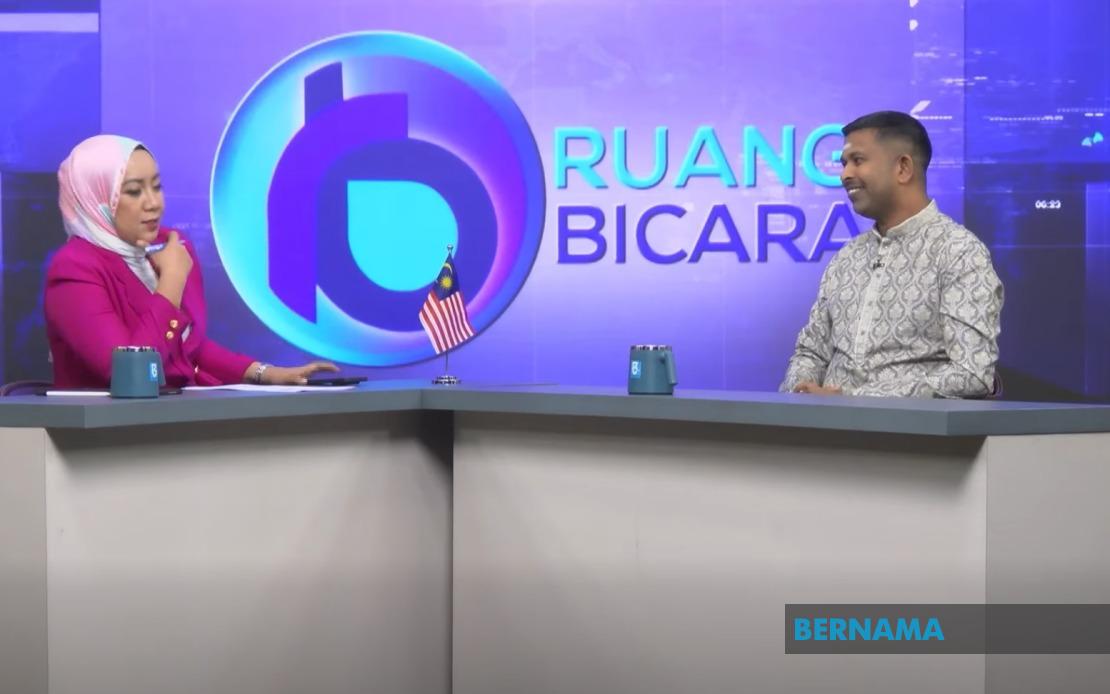
Safeguarding and advancing the standing of Malay as Malaysia's national language cannot succeed through isolated efforts, but demands a concerted, multi-stakeholder approach that mobilises the government, private enterprises, universities, researchers and ordinary citizens, according to a constitutional law specialist. Prof Dr Ramalinggam Rajamanickam, who holds a position at Multimedia University's Faculty of Law and serves on the Board of Governors of Dewan Bahasa dan Pustaka, outlined this vision while discussing the foundational place of the national language in Malaysia's civic fabric and constitutional order.
The legal framework protecting Malay's status remains solid and unambiguous. Article 152 of the Federal Constitution explicitly establishes Malay as the national language, with its application further reinforced through the National Language Act 1963/67, which mandates its use in official governmental functions and transactions. However, codifying a language's status in law represents only the beginning of meaningful language stewardship. Ramalinggam stressed that upholding and elevating the dignity of Malay extends beyond parliamentary acknowledgement—it demands active citizenship and institutional commitment from every Malaysian, reflecting a shared ownership of national identity.
Contrary to assumptions that language decline stems primarily from reduced usage, Ramalinggam identified the authentic challenge confronting Malay in contemporary Malaysia: maintaining and enhancing the quality of how the language is employed in practice. While usage levels remain broadly satisfactory across formal and informal domains, the emergence of linguistic degradation presents a more pressing concern. The phenomenon known as "bahasa rojak"—the blending of Malay with English, Mandarin, Tamil and other languages in casual speech—alongside the proliferation of abbreviated digital communication and grammatical inconsistencies, threatens the language's coherence and communicative precision.
Yet context matters significantly in assessing these linguistic trends. Ramalinggam drew a careful distinction between acceptable language mixing in relaxed social settings and the necessity for rigorous, grammatically correct Malay in institutional, governmental and academic contexts. Informal code-switching reflects the multilingual reality of modern Malaysia and poses no inherent danger to the language's standing. The critical issue emerges when substandard language usage infiltrates official correspondence, legislative documents, educational materials and professional communications where precision, clarity and adherence to grammatical norms become essential for credibility and effectiveness.
Universities occupy a particularly strategic position in this broader language preservation agenda. These institutions must consciously cultivate Malay as a sophisticated instrument of scholarly discourse and knowledge transmission, demonstrating that the national language can articulate complex ideas across scientific, technological, economic and philosophical domains with the same precision and reach as any international language. This does not require abandoning English proficiency—indeed, bilingual competency strengthens Malaysia's position in global academic and professional networks. Rather, universities must demonstrate that intellectual ambition and multilingual capability are complementary rather than contradictory objectives.
The rise of artificial intelligence and digital technology introduces both challenges and opportunities for the Malay language's future relevance. Rather than passively awaiting technological systems to accommodate Malay through subsequent adaptation, Malaysia should proactively invest in developing AI applications, digital tools and computational resources that embed Malay language capabilities from inception. This requires coordinated effort among technology researchers, language specialists, academic institutions and government agencies committed to ensuring that Malay becomes embedded in emerging technological ecosystems rather than remaining peripheral to them.
Historically, Malay enjoyed considerable prestige as a lingua franca facilitating commerce and communication throughout Southeast Asia. This regional linguistic heritage remains an untapped asset. Contemporary evidence suggests that Malay attracts scholarly interest in numerous countries, including China, Japan and India, where universities and research institutions include the language in their programmes. Malaysia could leverage this international interest by positioning Malay not merely as a national symbol but as a language of global knowledge production and cultural exchange, thereby strengthening its practical utility and intellectual standing.
The relationship between protecting Malay's constitutional status and fostering multilingualism requires careful balance. Ramalinggam explicitly rejected false dichotomies suggesting that elevating the national language necessarily means marginalising other tongues. Malaysia's strength resides in its citizens' capacity to command multiple languages while maintaining clear recognition of Malay's singular constitutional role as the binding symbol of national unity and identity. Proficiency in international languages enhances rather than diminishes national capacity, provided that the national language retains its primary institutional position and cultural significance.
Implementing this collective strategy demands specific institutional responsibilities. Government agencies and the education ministry must actively monitor compliance with language regulations governing official communications while ensuring consistent standards across the public sector. Universities must design curricula and institutional policies that genuinely position Malay as a language of knowledge rather than reducing it to ceremonial or symbolic status. The private sector can contribute through workplace policies that value proper language usage and through investment in technology and digital content development that strengthens Malay's functionality in commercial and professional environments.
The citizen's role transcends passive acceptance of language directives from above. Each Malaysian bears responsibility for conscious, deliberate use of Malay that reflects respect for its grammatical structure, vocabulary richness and expressive potential. This cultural commitment manifests through reading in Malay, supporting Malay-language media and publications, engaging in intellectual discourse that demonstrates the language's capacity for sophisticated expression, and transmitting linguistic competence and appreciation to succeeding generations.
Successfully elevating Malay's standing represents more than linguistic preservation—it constitutes an investment in national cohesion and cultural identity at a moment when globalisation, digitalisation and migration patterns challenge traditional relationships between language, nation and belonging. A weakened national language risks fragmenting shared civic space, while a strengthened, dynamic Malay language enhances national unity without limiting Malaysians' engagement with the multilingual world. The challenge, therefore, is neither insular nor isolationist but rather sophisticated nation-building that recognises language as fundamental infrastructure for collective flourishing.

