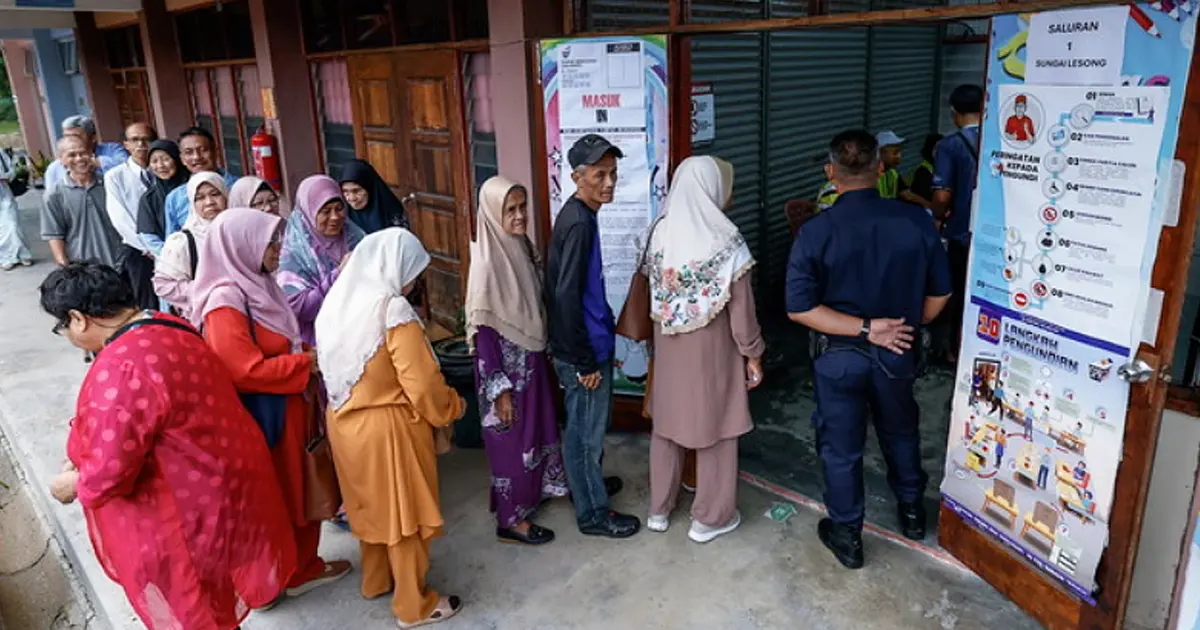
The persistent focus on 3R-related matters threatens to drain Malay voters of their emotional reserves, according to political scientist Awang Azman Pawi from Universiti Malaya, raising concerns about how extended discourse on these sensitive topics may reshape electoral behaviour and political engagement in the coming years.
Awang Azman argues that political parties cannot afford to ignore the fatigue factor that emerges when populations are repeatedly exposed to emotionally charged narratives. The relentless cycle of debate, counter-debate, and rebuttal over identity-laden issues creates a psychological toll that extends beyond simple disagreement—it begins to distance voters from political processes altogether. This phenomenon is particularly significant in Malaysia's multicultural context, where the 3R framework traditionally encompasses religion, royalty, and race, topics that touch the core of communal identity and historical grievance.
For the Malay-Muslim electorate specifically, the analyst notes that emotional fatigue manifests differently than mere political tiredness. When voters become exhausted by recurring discourse on matters they perceive as fundamental to their community's welfare and standing, they may withdraw from active political participation or engage in defensive voting patterns that prioritise security over progress. This creates a feedback loop where parties continue amplifying 3R messaging precisely because segments of the base respond to it, even as broader portions of the electorate grow weary.
Crucially, Awang Azman emphasises that political performance and tangible outcomes ultimately determine how voters evaluate their representatives. Parties will eventually be judged not by the intensity of their rhetoric on identity issues, but by their demonstrated ability to deliver concrete improvements to citizens' lives. This assessment carries particular weight in an environment where economic pressures have intensified significantly.
The cost of living crisis represents one such pressing concern that increasingly commands voter attention across Malaysia's demographic spectrum. Rising prices for essential goods, housing costs that outpace wage growth, and declining purchasing power have created genuine hardship for millions of households. When voters enter polling booths, they carry with them the weight of daily financial struggles—the choice between paying rent and purchasing food, the difficulty of affording children's education, the anxiety of healthcare expenses.
For political parties, the tension between maintaining support among voters animated by 3R concerns and addressing the practical needs of economically stressed citizens presents a genuine strategic dilemma. Overemphasis on identity politics risks appearing tone-deaf to communities grappling with basic survival questions. Yet completely abandoning these issues alienates core constituencies who view them as non-negotiable. The challenge intensifies when parties must craft messaging that acknowledges emotional and identity concerns while demonstrating serious commitment to economic relief and improved governance.
Awang Azman's analysis reflects a broader global pattern observed by political scientists across democracies. When voters experience what researchers term "issue fatigue," their engagement levels decline, turnout may decrease, and susceptibility to populist or alternative messaging increases. In Malaysia's context, this risk is amplified by the ethnic and religious dimensions inherent to 3R discourse, which can fracture coalition-building efforts and complicate cross-communal political cooperation.
The timing of this observation proves particularly significant. Malaysia faces multiple immediate challenges that demand comprehensive policy responses: managing inflation, improving healthcare accessibility, addressing environmental concerns, and navigating regional economic shifts. Politicians who spend political capital on repetitive 3R debates may find themselves ill-positioned to build the consensus necessary for effective governance on these broader fronts.
Furthermore, younger Malay voters—who represent an increasingly large segment of the electorate—appear to prioritise different concerns than previous generations. While not indifferent to identity questions, this demographic demonstrates greater concern with job prospects, educational quality, and digital economy participation. Political messaging that relies heavily on 3R appeals risks missing opportunities to mobilise and engage this crucial voter segment.
The analyst's warning also carries implications for coalition dynamics. In Malaysia's multiparty system, where governments depend on managing diverse constituencies, parties that become too narrowly identified with single-issue or single-community messaging may find themselves marginalised in broader political negotiations. Conversely, parties that successfully balance identity concerns with pragmatic governance messaging tend to consolidate broader electoral support.
Moving forward, the challenge for Malaysia's political leadership involves recalibrating discourse without abandoning legitimate communal concerns. This requires developing narratives that honour historical and contemporary sensitivities while redirecting attention toward shared challenges affecting all Malaysians. It demands political maturity—the ability to acknowledge that voters' lived experiences encompass both identity and economics, both cultural preservation and material progress.
Awang Azman's cautionary observation ultimately suggests that long-term political success belongs to parties that recognise voter fatigue as a real phenomenon deserving serious strategic attention. The parties that prove capable of delivering tangible improvements to living standards while respecting community values will likely command voter loyalty far more effectively than those locked in perpetual symbolic struggles. For Malaysian voters increasingly burdened by economic pressures, performance ultimately speaks louder than rhetoric.