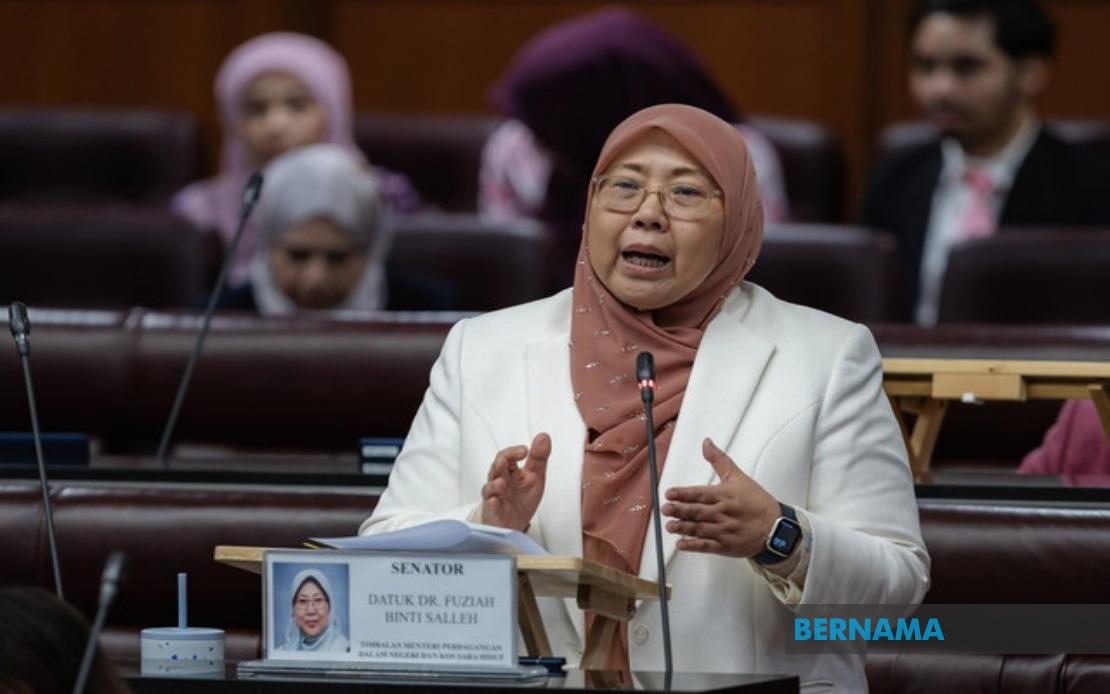
Malaysia's government has clarified that copyright holders retain full authority over whether their creative works can be used to train artificial intelligence systems, with licensing arrangements and royalty payments to be determined through negotiation between the relevant parties under the Copyright Act 1987. Deputy Domestic Trade and Cost of Living Minister Datuk Dr Fuziah Salleh issued this confirmation during parliamentary proceedings, emphasising that this requirement applies uniformly regardless of whether the material is intended for AI applications or other commercial purposes.
The clarification addresses growing concerns across Malaysia's creative sector about the uncontrolled use of copyrighted content in AI model development, a global practice that has generated considerable controversy among artists, writers, musicians and other content creators. Fuziah's statement represents an important policy position in a region where creative industries contribute significantly to economic output and employment, particularly in media production, digital content creation and entertainment sectors. Her remarks suggest that Malaysia intends to maintain a stricter interpretive stance toward existing copyright law rather than creating special exemptions for emerging technologies.
Section 27 of the Copyright Act 1987 provides the legislative foundation for this approach, establishing that payment arrangements between copyright owners and users must be formally agreed through various mechanisms. These mechanisms include direct licensing agreements, where creators negotiate terms individually with AI developers; rights assignments, involving the outright sale of reproduction rights; or engagement with Collective Management Organisations that represent the interests of multiple creators and negotiate standardised compensation packages on their behalf. This multi-pathway structure allows flexibility while maintaining the principle that creators retain control over commercial exploitation of their work.
The government's position stands in contrast to certain international jurisdictions where AI companies have operated under more permissive interpretations of fair use or fair dealing provisions, arguing that training data use constitutes transformative activity exempt from permission requirements. Malaysia's approach instead prioritises the rights of original creators, recognising that many local artists, photographers, journalists and content creators depend on licensing income as a primary revenue stream. This stance acknowledges that the traditional publishing and media industries remain vital employment sectors in Malaysia, particularly for creative professionals who lack alternative income sources.
Senator Datuk Wu Him Ven's questions that prompted this government response underscore legitimate concerns about whether existing legal frameworks adequately protect local creators in the AI era. His inquiry specifically addressed whether licensing and royalty mechanisms would be formally established to ensure proper compensation flows to Malaysian content creators whose work might be incorporated into AI training datasets. The deputy minister's response indicates that such mechanisms already exist within the current legislative framework, though their practical application in the AI context remains underdeveloped.
A significant gap in Malaysia's current approach is the acknowledged absence of formal impact assessment studies examining how AI-generated content affects employment opportunities and income levels for creative professionals. Deputy Minister Fuziah disclosed that no dedicated government research has been undertaken to quantify these effects, despite widespread industry concern that AI systems trained on human-created content could displace jobs and reduce opportunities for writers, visual artists, musicians and other creative workers. This research deficit is particularly notable given that Malaysia aspires to develop a knowledge-based economy with growing creative industries contributing substantially to GDP and employment.
The government's stated strategy involves ongoing engagement with various stakeholders while studying policy approaches adopted by other countries. This deliberate, consultative approach reflects recognition that AI technology is evolving rapidly, requiring governments to carefully observe international developments before committing to permanent legislative changes. Countries including the United States, European Union nations and the United Kingdom are developing or debating their own frameworks governing AI training data use, and Malaysia's policymakers are monitoring these developments to identify best practices applicable to the local context. However, this gradualist approach also creates uncertainty for creative sector professionals who face potential revenue impacts from uncompensated AI training practices today.
Malaysia's copyright law currently extends protection only to works demonstrating originality through human effort, intellectual contribution and creative skill. This limitation means that content generated entirely by AI systems without substantial human creative input does not qualify for copyright protection under existing legislation. This distinction creates important implications for the trajectory of AI development and content ownership in Malaysia. While it preserves copyright protection for human creators whose work trains AI systems, it potentially creates incentives for AI companies to develop fully AI-generated content, which would fall outside copyright protection and therefore not require licensing or royalty payments to anyone.
The absence of reported court cases involving copyright violations from AI technology use in Malaysia suggests that either such disputes have not yet reached the judiciary, or that creators and copyright holders have not yet initiated litigation to test the boundaries of existing law. This gap likely reflects the relatively early stage of AI adoption in Malaysia compared to advanced technology markets, though rapid development of local AI capabilities and applications may change this situation within coming years. Early court precedents established in other jurisdictions will likely influence how Malaysian judges interpret the Copyright Act 1987 when such cases do emerge.
For Malaysia's creative industries, this government position offers important protective language but falls short of establishing new institutional mechanisms specifically designed for the AI era. The reliance on existing Collective Management Organisations to negotiate AI training data licenses requires that these bodies develop new expertise and negotiating capacity to engage with technology companies unfamiliar with traditional rights licensing frameworks. Furthermore, individual creators and smaller content producers who operate outside established CMO structures face greater uncertainty about their rights and potential compensation opportunities. The government's commitment to continued stakeholder consultation and international policy monitoring suggests that new legislation or regulatory frameworks specifically addressing AI training data may be forthcoming, though no timeline has been indicated for such developments.

