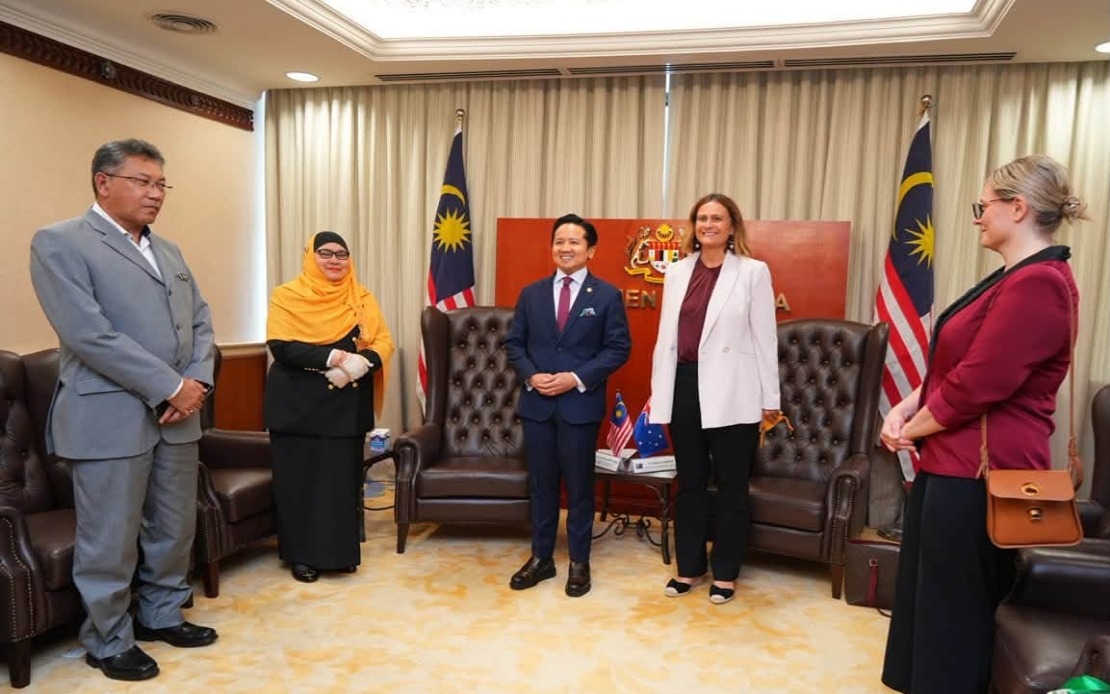
Malaysia and Australia are intensifying their strategic engagement on rare earth elements and critical minerals, marking a significant expansion of their bilateral relationship beyond traditional trade partnerships. During discussions at Parliament in Putrajaya on August 12, Natural Resources and Environmental Sustainability Minister Datuk Seri Arthur Joseph Kurup and Australian High Commissioner to Malaysia Danielle Heinecke mapped out a framework for deeper collaboration in resource development and sustainable manufacturing.
The initiative reflects growing recognition that the two nations can leverage their complementary strengths to secure competitive advantages in the global critical minerals market. Australia has established itself as a technical powerhouse in extraction and processing of rare earth materials, while Malaysia possesses manufacturing capabilities and strategic positioning in Southeast Asia's industrial ecosystem. This pairing addresses a critical gap in global supply chains, where nations with raw material reserves often lack downstream processing expertise, and vice versa.
Central to the partnership is Malaysia's ambitious development of a comprehensive domestic rare earth value chain, spanning from midstream processing through to downstream manufacturing. This ambition is anchored in the National Mineral Policy 3, which prioritises value creation and economic diversification beyond simple mineral extraction. The move away from exporting raw materials toward manufacturing finished products like neodymium magnets represents a strategic shift that could position Malaysia as a hub for advanced materials manufacturing in the region.
Neodymium magnets are particularly significant in this context. These materials are essential components in renewable energy systems, electric vehicle motors, and advanced manufacturing applications—sectors experiencing explosive growth as the world transitions toward clean energy. By developing domestic manufacturing capacity, Malaysia aims to capture greater economic value while reducing dependence on imported magnets. This directly supports both countries' climate ambitions and positions them favorably in the global race toward sustainable industrial production.
A key technical focus of the bilateral discussions concerns the management of neutralisation underflow residue, or NUF, a byproduct of rare earth processing. Handling this residue responsibly is critical for environmental protection and regulatory compliance. Australian expertise in managing processing residues offers valuable lessons for Malaysia as domestic REE operations scale up. This exchange of best practices demonstrates a matured approach to resource development that doesn't sacrifice environmental stewardship for economic gain.
The Malaysia-Australia Comprehensive Strategic Partnership, established in 2021, provides the institutional framework for this collaboration. The partnership has evolved beyond diplomatic courtesy into substantive engagement on shared economic and environmental challenges. Both nations recognise that climate finance, hazardous waste management, and marine ecosystem conservation are interconnected with industrial development decisions. Australia's experience managing environmental impacts from large-scale mining and Malaysia's commitment to sustainable resource management create a foundation for genuinely collaborative policy development.
For Malaysian readers and businesses, this partnership opens several practical opportunities. Domestic companies in the rare earth sector could gain access to Australian technical expertise and potentially become involved in joint ventures or licensing arrangements. The development of neodymium magnet manufacturing creates downstream employment and industrial opportunities across the supply chain, from processing facilities to component manufacturing and assembly. Additionally, enhanced bilateral cooperation may facilitate technology transfer and skills development in advanced materials science.
Regionally, this initiative carries broader implications. Southeast Asia increasingly seeks to reduce its dependence on external supply chains for critical materials, a concern amplified by recent global tensions affecting semiconductor and energy sectors. A functional Malaysia-Australia rare earth partnership could serve as a model for regional cooperation, potentially expanding to include other nations seeking secure access to critical minerals. This positions both countries as stabilising forces in regional economic development.
The partnership also reflects shifting geopolitical realities. As supply chain vulnerabilities become apparent, nations are prioritising relationships with trusted partners who share values around environmental management and transparent governance. Australia's democratic institutions and Malaysia's positioning within ASEAN make this partnership particularly valuable for countries concerned about supply chain concentration in politically unstable regions or countries with poor environmental records.
Climate financing featured prominently in the discussions, underscoring how rare earth development connects to broader sustainability goals. Clean energy transition requires vast quantities of rare earth elements, yet mining and processing these materials is traditionally energy-intensive. The partnership's focus on developing sustainable extraction and processing methods helps reconcile the apparent contradiction between mining for climate solutions and protecting the environment.
Looking forward, the success of this collaboration will depend on translating diplomatic frameworks into concrete commercial arrangements. Whether through joint ventures, knowledge-sharing initiatives, or coordinated policy development, both nations must move beyond discussion toward implementation. For Malaysia, this means creating regulatory environments and investment incentives that attract both Australian expertise and capital.
The timing of this partnership deepening is noteworthy. Global demand for critical minerals is accelerating, driven by the clean energy transition and technological advancement. Nations that establish reliable supply relationships and manufacturing capabilities now will enjoy significant competitive advantages in coming decades. Malaysia and Australia's proactive engagement positions them well to capture growing market opportunities while demonstrating that resource development and environmental responsibility can advance together.

