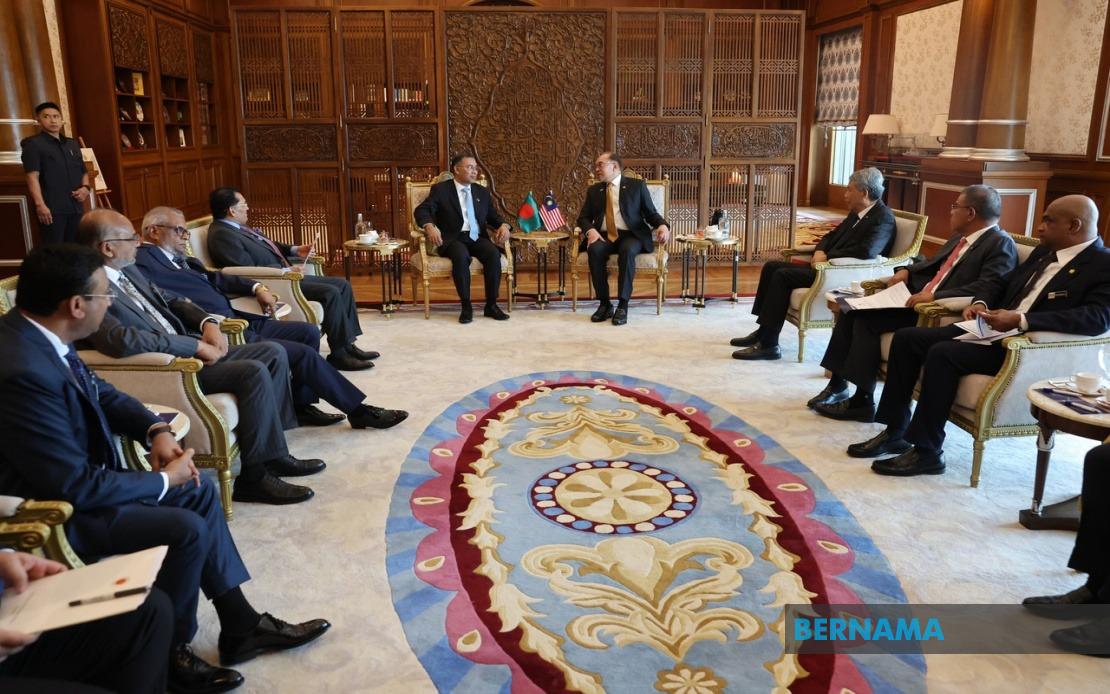
Prime Minister Datuk Seri Anwar Ibrahim has signalled a renewed push by Malaysia and Bangladesh to address the protracted Rohingya refugee situation through multilateral ASEAN frameworks, marking a significant diplomatic initiative on one of Southeast Asia's most entrenched humanitarian challenges. During a joint press conference with Bangladesh Prime Minister Tarique Rahman in Putrajaya, Anwar emphasised that both nations would leverage their foreign ministries and regional platforms to engage directly with Myanmar's authorities in pursuit of durable solutions for the hundreds of thousands of displaced Rohingya currently sheltering across South and Southeast Asia.
The articulation of a structured bilateral approach signals recognition that the Rohingya crisis demands coordinated regional action rather than isolated national responses. Malaysia, which hosts one of the world's largest undocumented Rohingya populations alongside Bangladesh, has long shouldered disproportionate humanitarian burden in accommodating stateless refugees. By positioning the issue within ASEAN's institutional architecture, Anwar's government indicates willingness to move beyond ad-hoc humanitarian assistance towards systematic diplomatic pressure on Myanmar to facilitate repatriation and restore citizenship rights.
Tarique Rahman, who assumed Bangladesh's premiership in February 2026 following political upheaval, used the occasion to reiterate Dhaka's deep anxiety over the humanitarian situation affecting Rohingya communities within Bangladesh, simultaneously expressing gratitude for Malaysia's sustained support. His emphasis on safe, dignified and sustainable repatriation underscores Bangladesh's preference for permanent rather than indefinite solutions—a position shaped by the extraordinary strain on Bangladesh's resources from hosting approximately 900,000 Rohingya across sprawling camps in Cox's Bazar. Malaysia's backing for this repatriation framework aligns Kuala Lumpur with Dhaka's strategic interests and amplifies collective pressure on Myanmar to create conditions for voluntary returns.
The bilateral engagement extended considerably beyond the Rohingya dossier, with the two leaders conducting comprehensive discussions on Malaysia-Bangladesh relations and identifying concrete opportunities for economic deepening. Trade data underscores the partnership's economic foundations: in 2025, bilateral commerce reached RM12.18 billion, with Malaysian exports valued at RM10.08 billion predominantly comprising petroleum and energy products. Bangladesh reciprocated with RM2.10 billion in exports, principally textiles, apparel and footwear—reflecting complementary economic structures typical of ASEAN-South Asia trade relationships. Malaysia's position as Bangladesh's second-largest trading partner in South Asia, after India, reflects both geographic proximity and established supply chains.
The visit represents Tarique's maiden bilateral foreign trip since taking office, a deliberate diplomatic choice that elevates Malaysia's strategic importance in Bangladesh's regional positioning. By selecting Malaysia as his first destination abroad, the new Bangladesh premier signalled commitment to Southeast Asian engagement and acknowledgement of Malaysia's centrality to solving the Rohingya crisis. This ceremonial dimension carries weight for Malaysian policymakers, as it validates efforts to position Malaysia as a leading voice on humanitarian and regional stability issues within ASEAN.
Institutional outputs from the meeting included the signing of a Memorandum of Understanding on Cultural Cooperation alongside two Exchanges of Notes addressing counter-terrorism research and investment promotion. These instruments reflect both nations' recognition of shared security challenges and mutual interest in deepening people-to-people ties. Counter-terrorism cooperation carries particular salience given the security dimensions of refugee populations and regional concerns about militant recruitment within displaced communities. The investment promotion framework acknowledges Malaysia's capacity for foreign direct investment into Bangladesh's manufacturing and infrastructure sectors, areas where Malaysian corporations maintain competitive advantages.
Within ASEAN's institutional ecosystem, Malaysia's determination to activate regional mechanisms on the Rohingya question faces structural constraints. Myanmar's military government has historically resisted international pressure through ASEAN forums, often invoking the principle of non-interference central to ASEAN's founding philosophy. However, Malaysia's diplomatic approach—emphasising engagement rather than coercion—may prove more productive than confrontational strategies. By framing the issue as requiring collaborative regional problem-solving rather than criticism of Myanmar, Anwar's government positions itself to maintain dialogue with Naypyidaw while satisfying Bangladesh and domestic constituencies concerned with refugee welfare.
The economic dimensions of Malaysia-Bangladesh ties offer additional leverage for diplomatic progress. Bangladesh represents a growing market for Malaysian energy exports and investment opportunities, particularly in renewable energy and industrial zones. Strengthening commercial partnerships simultaneously cultivates economic incentives for Bangladesh to support Malaysian positions on regional issues and creates informal channels for dialogue on the Rohingya question. This interlinking of humanitarian and commercial objectives reflects sophisticated diplomatic statecraft.
For Malaysian readers, this bilateral initiative carries implications across multiple registers. Domestically, Malaysia hosts an estimated 180,000 registered Rohingya refugees alongside hundreds of thousands of undocumented individuals, creating significant fiscal demands on public services and periodic tensions in host communities. Any diplomatic progress toward sustainable repatriation directly reduces long-term social and economic costs borne by the Malaysian state and local populations. Regionally, Malaysia's advocacy for ASEAN-level solutions positions the country as bridge between South Asian and Southeast Asian concerns, enhancing its diplomatic weight within the community.
The sustainability question remains paramount. Repatriation requires not merely Myanmar's agreement to accept Rohingya populations, but creation of genuine conditions enabling safe returns—including restoration of citizenship status, property rights, and security guarantees. Current circumstances in Myanmar, where military authorities remain entrenched and Rohingya communities face ongoing hostility, create minimal incentives for voluntary repatriation. Malaysia and Bangladesh's ASEAN-focused diplomacy therefore requires extraordinary persistence and strategic patience, with outcomes likely measured across years rather than months.
Moving forward, the effectiveness of this coordinated approach will depend on sustained pressure from ASEAN members, particularly Indonesia and Thailand, to align with Malaysia-Bangladesh positions and maintain Myanmar's engagement on the issue. It will also require complementary initiatives on humanitarian assistance, protection of refugee rights, and documentation programs that facilitate eventual repatriation. The bilateral commitment articulated during this visit represents an important stepping stone, though the pathway toward comprehensive resolution of the Rohingya crisis remains lengthy and uncertain.

