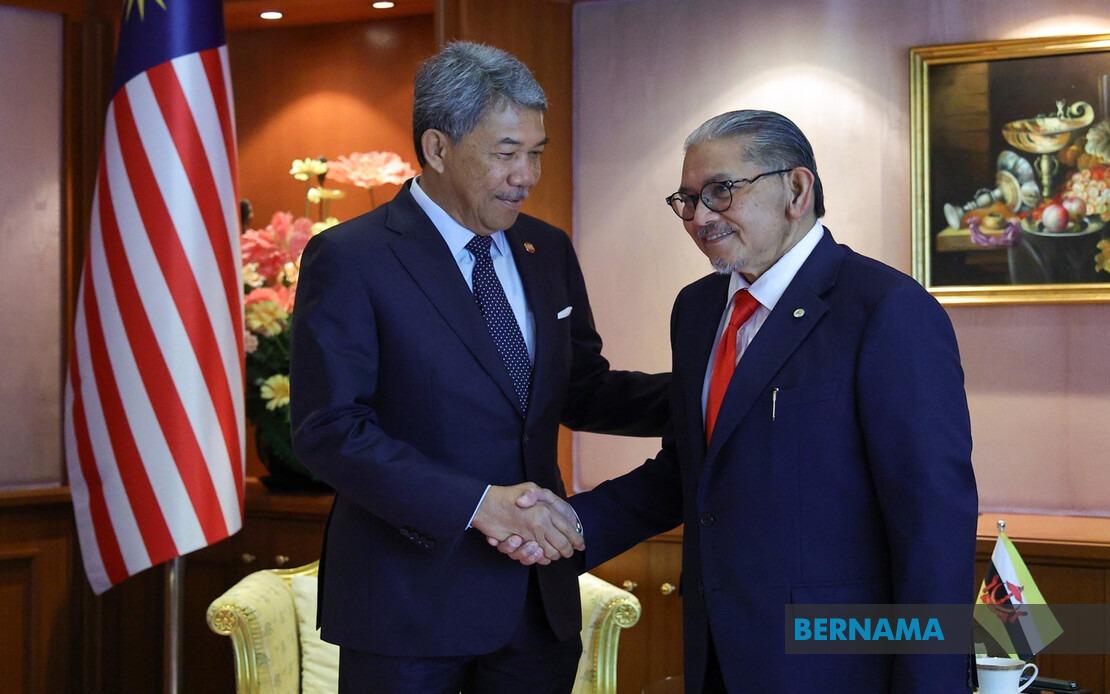
Malaysia and Brunei have demonstrated renewed commitment to strengthening their bilateral relationship through substantive dialogue, with high-level officials from both nations meeting in Bandar Seri Begawan to address a range of shared concerns and collaborative opportunities. Foreign Minister Datuk Seri Mohamad Hasan co-chaired the 27th Meeting on the Implementation of the Exchange of Letters with Brunei Second Minister of Foreign Affairs Datuk Seri Setia Erywan Mohd Yusof, signalling the importance both governments attach to maintaining robust diplomatic channels and practical cooperation mechanisms.
The bilateral engagement tackled several interconnected issues that reflect the complexities of managing relations between two neighbouring Southeast Asian nations sharing both terrestrial and maritime boundaries. Discussion centred on the demarcation of land and maritime frontiers, a process that Mohamad characterised as ongoing and methodical rather than contentious. The minister emphasised that while the fundamental boundary delineation between the two countries is already established and internationally recognised, the formal demarcation process—essentially the marking and documentation of these boundaries on the ground—represents a more nuanced undertaking requiring careful coordination and technical expertise.
Progress on boundary demarcation has advanced to approximately 50 per cent completion, indicating that both nations have made substantive headway in what is typically a lengthy and detailed process. Mohamad explained that the demarcation exercise extends beyond simply drawing lines on maps; it necessitates field verification and reconciliation of various geographical, topographical, and practical considerations that emerge when boundaries are precisely established across diverse terrain. This methodical approach, guided by the 2009 Terms of Reference that both nations previously agreed upon, reflects international best practices in boundary management and helps prevent future disputes arising from ambiguities or misunderstandings.
A technical committee comprising ground-level experts from both Malaysia and Brunei continues to oversee the demarcation efforts, with their findings and reports informing the progress disclosed by Mohamad. This institutional framework ensures that boundary work proceeds systematically and remains insulated from broader political fluctuations, allowing technical and professional standards to guide the outcome. The two nations' commitment to following established terms of reference demonstrates their preference for predictable, rules-based cooperation rather than ad hoc negotiations that might introduce unpredictability.
Beyond boundary matters, the dialogue yielded concrete progress on search-and-rescue coordination, an essential practical concern in a region where maritime activities, fishing operations, and cross-border movement regularly occur. The two countries announced their intention to sign a memorandum of understanding on search-and-rescue mechanisms, formalising cooperation protocols that could prove lifesaving in emergency situations. This agreement addresses a genuine operational need, as maritime incidents in the waters between Malaysia and Brunei could involve vessels or personnel from either nation, necessitating swift and coordinated response from both governments.
The bilateral framework also addressed facilitation of movement for citizens of Brunei, Sarawak, and Sabah, reflecting the reality that informal cross-border mobility has historically characterised the region. By establishing clearer, more streamlined procedures and mechanisms, the two nations aim to balance legitimate people-to-people contact with security and administrative requirements. This initiative holds particular significance for communities on both sides of the border who have familial, cultural, and economic ties spanning generations.
The Exchange of Letters mechanism itself, now in its 27th iteration, represents an institutionalised channel for addressing bilateral matters in a structured format. Such frameworks allow governments to compartmentalise different issue areas while maintaining continuity and institutional memory across administrations and personnel changes. The longevity of this mechanism—extending back decades—indicates that Malaysia and Brunei have found this approach valuable for managing their relationship in a manner that produces tangible outcomes without escalating disagreements.
For Malaysia's broader regional diplomacy, the engagement with Brunei reflects the government's attention to relationships with immediate neighbours and partners within ASEAN. While Malaysia's foreign relations extend to major powers and distant regions, the cultivation of strong ties with Brunei—a small but strategically located neighbour with whom Malaysia shares substantial maritime interests—remains foundational to regional stability. The specific focus on practical cooperation mechanisms like search-and-rescue also signals a priority shift toward concrete, mutual-benefit arrangements rather than symbolic gestures.
The boundary demarcation process, though proceeding at a measured pace, holds implications for resource management in both countries, particularly regarding maritime boundaries that determine fishing rights and potential resource exploitation zones in the South China Sea. Clarifying boundaries reduces the risk of inadvertent incursions or resource competition, thereby enhancing stability in an already complex geopolitical environment where multiple claimants assert interests in overlapping maritime areas.
Looking forward, the continued momentum in Malaysia-Brunei bilateral relations provides a model of pragmatic, institutionalised cooperation within Southeast Asia. Both nations appear committed to resolving outstanding matters through technical and diplomatic means rather than allowing grievances to fester or escalate. The focus on practical cooperation mechanisms—whether search-and-rescue, boundary demarcation, or facilitation of movement—demonstrates that bilateral engagement need not be confined to high-level rhetoric but can generate tangible improvements in people's lives and cross-border operational effectiveness.
The 27th Implementation Meeting underscores that Malaysia and Brunei remain focused on deepening cooperation and resolving outstanding issues through established channels and agreed frameworks. With boundary demarcation halfway complete and new search-and-rescue protocols emerging, both nations are demonstrating that patient, systematic dialogue can produce concrete results that serve mutual interests and enhance regional peace and stability.

