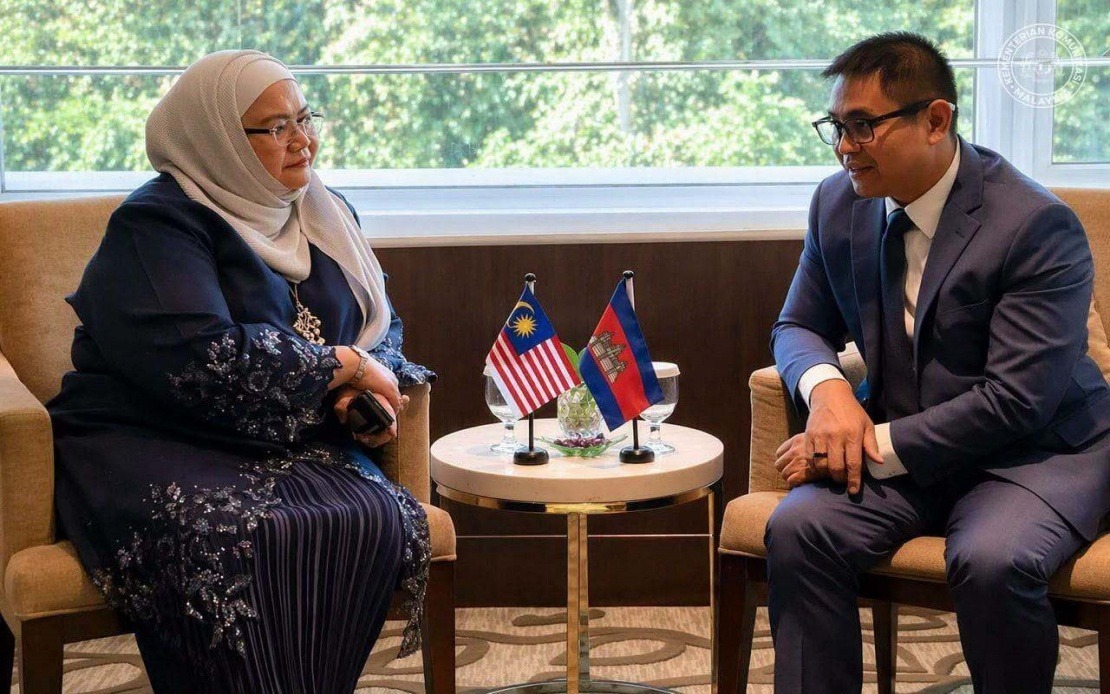
Malaysia and Cambodia are moving forward with concrete plans to operationalise a bilateral agreement aimed at transforming their media and communications landscape. The partnership was formalised through a Memorandum of Understanding on Information and Media Development Cooperation, which both nations signed in late June, and is now entering an implementation phase that could reshape how information flows between the two Southeast Asian neighbours.
The two countries convened at the 23rd ASEAN Senior Officials Responsible for Information meeting in Bandar Seri Begawan, Brunei, to chart the course for activating this strategic accord. Malaysia's delegation was helmed by Datuk Bahria Mohd Tamil, Deputy Secretary-General of the Ministry of Communications overseeing strategic communications and the creative industry portfolio. Cambodia fielded Secretary of State Prak Thaveak Amida from its Ministry of Information, underscoring the seniority of officials engaged in translating the agreement into tangible outcomes.
The timing of this bilateral discussion reflects broader regional recognition that media institutions and information systems require collaborative governance in an era of rapid technological change. During their talks, both delegations explored practical mechanisms for advancing their shared interests across multiple dimensions of the media sector. These discussions encompassed how the two nations might harmonise approaches to information exchange, a particularly sensitive issue in a region where news flows and narrative control remain politically significant.
Media development featured prominently in the discussions, with officials examining how Malaysia and Cambodia might jointly upgrade their broadcasting standards, journalistic training programmes, and newsroom capabilities. This dimension speaks to an underlying reality: smaller media markets in Southeast Asia increasingly benefit from knowledge-sharing and capacity-building partnerships. By pooling expertise and resources, both countries can accelerate improvements that might take longer if pursued independently.
Digital transformation emerged as a central pillar of the cooperation framework. Southeast Asian media organisations are grappling with the transition from traditional platforms to digital-first models, confronting challenges ranging from revenue fragmentation to audience atomisation. The Malaysia-Cambodia initiative recognises that digital infrastructure, publishing platforms, and content distribution networks benefit from cross-border standards and interoperability. Aligning digital strategies could facilitate seamless information flows and reduce duplicative investments.
Perhaps most significantly, both delegations prioritised the thorny challenge of safeguarding information integrity. Misinformation, disinformation, and the weaponisation of false narratives have become endemic across Southeast Asia, undermining public discourse and institutional trust. By establishing joint mechanisms to combat these phenomena—whether through fact-checking protocols, media literacy initiatives, or coordinated responses to coordinated inauthentic behaviour—Malaysia and Cambodia position themselves as regional leaders in defending democratic information ecosystems against manipulation.
The broader context for this agreement includes the Malaysian government's strategic emphasis on communications and the creative industries as drivers of economic and social development. By anchoring cooperation with Cambodia in formal institutional arrangements, Malaysia signals its commitment to becoming a regional hub for media excellence and innovation. For Cambodia, the partnership offers access to Malaysian institutional experience and technological capabilities whilst affirming Cambodia's role in shaping ASEAN's information environment.
The agreement was initially inked ad referendum by Malaysian Communications Minister Datuk Fahmi Fadzil and Prak Thaveak Amida on behalf of Cambodian Information Minister Neth Pheaktra during National Journalists' Day celebrations in Penang in June. This symbolic setting—honouring the profession that mediates between governments and citizens—underscored the agreement's deeper significance: it represents a commitment to institutional integrity and professional excellence in journalism.
Implementation will likely unfold through working groups tasked with specific domains: digital platforms and broadcasting standards, professional development and skills training, content exchange and distribution, and information security protocols. Success hinges on sustained political backing, adequate resource allocation, and the willingness of media institutions themselves to engage constructively with government initiatives. Malaysian and Cambodian broadcasters, publishers, and digital platforms will ultimately determine whether this framework translates into tangible improvements in service quality and public trust.
The bilateral dialogue also demonstrated how ASEAN forums serve as catalysts for deepening bilateral relationships. By leveraging the SOMRI meeting's multilateral platform to advance bilateral interests, Malaysia and Cambodia exemplify how regional organisations can facilitate pragmatic cooperation on issues transcending borders. This approach allows smaller nations to amplify their influence whilst addressing transnational challenges collectively.
Looking ahead, the implementation timeline and specific deliverables will reveal how seriously both governments treat this commitment. Observers should monitor whether joint committees are established, whether financial allocations follow institutional restructuring, and whether independent media outlets are genuinely empowered or merely co-opted into government information strategies. The distinction matters profoundly: genuine media cooperation advances public understanding, whilst instrumentalised partnerships erode journalistic independence.
For Malaysia's wider regional diplomacy, the Cambodia initiative fits within a pattern of strengthened bilateral engagement across ASEAN. As tensions simmer over trade, sovereignty disputes, and competing visions for regional order, functional cooperation in non-contentious sectors like media development provides space for relationship-building and mutual understanding. Successful implementation could serve as a blueprint for similar initiatives with other ASEAN partners, gradually weaving tighter institutional links across the region.

