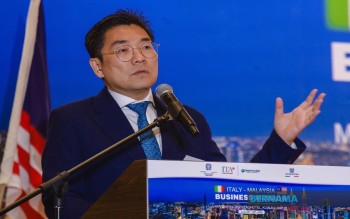
Malaysia and the European Union are moving steadily toward a comprehensive free trade agreement, having cleared five negotiating chapters as both sides commit to finalising the Malaysia-European Union Free Trade Agreement (MEUFTA) by 2027. Investment, Trade and Industry Deputy Minister Sim Tze Tzin confirmed that the fourth negotiating round, conducted in Kuala Lumpur from June 8 to 12, concluded three critical chapters covering customs procedures, trade remedies and regulatory best practices. These additions follow the completion of chapters on transparency and small-to-medium enterprise support in earlier rounds, signalling meaningful progress on a deal that officials contend could reshape Malaysia's economic engagement with one of the world's largest trading blocs.
The timeline for advancing these negotiations remains ambitious. The bilateral teams will reconvene in Brussels from September 21 to 25 for the fifth round of discussions, suggesting both parties maintain momentum despite the complexity inherent in harmonising regulatory frameworks and trade rules across continents. Such speed in trade negotiations is noteworthy, particularly given the breadth of sectors and the number of technical issues that typically require resolution. The compressed schedule hints at strong political will on both sides to deliver tangible outcomes within the coming years, though observers will monitor whether subsequent rounds maintain this pace or encounter friction on more contentious provisions such as intellectual property protections or agricultural tariffs.
For Malaysia, this agreement represents something far more significant than routine commercial arrangement. Deputy Minister Sim characterised the MEUFTA as a "game-changer" capable of anchoring Malaysia more firmly within global value chains while opening doors to premium sectors including advanced technologies, renewable energy infrastructure and digital commerce. The strategic calculus behind Malaysia's engagement with the EU reflects a broader diversification strategy, reducing reliance on traditional Asian trading relationships whilst positioning the country as a competitive hub for high-value manufacturing and services. This positioning becomes increasingly crucial as geopolitical competition intensifies across the Indo-Pacific, with countries jockeying to secure preferential market access and technology partnerships.
Bilateral commerce between Malaysia and Italy already demonstrates the latent potential within Malaysia-Europe trade relationships. Italy ranks as Malaysia's fifth-largest European trading partner, with two-way commerce reaching approximately RM17 billion in 2025, a robust 14.2 per cent year-on-year expansion. Malaysian exports to Italy, climbing 12.7 per cent annually to RM7.6 billion, remain dominated by palm oil and processed agricultural commodities alongside industrial goods including steel, electronics and machinery. This export profile reveals Malaysia's continued strength in resource-based manufacturing and mid-tier industrial production, even as the nation pursues higher-value semiconductors and digital services. Reciprocal imports from Italy—centred on sophisticated machinery, precision instruments, chemicals and electronics—underscore Italy's role as a source of advanced production technologies and premium inputs that Malaysian manufacturers depend upon for competitive positioning.
The investment track record between Malaysia and Italy illuminates the commercial foundation underpinning these trade negotiations. Over 80 Italian manufacturing projects valued at US$442 million have established operations across Malaysia, spanning food processing, speciality chemicals, machinery design, aerospace components and related sectors. This investment presence creates natural constituencies within both economies favouring closer commercial ties and lower trade barriers. Italian enterprises have identified Malaysia's comprehensive industrial ecosystem and integrated supply chains as distinctive advantages, particularly for production targeting the Southeast Asian market where tariffs and logistical costs significantly influence competitiveness. The arrival of additional Italian firms through an eventual MEUFTA framework would likely accelerate technology transfer and managerial expertise flowing into Malaysian operations, benefiting domestic supplier networks and workforce capabilities.
Malaysia's semiconductor ambitions feature prominently in the strategic rationale for European partnership. Deputy Minister Sim emphasised government commitment to supporting higher-value semiconductor manufacturing through the New Investment Incentive Framework, which commenced operation in March 2025. This policy architecture extends tax concessions to investors undertaking advanced manufacturing, front-end semiconductor fabrication and integrated circuit design, deliberately targeting the industry's most technically demanding segments. The framework extends comparable incentives to Malaysian companies and foreign investors alike, reflecting stated policy priorities to elevate domestic industrial capabilities alongside attracting multinational production. A liberalised trade environment with the EU would lower input costs for semiconductor manufacturers sourcing specialised equipment, materials and components from European suppliers, whilst simultaneously facilitating exports of Malaysian-produced semiconductors and related products into EU markets without tariff impediments.
The timing of MEUFTA negotiations intersects meaningfully with Malaysia's broader economic positioning within Southeast Asia and globally. Regional competitors including Vietnam and Thailand have pursued their own preferential trade relationships with Europe, creating competitive pressure for Malaysia to secure comparable market access and regulatory harmonisation. An EU partnership would complement Malaysia's existing arrangements under the Regional Comprehensive Economic Partnership and bilateral agreements, creating a multipolar trade network reducing vulnerability to any single partner's policy shifts. For small and medium enterprises across Malaysia's electronics, manufacturing and services sectors, preferential EU access could unlock export opportunities previously constrained by tariff structures and regulatory divergence, particularly for firms producing specialised components or business services.
The connection between Malaysia-EU trade negotiations and the Italy-Malaysia business mission reflects strategic economic diplomacy extending beyond formalised discussions. Prime Minister Datuk Seri Anwar Ibrahim's working visit to Italy in July 2024, undertaken at the invitation of Italian Prime Minister Giorgia Meloni, established high-level political backing for commercial expansion. Such visits signal to business communities in both nations that government prioritises closer economic integration, encouraging private-sector participation in identifying opportunities and supporting negotiating objectives. The subsequent Kuala Lumpur business mission, continuing this engagement, allows Italian enterprises to assess investment prospects and participate directly in networking that underpins bilateral commercial relationships beyond what trade agreements alone can achieve.
The sectoral composition of Malaysia-Italy commerce reveals complementarities that a comprehensive trade agreement could substantially deepen. Malaysian strengths in palm oil, palm-derived products, metallurgy and electronics align with Italian demand for agricultural inputs, finished food products and manufacturing components. Conversely, Italian expertise in machinery manufacturing, precision engineering and specialised chemicals represents exactly the advanced inputs Malaysian manufacturers require for climbing value chains. Deputy Minister Sim explicitly noted that both Malaysia and Italy possess substantial machine manufacturing capabilities, suggesting scope for collaborative production arrangements and supply-chain integration that could serve third markets. Such complementarity typically generates durable trade relationships less vulnerable to commodity price fluctuations or temporary demand shocks, supporting stable long-term growth in bilateral commerce.
The government's commitment to treating domestic and foreign investors equitably within the new incentive framework addresses a persistent perception that Malaysia's preferential policies disproportionately favour multinational corporations. Deputy Minister Sim's explicit statement that all investors receive equal treatment and that government prioritises Malaysian companies advancing up value chains signals determination to balance inbound foreign investment with indigenous capability development. This approach, if genuinely implemented, could alleviate concerns among Malaysian manufacturers that trade liberalisation under MEUFTA might simply expose them to overwhelming European competition without corresponding support for competitive upgrading. The semiconductor framework's explicit inclusion of Malaysian companies in advanced manufacturing incentives exemplifies this balancing philosophy, potentially creating conditions for viable competition and partnership between Malaysian firms and European multinationals operating within Malaysian territory.
Looking toward 2027, successful completion of MEUFTA would position Malaysia as a strategically significant economy maintaining substantive partnerships with Europe, Asia and globally. The agreement's symbolic importance may ultimately exceed its direct trade impact, signalling Malaysia's capacity to negotiate complex international commercial arrangements and secure preferential terms with major economic blocs. This credibility becomes increasingly valuable as geopolitical competition intensifies and trading nations seek reliable, technologically advanced partners for supply-chain resilience. For Malaysian policymakers, MEUFTA represents an opportunity to lock in preferential access to EU markets while restructuring the economy toward higher-value sectors where European partnerships confer particular advantages through technology, capital and expertise flows.

