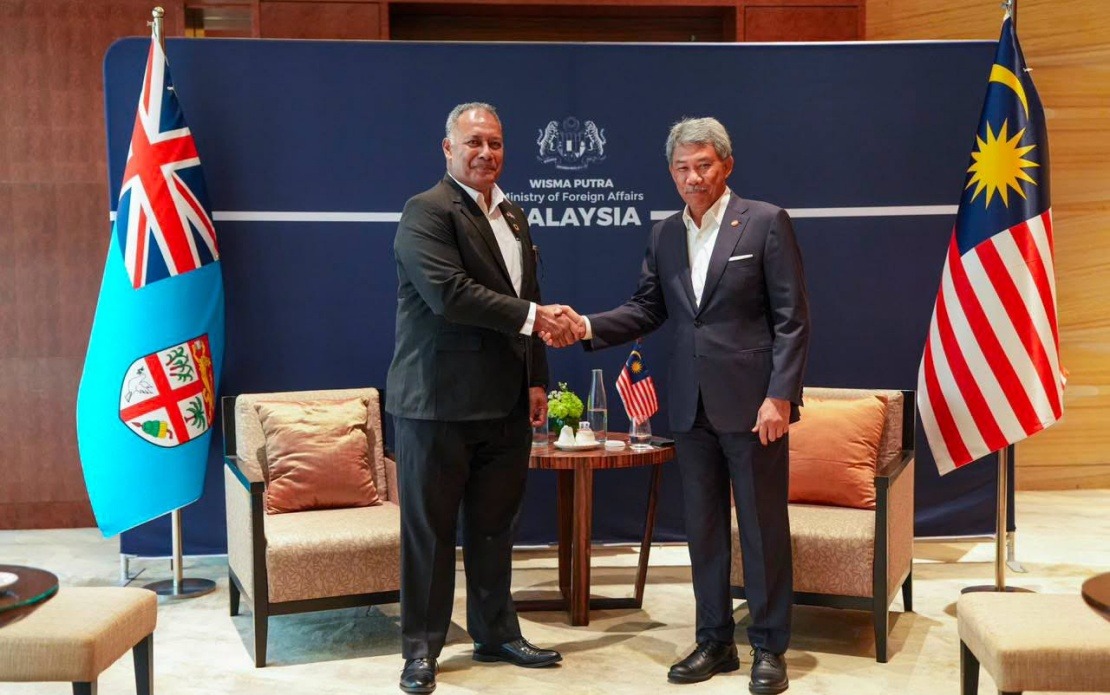
Foreign Minister Datuk Seri Mohamad Hasan has outlined an ambitious framework for deepening Malaysia's relationship with Fiji, signalling Kuala Lumpur's commitment to strengthening ties with Pacific nations at a time when major powers are intensifying competition for regional influence. During a working visit by Fijian Foreign and External Trade Minister Sakiasi Raisevu Ditoka from August 9 to 12, the two officials examined concrete pathways for cooperation that extend well beyond traditional diplomatic exchanges, reflecting both countries' recognition that meaningful engagement requires sustained economic and institutional collaboration.
The scope of proposed cooperation spans multiple strategic sectors that underscore the complementary nature of the two economies. Trade and investment opportunities form the foundation of the expanded partnership, with officials identifying growth potential in areas where Malaysia's manufacturing capabilities and services expertise can support Fiji's development ambitions. Beyond commerce, the bilateral agenda encompasses human capital development—a critical area where knowledge transfer and educational partnerships can benefit both nations' workforce development objectives. This dimension is particularly significant for smaller island economies like Fiji, where capacity-building initiatives can yield outsized developmental returns.
Renewable energy has emerged as a centrepiece of the partnership discussions, reflecting global momentum toward decarbonisation and the specific energy security challenges facing Pacific island nations. Malaysia's growing renewable sector expertise and established technology transfer mechanisms position it as a valuable partner for Fiji's transition toward cleaner energy sources. The emphasis on this sector also signals alignment with broader regional climate commitments and the increasing realisation that energy security intertwines with economic stability and environmental sustainability across the Indo-Pacific.
Forestry cooperation represents another substantive area of engagement, touching on resource management, sustainable practices, and potential trade in forest products. This dimension carries particular weight given the ecological significance of both nations' forested regions and the international focus on combating deforestation. Cultural cooperation rounds out the formal agenda, serving both as a soft-power dimension of the relationship and as a bridge for people-to-people connections that often prove more durable than government-level ties.
The Fijian minister's visit assumes heightened significance given its timing with the official reopening of Fiji's High Commission in Kuala Lumpur, which Ditoka officiated on Monday. This physical diplomatic presence symbolises both nations' commitment to sustained engagement and provides institutional infrastructure for implementing the cooperative frameworks discussed during the visit. The reopening underscores Fiji's strategic interest in deepening its presence within Southeast Asia and maintaining close working relationships with major regional economies.
Bilateral trade data reveals an asymmetric but growing commercial relationship. In 2025, two-way commerce reached RM880.01 million (US$206.2 million), with Malaysian exports substantially outweighing imports. Malaysia's exports to Fiji totalled RM867.92 million (US$203.41 million), while imports from the Pacific nation amounted to just RM12.09 million (US$2.80 million). This imbalance presents both challenges and opportunities, suggesting room for Malaysian investment in Fijian export sectors and potential expansion of bilateral trade in goods where Fiji possesses competitive advantages.
For Malaysian readers and policymakers, the enhanced engagement with Fiji carries broader strategic implications within the context of Malaysia's Pacific diplomacy. As a major Southeast Asian economy, Malaysia has increasingly sought to build partnerships across the Indo-Pacific region, recognising that stable, mutually beneficial relationships with Pacific nations contribute to regional security architecture and economic integration. Fiji's role as a major Pacific island forum member and regional voice amplifies the value of strengthened bilateral ties.
The diplomatic emphasis on regional and global issues during the ministerial discussions reflects the reality that smaller nations like Fiji face international challenges—from climate change to trade disruption—that transcend bilateral relationships. Malaysia's willingness to exchange views on these broader questions positions it as a substantive partner rather than merely a transactional one, an approach that builds long-term diplomatic capital and trust.
The visit also illuminates Malaysia's broader strategy toward the Pacific, where Southeast Asian nations compete with larger powers for influence and partnership opportunities. By systematically developing institutional relationships, identifying concrete cooperation areas, and demonstrating high-level political commitment through ministerial visits, Malaysia constructs a durable framework for engagement that distinguishes it from purely commercial or sporadic contacts.
Looking forward, the implementation phase will prove critical to the partnership's success. Moving from agreed frameworks to tangible outcomes requires institutional coordination, resource allocation, and sustained political will from both governments. Malaysian businesses eyeing opportunities in renewable energy, technology services, and educational exchanges will need clear implementation roadmaps and facilitative policies from Kuala Lumpur.

