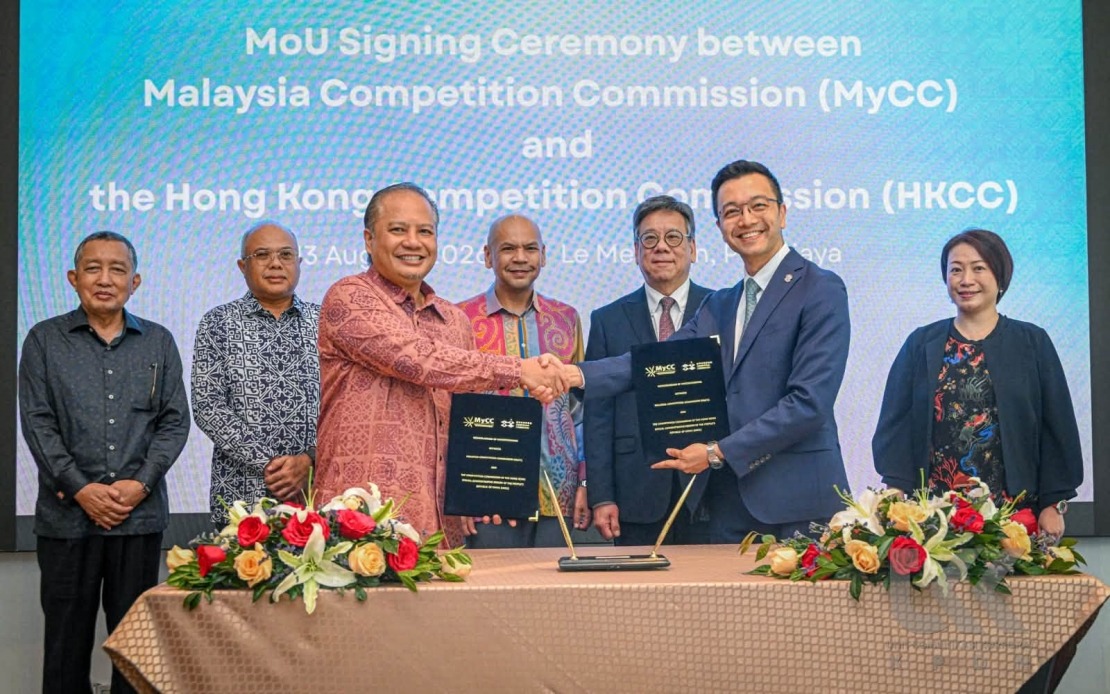
Malaysia and Hong Kong have formalised a landmark agreement to intensify collaboration between their respective competition authorities, marking a significant step in the region's efforts to combat anti-competitive practices in an increasingly interconnected economy. The Memorandum of Understanding, signed between the Malaysia Competition Commission (MyCC) and the Hong Kong Competition Commission (HKCC), represents a formal commitment from both jurisdictions to work together on matters ranging from legislative development to enforcement strategies.
Domestic Trade and Cost of Living Minister Datuk Armizan Mohd Ali characterised the agreement as the fourth such bilateral arrangement for MyCC, placing it alongside existing cooperative frameworks with the Türkiye Competition Authority, Korea Fair Trade Commission, and Philippine Competition Commission. This expanding network of partnerships underscores Malaysia's strategic positioning within regional economic structures and its recognition of competition policy as a cornerstone of contemporary trade governance.
The underlying rationale for this partnership centres on the reality that modern competition challenges transcend national boundaries. Armizan emphasised that in today's complex and interdependent economic landscape, many anti-competitive activities involve cross-border dimensions that single nations cannot effectively address alone. Businesses operating across multiple jurisdictions create enforcement complications that require coordinated international responses to be meaningful. The MoU acknowledges this structural reality and provides institutional mechanisms to address it.
At its foundation, the agreement establishes channels for systematic information sharing on major competition law developments. Both authorities will exchange intelligence regarding legislative amendments, regulatory shifts, and emerging enforcement trends within their respective markets. This transparency mechanism allows regulators in Kuala Lumpur and Hong Kong to benchmark their approaches against international best practices and anticipate market dynamics that may affect their enforcement priorities. Such knowledge transfer is particularly valuable for smaller or emerging markets seeking to strengthen institutional capacity alongside more established competition regimes.
The cooperation extends beyond passive information exchange to encompassing active investigative collaboration. MyCC and HKCC have committed to sharing investigative methodologies and enforcement experiences, creating opportunities for each institution to learn from concrete case studies and operational approaches developed by the other. This practical knowledge transfer can accelerate the development of sophisticated enforcement techniques without requiring each jurisdiction to independently develop expertise in complex areas such as digital platform regulation or cartel detection.
Capacity-building constitutes another critical pillar of the arrangement. Both parties will facilitate training workshops, sponsor officer secondments, and commission joint research projects designed to enhance the technical competencies of competition enforcement personnel. These initiatives recognise that effective competition administration depends not merely on legal frameworks but on the skills, knowledge, and experience of the officials tasked with implementation. By rotating staff between agencies and conducting collaborative training, MyCC and HKCC can develop a community of practice that strengthens both institutions simultaneously.
For Malaysia particularly, this partnership carries implications extending beyond bilateral relations. The agreement positions MyCC as an increasingly integral actor within the international competition architecture at a moment when Southeast Asia's economic integration is accelerating. As regional supply chains become more complex and cross-border e-commerce expands, the capacity of national regulators to cooperate effectively determines whether fair competition can be maintained or whether businesses can exploit jurisdictional gaps to circumvent enforcement.
The timing of this MoU reflects broader global trends toward regulatory convergence and multilateral cooperation on economic governance. Hong Kong's established position as a financial and trading hub makes it a valuable partner for Malaysian authorities seeking to understand how competition issues manifest in highly internationalised economies. Conversely, Malaysia's position as a major ASEAN economy and its experience managing competition issues across a developing market context offers Hong Kong insights into regulatory challenges within different economic contexts.
Minister Armizan framed the agreement within the government's broader commitment to maintaining a competitive ecosystem that benefits consumers and strengthens economic performance. This framing connects competition policy to consumer welfare outcomes, suggesting that enforcement cooperation ultimately serves ordinary Malaysians by preventing monopolistic pricing, maintaining product variety, and encouraging innovation. The emphasis on consumer benefit reflects contemporary thinking that positions competition law as a social policy tool rather than merely a technical regulatory matter.
The inclusion of bilateral and multilateral enforcement mechanisms within the MoU's scope suggests that MyCC and HKCC may jointly approach enforcement challenges that involve third jurisdictions. This represents a sophisticated approach to international cooperation where multiple regulators can coordinate investigations and information gathering to address genuinely cross-border competition issues. Such multilateral enforcement coordination has become increasingly important as technology companies operate simultaneously across numerous jurisdictions.
The agreement also signals Malaysia's intention to continue expanding its competition cooperation framework beyond this bilateral partnership. Armizan indicated that KPDN through MyCC would persist in strengthening relationships with additional regional and international competition authorities, suggesting a strategic intention to embed Malaysian competition policy within global governance structures. This approach contrasts with isolationist or protectionist orientations and positions Malaysia as aligned with liberal international economic governance principles.
From a Southeast Asian perspective, Malaysia's deepening competition law cooperation with Hong Kong contributes to regional regulatory harmonisation. As individual ASEAN member states strengthen bilateral relationships with each other and with external partners, the cumulative effect creates a more integrated regional enforcement environment. This gradual convergence of competition standards and practices can reduce compliance costs for businesses operating regionally while simultaneously enhancing protection for regional consumers against anti-competitive conduct.
The long-term significance of this MoU lies less in any immediate enforcement action it may facilitate and more in the institutional infrastructure it creates. By formalising cooperation mechanisms and establishing regular channels for dialogue, Malaysia and Hong Kong are building the groundwork for addressing future competition challenges that neither jurisdiction can yet fully anticipate. As digital markets, artificial intelligence, and new business models emerge, having established relationships and institutional practices in place will enable authorities to respond more rapidly and effectively to novel competition issues.

