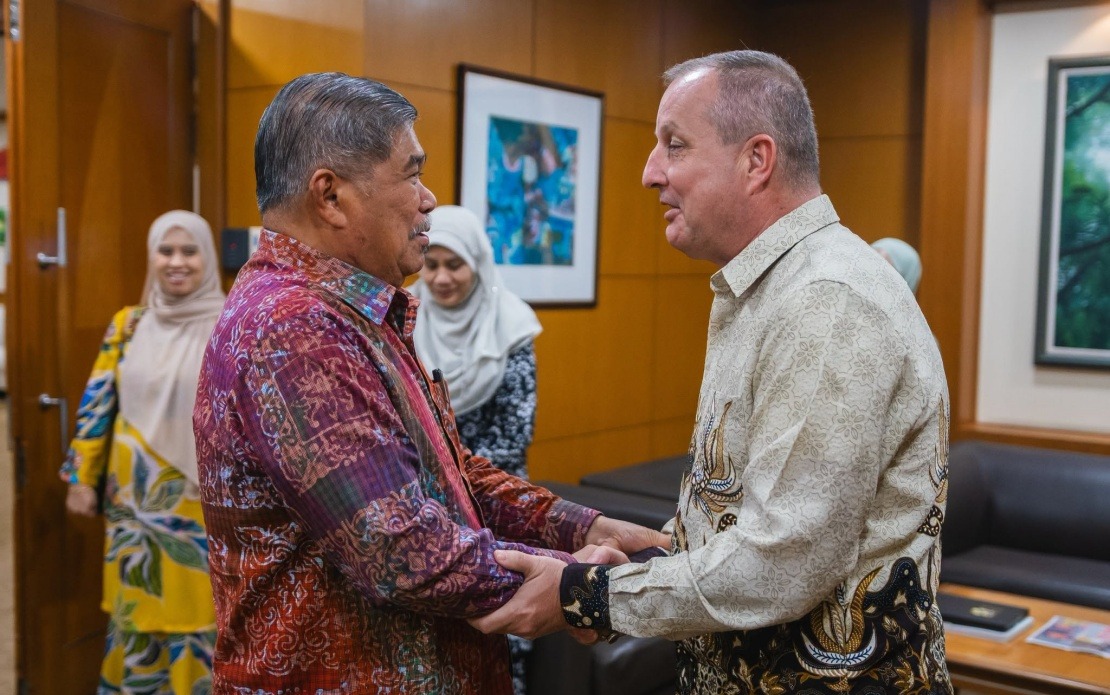
Malaysia and Hungary have embarked on a comprehensive partnership to strengthen agricultural development and food security across both nations, marking a significant step in bilateral engagement within the agri-food sector. During a recent courtesy call by Hungarian Ambassador to Malaysia Dr. Sándor Sipos, Agriculture and Food Security Minister Datuk Seri Mohamad Sabu outlined an ambitious roadmap for collaboration that reflects both countries' commitment to addressing food production challenges and advancing agricultural innovation in an increasingly interconnected Southeast Asian region.
The bilateral framework encompasses multiple layers of cooperation, beginning with Hungary's confirmed participation in the Malaysian Agriculture, Horticulture and Agrotourism Exhibition (MAHA) 2026, positioning the Eastern European nation as an active participant in one of the region's premier agricultural showcases. This involvement signals Hungary's strategic interest in accessing Southeast Asian agricultural markets and showcasing Central European farming expertise to Malaysian stakeholders, from government agencies to private sector agri-businesses seeking international partnerships and technology transfers.
Central to the partnership is the inaugural Malaysia-Hungary Joint Working Group meeting, which establishes a formal institutional mechanism for sustained dialogue on agricultural policy, trade regulations, and investment frameworks. Such structured engagement helps identify complementary strengths—Malaysia's tropical agricultural expertise and established supply chains contrasting with Hungary's advanced breeding technologies and temperate-zone agricultural practices—creating opportunities for knowledge exchange that benefits both economies.
Research collaboration represents the technical backbone of this cooperation. The Malaysian Agricultural Research and Development Institute (MARDI) and the Hungarian University of Agriculture and Life Sciences (MATE) have initiated joint research programs that leverage each institution's capabilities. These initiatives are particularly focused on genetics, selective breeding technology, and the development of premium livestock products, areas where Central European expertise in sustainable and high-value production methods can meaningfully augment Malaysia's existing research infrastructure. The collaboration extends to the Erasmus+ Researcher exchange programme, enabling scientists and technologists to work across borders and transfer practical knowledge directly to agricultural practitioners.
For Malaysian stakeholders, this partnership addresses critical supply-chain vulnerabilities and technological gaps. By accessing Hungary's advanced breeding technologies and production methodologies, local farmers and agri-entrepreneurs gain tools to enhance productivity and product quality, essential factors for competing in premium regional and global markets. The emphasis on livestock product development is particularly significant for Malaysia, where demand for high-quality proteins continues to rise alongside urbanization and rising consumer incomes across Southeast Asia.
The expansion of trade and investment in the agri-food sector between Malaysia and Hungary creates new commercial channels. Hungarian agricultural machinery manufacturers, seed producers, and agricultural technology firms may find growing demand among Malaysian farmers seeking to modernize operations. Conversely, Malaysian agri-businesses and exporters can explore opportunities to market tropical products and processed foods to Central European markets and leverage Hungarian distribution networks to reach broader European audiences.
For regional food security architecture, this Malaysia-Hungary engagement illustrates how developing nations can constructively build resilience through strategic bilateral partnerships. Southeast Asia remains vulnerable to supply disruptions and climate variability, making diversified agricultural partnerships essential. Hungarian expertise in cold-climate crop management and precision agriculture technologies complements ASEAN nations' tropical capabilities, creating a more robust regional food system less dependent on any single supplier or production model.
Minister Mohamad's emphasis on creating opportunities for farmers, breeders, researchers, and agri-food entrepreneurs underscores the partnership's inclusive design. Rather than focusing solely on government-to-government transactions, the framework deliberately enables grassroots participation through technology sharing, expertise exchange, and commercial networking. This approach recognizes that sustainable agricultural development depends on farmer adoption and private sector innovation, not merely policy coordination at ministerial levels.
The partnership also reflects broader Southeast Asian efforts to strengthen non-traditional partnerships in critical sectors. As regional nations navigate evolving geopolitical dynamics and seek to reduce dependencies on historical suppliers, partnerships with nations like Hungary—offering technological capability without strategic complications—become increasingly valuable. Hungary's participation signals reciprocal interest in Southeast Asian agricultural markets and positions Central Europe as a credible technology partner for tropical and subtropical agricultural development.
Looking forward, the success of this partnership depends on translating institutional agreements into tangible outcomes. The MARDI-MATE collaboration must produce research findings applicable to Malaysian farming conditions. Trade missions and market assessments must progress beyond initial discussions to concrete commercial transactions. The technology exchange programs must successfully adapt Hungarian practices to Malaysian contexts, accounting for differences in climate, soil, labor availability, and market structures.
For Malaysian policymakers, this engagement reinforces the strategic importance of agricultural modernization within national development planning. As global food demands intensify and climate pressures mount, Malaysia's ability to boost productivity and export capability hinges on accessing advanced technologies and practices from wherever they originate. Hungary represents an underutilized knowledge source for tropical agricultural innovation, and deepening this partnership offers genuine potential to strengthen national food security while creating commercial opportunities for Malaysian agri-entrepreneurs in European markets.

