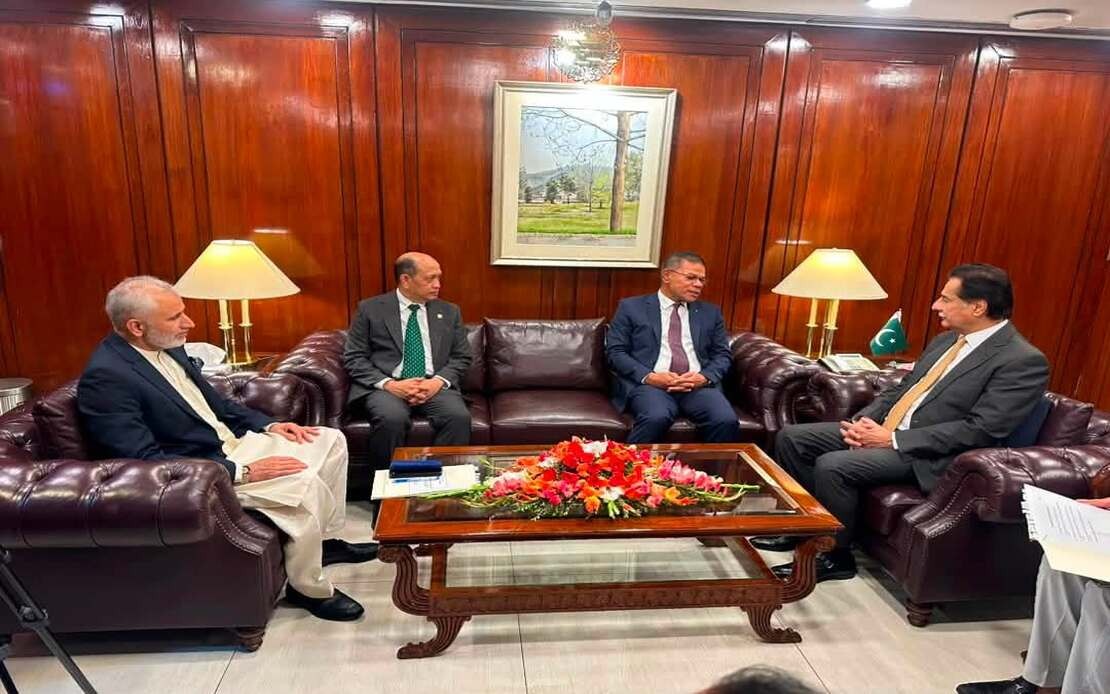
Malaysia and Pakistan have reaffirmed their shared commitment to resolving contemporary geopolitical tensions through constructive dialogue and diplomatic channels, according to discussions held during an official visit to Islamabad. Home Minister Datuk Seri Saifuddin Nasution Ismail raised these points while meeting with key parliamentary figures, signalling that both nations view peaceful solutions as essential in navigating current international security challenges.
The discussions took place across multiple high-level engagements during the second day of Saifuddin Nasution's official visit to Pakistan. He met with the Speaker of the National Assembly of Pakistan, Sardar Ayaz Sadiq, and paid a courtesy call on the chairman of the Senate of Pakistan, Syed Yousaf Raza Gilan. These encounters provided a platform to exchange perspectives on how both nations can work together in addressing regional and global security concerns without resorting to confrontation.
A central theme emerging from the talks was Malaysia's approach to maintaining regional stability through ASEAN frameworks. Saifuddin Nasution articulated how Malaysia has successfully prioritised dialogue and constructive engagement within the Association of Southeast Asian Nations as a model for safeguarding peace and stability in its own neighbourhood. This approach resonates particularly with Pakistan, which faces its own complex security environment and maintains strategic interests across multiple regions.
The bilateral relationship between Malaysia and Pakistan was extensively discussed, with both sides acknowledging its deep historical roots and the cultural bonds linking their societies. The foundation of this partnership rests on principles of mutual trust and respect, qualities that have endured despite the evolving international landscape. Leadership-level engagement such as these visits reinforces the importance both nations place on maintaining these ties at a time when many bilateral relationships face strain.
Particularly significant was the emphasis placed on parliamentary diplomacy and institutional exchanges. Both countries recognised that strengthening connections between their parliamentary institutions serves as a vital mechanism for deepening bilateral understanding and cooperation. This track-two and institutional diplomacy approach complements formal government-to-government relations and provides additional channels for dialogue during periods of international tension. The discussions highlighted how parliamentary bodies can contribute meaningfully to conflict prevention and relationship building.
Saifuddin Nasution's visit to the Parliament Museum in Islamabad underscored this institutional focus. The museum tour offered insights into Pakistan's parliamentary democratic traditions, constitutional development, and the evolution of its parliamentary institutions. Understanding another nation's constitutional and legislative frameworks builds appreciation for its decision-making processes and political culture, facilitating smoother diplomatic interactions and fostering greater respect for each other's governance structures.
For Malaysian observers, this engagement reflects Kuala Lumpur's broader strategy of maintaining equidistant relationships with major powers and regional actors while promoting dialogue-based solutions to international disputes. Malaysia's emphasis on ASEAN's centrality in addressing regional challenges has become increasingly important as tensions rise between competing powers in Asia-Pacific. By sharing its experience with Pakistan, Malaysia positions itself as a constructive voice advocating for peaceful resolution mechanisms.
Pakistan's receptiveness to these discussions also carries significance. As a nation at the intersection of multiple geopolitical competitions and facing internal security challenges, Pakistan's willingness to engage in dialogue and cooperative frameworks demonstrates its commitment to pursuing stability through diplomatic means. For Pakistan, connecting with like-minded nations that prioritise peaceful solutions provides reassurance and strengthens networks of countries opposed to escalation.
The timing of these exchanges matters considerably. With tensions escalating in various parts of the world, from the Middle East to South Asia, multilateral and bilateral efforts to strengthen dialogue mechanisms take on added importance. Malaysia and Pakistan's reaffirmation of commitment to peaceful solutions contributes, however modestly, to the broader international conversation about managing competition without conflict.
Looking forward, these discussions suggest both nations will likely deepen institutional exchanges and continue leveraging parliamentary diplomacy to strengthen their relationship. Regular high-level visits such as Saifuddin Nasution's trip serve to maintain momentum in bilateral ties and ensure that dialogue channels remain open even when international circumstances become challenging. The emphasis on parliamentary institutions also indicates both countries see value in building resilient relationships that can withstand external pressures.
The Malaysia-Pakistan engagement also carries implications for the broader Muslim world and developing nations navigating complex geopolitical terrain. By demonstrating that dialogue and institutional cooperation can flourish despite global tensions, both nations model an approach other countries might emulate. This is particularly relevant for Southeast Asian nations seeking to balance relationships with multiple powers while protecting their own strategic interests and maintaining regional peace.
For regional stability in Southeast Asia specifically, Malaysia's reinforcement of dialogue-based approaches during international discussions strengthens ASEAN's collective position on peaceful dispute resolution. Pakistan, meanwhile, observes how a maritime Southeast Asian nation manages diverse relationships and pursues stability through institutional frameworks, potentially applying similar lessons in its own regional context. The exchange of experiences between these two Muslim-majority nations contributes to a broader narrative emphasising diplomatic engagement over confrontation.

