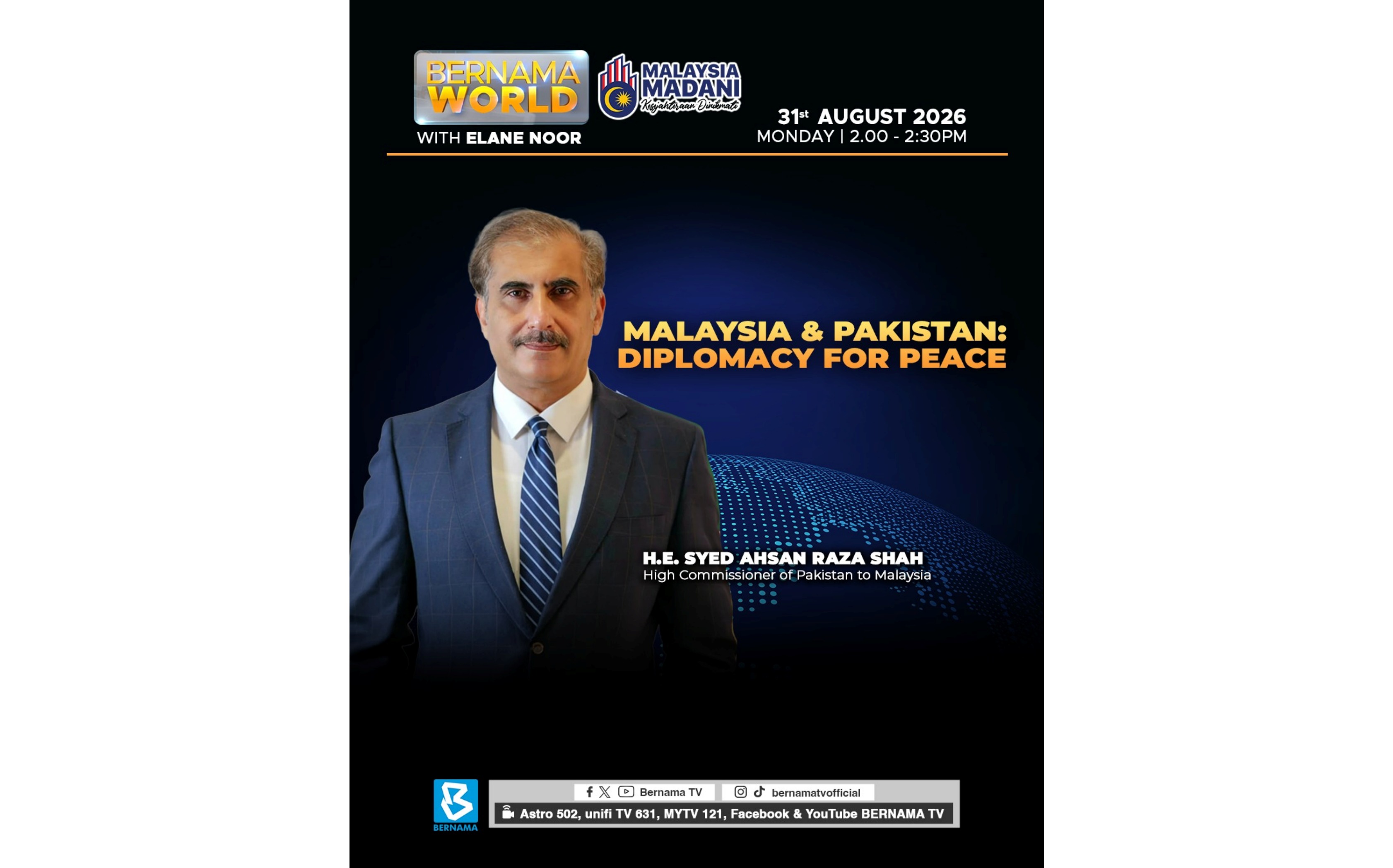
As geopolitical tensions continue to destabilise the wider region and beyond, Malaysia and Pakistan must urgently collaborate on conflict resolution and mediation strategies, according to Syed Ahsan Raza Shah, Pakistan's High Commissioner to Malaysia. Speaking in an interview, he characterised such cooperation as essential rather than optional, arguing that both nations occupy critical positions in the international system and have demonstrated proven capacity in managing high-stakes disputes between hostile parties.
The High Commissioner drew attention to the diplomatic contributions each country has made in recent years. Malaysia, under Prime Minister Datuk Seri Anwar Ibrahim, played a decisive role when Thailand and Cambodia descended into armed conflict, a moment that tested ASEAN's institutional cohesion. Anwar's measured response and diplomatic intervention facilitated a ceasefire and ultimately the signing of the Kuala Lumpur pact, a significant achievement in forestalling further regional deterioration. Similarly, Pakistan leveraged its unique position to facilitate dialogue between the United States and Iran during a period of unprecedented hostility, when both powers seemed locked in an irreconcilable standoff.
Pakistan's ability to mediate the US-Iran dispute stemmed from its distinctive geographical and diplomatic circumstances. Tehran remains a near neighbour with whom Pakistan shares deep historical and cultural connections, while simultaneously maintaining one of its closest strategic partnerships with Washington. This dual relationship positioned Islamabad as a trusted intermediary when direct channels between Tehran and Washington had effectively broken down. Syed Ahsan expressed considerable pride in what he termed the Islamabad accord, underscoring the tangible outcomes that resulted from Pakistan's mediation efforts.
Both nations' experiences illustrate a fundamental shift in how international relations operate in what Prime Minister Anwar has characterised as "post-normal times". The traditional frameworks and assumptions that underpinned diplomatic practice no longer suffice in an environment marked by unpredictability, rapid escalation, and unprecedented interconnectedness. The High Commissioner stressed that Malaysia and Pakistan must consciously adapt their diplomatic playbooks, moving beyond conventional approaches to develop new methodologies suited to contemporary challenges. Knowledge sharing between the two countries could accelerate this transition and enhance the effectiveness of both nations' international engagement.
The foundation of any successful mediation, according to Syed Ahsan, rests on trust—a prerequisite that often proves elusive in high-tension negotiations. Disputing parties must perceive the mediator as genuinely impartial, intellectually honest, and motivated by principles rather than hidden agendas. Without this fundamental credibility, even the most skilfully constructed proposals will founder. He emphasised that mediators cannot afford to be perceived as advancing narrow national interests or harbouring secret sympathies for one party over another. This dimension of trust-building represents perhaps the most challenging aspect of diplomatic work, particularly when dealing with longstanding adversaries.
Effective mediation also requires patience and a willingness to embrace incremental progress rather than pursuing comprehensive settlements in single negotiating sessions. The High Commissioner cautioned against the temptation to rush toward dramatic breakthroughs, which often collapse under scrutiny. Instead, mediators must construct agreements through careful, layered progress, allowing antagonists to gradually adjust their positions and explore common ground at their own pace. Additionally, experienced mediators must develop psychological resilience, remaining composed when negotiations stall or when parties resort to inflammatory rhetoric designed to provoke or undermine proceedings.
A particular strength that Malaysia brings to mediation efforts, in Syed Ahsan's assessment, is Prime Minister Anwar Ibrahim's capacity to establish genuine personal connections with international counterparts. This interpersonal dimension frequently proves decisive in negotiations, as leaders who respect and trust one another demonstrate greater flexibility and creativity in problem-solving. Anwar's track record of building these relationships across diverse cultural and political contexts has tangibly enhanced Malaysia's ability to convene parties and broker settlements. Such personal diplomatic capital represents a strategic asset that complements formal institutional mechanisms.
The High Commissioner highlighted a broader concern regarding the containment of regional conflicts. In an interconnected world, disputes that appear geographically confined inevitably generate broader economic and strategic ramifications. Instability in one region reverberates through supply chains, investment flows, security arrangements, and diplomatic alignments, eventually impacting countries far removed from the original conflict zone. Malaysia itself faces potential consequences from turbulent situations in the Middle East, South Asia, and beyond, creating a compelling national interest in promoting stability through effective mediation. This reality underscores why investment in conflict resolution capacity represents prudent statecraft rather than merely humanitarian concern.
The call for Malaysia-Pakistan mediation collaboration arrives at a moment when multilateral institutions face questioning and when traditional diplomatic channels frequently operate at reduced effectiveness. Both nations have demonstrated that targeted bilateral or informal multilateral engagement, grounded in regional knowledge and credibility, can sometimes accomplish what broader institutional frameworks cannot. Their complementary strengths—Malaysia's ASEAN positioning and bridge-building tradition, combined with Pakistan's South Asian and Middle Eastern connections—create natural synergies for expanded cooperation. Such partnership could model how middle powers might assert greater agency in managing international crises during an era of great power competition and institutional strain.

