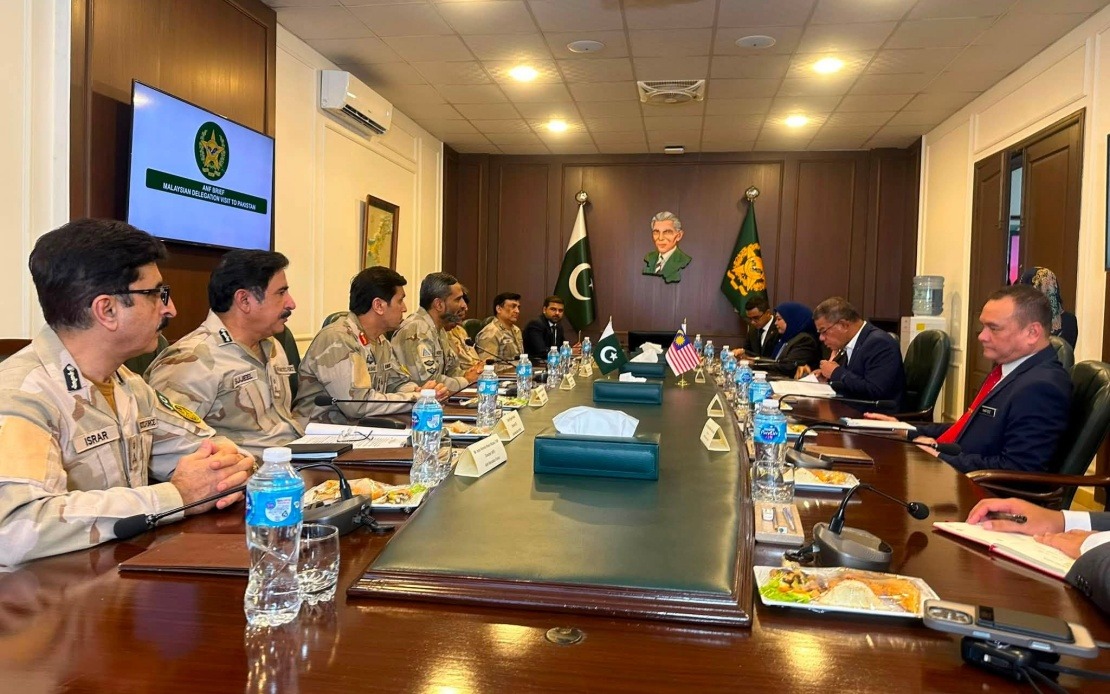
Home Minister Datuk Seri Saifuddin Nasution Ismail has announced plans to formalise Malaysia's anti-narcotics partnership with Pakistan through a structured Memorandum of Understanding, marking a significant escalation in bilateral efforts to combat the region's escalating drug crisis. During his recent visit to Islamabad, Saifuddin Nasution held discussions with Pakistan's Anti-Narcotics Force leadership and senior government officials to advance the proposed framework, which aims to provide a more coherent and coordinated approach to addressing shared security challenges in drug enforcement.
The initiative comes at a critical juncture, as drug trafficking patterns across Asia have grown substantially more complex and dangerous. Beyond traditional heroin and opium products, the emergence of synthetic drugs such as methamphetamine has created new vulnerabilities in law enforcement strategies across Southeast Asia. These designer narcotics are often produced in clandestine laboratories operating within organised crime networks that span multiple countries, creating enforcement challenges that no single nation can effectively address alone. The involvement of transnational criminal organisations further complicates efforts, as these groups exploit porous borders, corrupt officials, and fragmented regulatory systems to move contraband across continents.
Pakistan's geographic position gives it particular strategic importance in this regional security architecture. Situated between Afghanistan—a major opium-producing region—and the maritime routes leading toward East Asia and Southeast Asia, Pakistan faces constant pressure from drug flows transiting through its territory. For Malaysia, which lies at the terminus of many trafficking routes, collaboration with Pakistani law enforcement agencies represents a critical missing link in intercepting drugs before they reach Malaysian shores and subsequently spread throughout the region. Saifuddin Nasution emphasised that confronting this threat requires engagement beyond national boundaries and even regional forums like ASEAN, necessitating broader international coalitions.
The two countries already possess a substantive operational history. Between 2012 and 2018, Malaysian and Pakistani enforcement agencies jointly coordinated more than 28 significant cases, demonstrating the practical value of existing informal cooperation channels. However, the proposed MoU represents a qualitative jump beyond ad-hoc coordination. By establishing formal mechanisms for intelligence sharing, the agreement seeks to enable real-time information exchange that can support coordinated operations targeting the same criminal networks across both jurisdictions. Intelligence-led operations—where enforcement actions are guided by data analysis rather than reactive policing—have proven more effective at disrupting supply chains at their source rather than attempting interception at borders.
Beyond intelligence architecture, the framework will facilitate training exchanges and expertise-sharing between Malaysian and Pakistani law enforcement agencies. Such capacity-building initiatives allow frontline officers to learn international best practices, understand how criminal networks operate across borders, and develop standardised approaches to investigations. This human capital development complements technological solutions and helps build institutional knowledge that persists even as individual officers move to different assignments. The proposed Joint Working Group, which both Interior Ministers agreed to establish, will provide an ongoing governance structure for these collaborative efforts, moving beyond one-time agreements toward sustained operational integration.
During his Islamabad visit, Saifuddin Nasution also engaged with Pakistan's Deputy Prime Minister and Foreign Minister Mohammad Ishaq Dar on the broader geopolitical context surrounding security cooperation. The discussions acknowledged that effective counternarcotics work exists within a wider landscape of regional stability, economic cooperation, and people-to-people exchange. The visit touched on complementary areas including food security—with Pakistan potentially supplying rice and meat to Malaysia—and visa facilitation measures designed to strengthen bilateral ties. These economic and diplomatic dimensions matter because they create political will and institutional goodwill necessary for sustained security cooperation, preventing narcotics enforcement from becoming isolated from broader strategic relationships.
A particularly notable development was the signing of the International Transfer of Prisoners Agreement between Malaysia and Pakistan. This accord addresses a longstanding gap in cooperative law enforcement by establishing mechanisms for the transfer of convicted prisoners between jurisdictions. Such arrangements are essential when drug trafficking cases result in prosecutions in multiple countries, allowing individuals to serve sentences closer to their home nations and potentially facilitating rehabilitation programmes designed within each country's cultural and legal context. The agreement also demonstrates confidence between both governments in each other's judicial systems and prison management practices.
The Malaysian delegation's visit to Pakistan's National Database and Registration Authority (NADRA) revealed another dimension of cooperation emerging around digital security infrastructure. NADRA operates one of Asia's most advanced identity management systems, utilising biometric data, comprehensive civil registration databases, and integrated border management technologies. For Malaysia's Home Ministry, studying these systems offers insights into how technology can enhance both national security and service delivery efficiency. Digital identity solutions and sophisticated border management systems—particularly biometric passport verification and real-time database integration—provide tools that make it far more difficult for traffickers to move across borders undetected or to operate under false identities.
The emphasis on digital transformation and cybersecurity in narcotics enforcement reflects a recognition that modern drug trafficking increasingly relies on encrypted communications, digital money transfers, and technology-enabled coordination. Enforcement agencies that cannot match this technological sophistication operate at a significant disadvantage. By exchanging expertise with Pakistan on digital identity systems, e-government platforms, and crisis management technologies, Malaysia's Home Ministry aims to strengthen its own institutional capacity while demonstrating Malaysia's ability to contribute knowledge and experience to a bilateral partnership.
For Malaysia specifically, these developments address a persistent security concern. Despite previous anti-drug campaigns and enforcement successes, synthetic drug abuse continues rising domestically, with methamphetamine and related compounds now accounting for a substantial share of drug-related arrests and treatment admissions. The drug supply undergirding this demand originates from international sources; addressing it therefore requires understanding and disrupting production and trafficking networks at their origins or transit points. Pakistan's cooperation, combined with efforts through ASEAN frameworks and bilateral relationships with other countries along trafficking routes, creates a more comprehensive strategy.
The MoU framework also signals to the broader international community that Malaysia and Pakistan are committed to combating transnational crime through multilateral partnerships. This positioning matters for Malaysia's standing within international drug enforcement networks, ASEAN coordination mechanisms, and cooperative arrangements with other regional powers. It demonstrates proactive engagement rather than reactive responses to crises. Such demonstrations of institutional capacity and international cooperation strengthen Malaysia's ability to attract technical assistance, intelligence sharing, and capacity-building support from developed nations also concerned with Asian narcotics trafficking.
Looking forward, the success of this formalised cooperation will depend on sustained implementation beyond the initial MoU signing. Establishing genuine intelligence-sharing protocols requires building trust between security agencies and overcoming bureaucratic barriers to information exchange. Training programmes require sustained funding and commitment from both governments. The Joint Working Group must meet regularly and demonstrate concrete results to maintain political momentum. Nevertheless, the initiative represents important progress in addressing a security challenge that threatens public health, economic development, and social stability across Malaysia and the broader Southeast Asian region.

