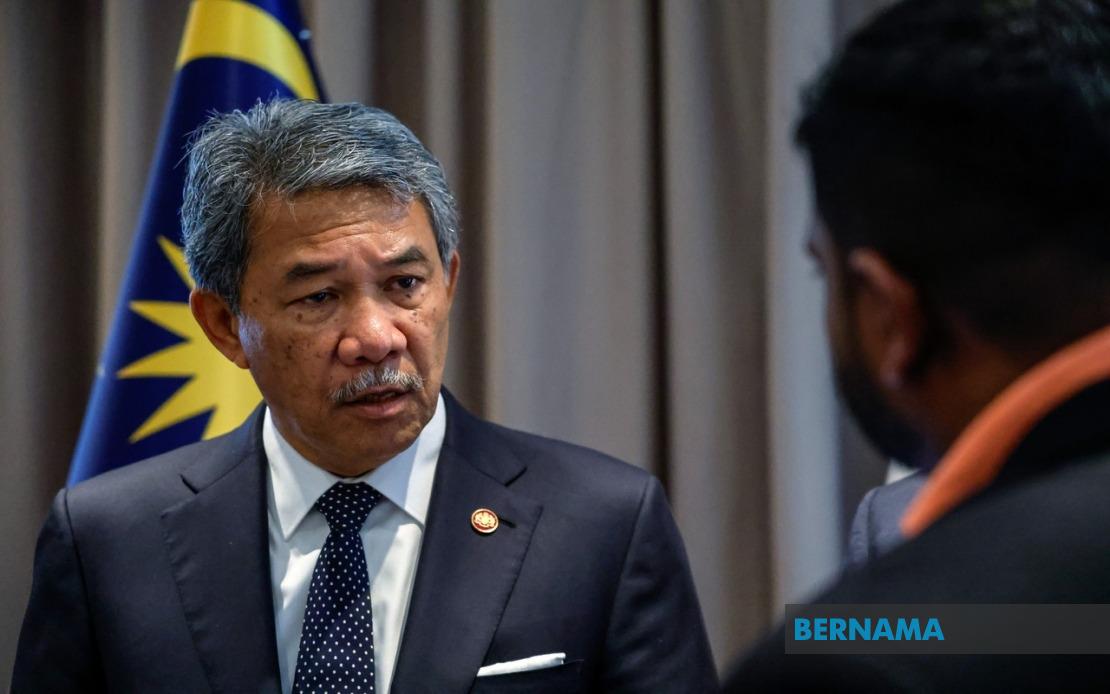
Malaysia and the Philippines have entered into concrete discussions aimed at accelerating the return of more than 5,000 undocumented Philippine nationals currently housed in immigration detention centres across Sabah. The commitment emerged during the 9th Malaysia-Philippines Joint Commission Meeting held in Manila on August 18, where both nations acknowledged the pressing need to resolve the mounting capacity crisis at these facilities. Foreign Minister Datuk Seri Mohamad Hasan outlined the collaborative approach, noting that preliminary screening conducted by the Philippine Embassy in Kuala Lumpur has already identified in excess of 1,000 individuals prepared for immediate deportation to their homeland.
The detention infrastructure in Sabah, which comprises four major immigration depot centres, has reached critical occupancy levels and can no longer sustain the existing population of undocumented migrants. This logistical strain represents a significant administrative burden for Malaysia's immigration authorities and has prompted the bilateral discussions. Mohamad Hasan emphasised that Malaysia is seeking expeditious action from the Philippine government to retrieve its citizens through available transportation routes, whether by sea or alternative means. The urgency reflects not merely administrative convenience but also the humanitarian imperatives associated with prolonged detention, particularly given the family circumstances of many detainees.
Beyond the mechanics of physical repatriation, the two nations have recognised the complexity of the situation extends to the children of undocumented migrants residing in Sabah. Malaysia has committed to examining educational provisions for these youngsters and assessing whether continued schooling before repatriation remains feasible and necessary. However, Mohamad Hasan stressed stringent conditions: any educational framework must be directly administered by the Philippine government rather than delegated to private entities. This insistence reflects Malaysian concerns about unregulated institutions operating without proper oversight and accountability standards. The distinction proves significant for both nations, as it establishes governance clarity and prevents ad hoc solutions that might inadvertently complicate future repatriation efforts.
The dialogue represents a pragmatic bilateral response to a recurring regional challenge. Undocumented migration from the Philippines to Malaysia, particularly concentrated in Sabah, stems from economic disparities, limited employment opportunities in the Philippines, and established migrant networks that facilitate irregular movement. The detention situation reflects Malaysia's policy enforcement mechanisms attempting to manage irregular immigration while respecting humanitarian considerations. The willingness of both governments to coordinate directly on repatriation demonstrates recognition that unilateral approaches prove ineffective and that collaborative frameworks yield superior outcomes for managing cross-border population movements.
For Malaysian policymakers, the Sabah detention situation carries particular significance given the state's geographic proximity to the southern Philippines and its established role as a destination for labour migrants. The detention centres, while necessary for processing and documentation purposes, consume considerable resources and create friction points with advocacy organisations concerned about conditions and procedural fairness. Resolving these cases through efficient repatriation alleviates pressures on both immigration infrastructure and Malaysian resources while enabling the Philippines to address the underlying push factors driving emigration.
The screening process coordinated through the Philippine Embassy in Kuala Lumpur represents a structured approach to categorising detainees according to citizenship verification, document status, and repatriation readiness. This methodical assessment ensures that the first cohorts selected for deportation genuinely comprise Philippine nationals with established identity documentation, thereby avoiding complications that might arise from processing individuals whose nationality remains contested or unverifiable. The identification of over 1,000 persons ready for immediate return indicates that substantial portions of the detained population possess sufficient documentation or have undergone successful verification procedures.
However, managing the remaining batches requires sustained commitment and resources from both governments. The Philippine government must mobilise transport capacity, coordinate regional logistics, and ensure receiving protocols that accommodate large-scale repatriation within compressed timeframes. Malaysia simultaneously must maintain detention security, manage information flows to detainees, and prepare transition procedures for sequential cohorts. The complexity multiplies when considering family separations—some detainees may have spouses or dependents either in Sabah or elsewhere in Malaysia, creating humanitarian dimensions that demand careful handling alongside administrative expedience.
The educational question regarding detainees' children reflects broader Southeast Asian patterns wherein second-generation migrants occupy ambiguous legal statuses and institutional gaps. Children born in Sabah to undocumented parents may possess limited documentary proof of Philippine nationality despite biological connections. Schooling arrangements for these vulnerable populations carry implications for future integration—whether in the Philippines upon family repatriation or in Malaysia if parents eventually regularise status. By insisting on Philippine government administration of educational facilities, Malaysia avoids creating parallel institutional structures that might inadvertently entrench irregular populations.
The Joint Commission Meeting also addressed the historical Sabah sovereignty dispute, which periodically resurfaces in Philippine political discourse. Mohamad Hasan reaffirmed Malaysia's position that Sabah constitutes internationally recognised Malaysian territory, citing United Nations recognition and established global precedent. This clarification responds to recent remarks by Philippine Senator Robin Padilla advocating renewed pursuit of historical claims over Sabah. By raising the matter during bilateral discussions, Malaysia signals that such claims remain inconsistent with international law and regional stability, potentially spurring diplomatic notes formalising Malaysia's objections. While the Sabah question did not dominate the Joint Commission agenda, its articulation underscores that bilateral migration cooperation proceeds within a framework of clearly delineated territorial sovereignty and international legal frameworks.
The repatriation initiative carries implications extending beyond immediate bilateral relations into broader ASEAN dynamics and regional migration governance. Southeast Asia hosts millions of irregular migrants navigating porous borders, limited documentation infrastructure, and disparate national legal frameworks. Malaysia and the Philippines, as significant source and transit nations for regional migration, influence how other ASEAN members approach similar challenges. Demonstrating effective bilateral coordination on repatriation potentially establishes precedents and practical methodologies that other nation-pairs might emulate, gradually building more coherent regional approaches to irregular migration management.
For Malaysian society, particularly Sabah communities, accelerated repatriation offers prospects of reducing demographic pressures and associated social strains that irregular migration populations generate. Employment competition, housing pressures, and public service demands associated with undocumented populations create tension in local politics and civil society discourse. Resolving detention backlogs through systematic repatriation symbolises governmental capacity to manage borders effectively while maintaining humanitarian standards. This proves electorally and socially significant in Sabah, where migration remains politically salient and community preferences lean toward controlled borders.
The screening process and repatriation timeline remain fluid, dependent on continued political will and resource allocation from both governments. Bureaucratic delays, transport bottlenecks, or shifting political priorities in either capital could impede momentum. Nevertheless, the formal commitment articulated by both Foreign Ministers establishes expectations for progress and creates accountability frameworks for implementation. Periodic reviews through the Joint Commission apparatus allow both nations to assess progress, identify obstacles, and recalibrate strategies as circumstances evolve. The August 2024 meeting thus represents not a resolution but rather a reaffirmed commitment to structured management of this persistent bilateral challenge.

