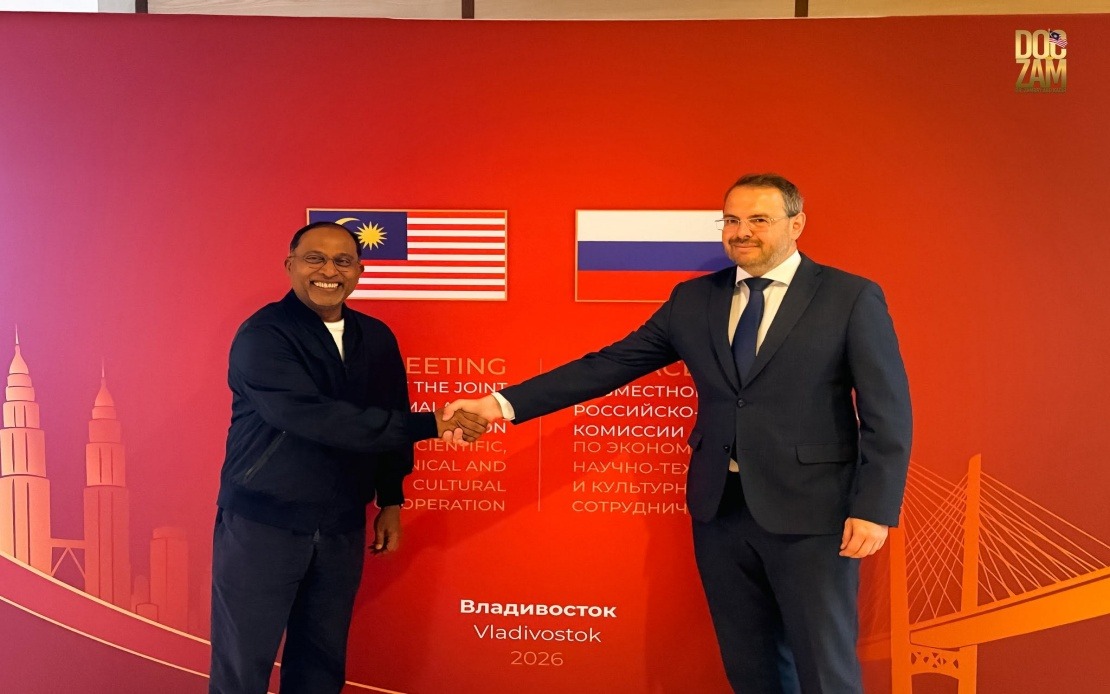
Malaysia and Russia are preparing to chart an expanded trajectory of bilateral cooperation, with discussions set to encompass trade expansion, investment opportunities, and strategic partnerships in emerging technology sectors. The Fifth Malaysia-Russia Joint Committee on Economic, Scientific and Technical Cooperation (JC-ESTC) meeting, to be held in Vladivostok from August 13-15, represents a significant moment for both nations to assess existing commitments and identify fresh avenues for mutual benefit. Higher Education Minister Datuk Seri Dr Zambry Abd Kadir, who is heading Malaysia's delegation, has underscored the importance of translating diplomatic goodwill into tangible outcomes that directly benefit the populations and economies of both countries.
The scope of the meeting extends well beyond bilateral education exchanges, reflecting the comprehensive nature of Malaysia-Russia relations in the contemporary geopolitical landscape. Delegations representing 17 ministries and agencies will participate, signalling the breadth of engagement across economic, trade, investment, energy, science and technology, higher education, agriculture, and social and cultural domains. This multi-sectoral approach demonstrates both nations' recognition that strategic partnerships must be woven across multiple dimensions of national interest rather than confined to individual portfolios. The participation of such a wide range of government bodies underscores how deeply integrated Malaysia-Russia cooperation has become, touching nearly every significant area of state responsibility.
Within the higher education sphere, Malaysia intends to prioritise several key initiatives that align with the nation's broader development ambitions. Student and academic mobility schemes will receive particular attention, enabling young Malaysians to access Russian educational institutions while facilitating reverse flows of Russian scholars to Malaysian campuses. Joint research projects form another pillar, allowing scientists and academics from both nations to combine expertise and resources on problems of mutual concern. University-to-university partnerships will be formalised and expanded, creating institutional frameworks that can persist beyond individual political administrations. Talent development in science, technology, and what Malaysian officials describe as future strategic fields suggests an orientation towards preparing human capital for emerging industries and technological frontiers.
The JC-ESTC framework itself, established in 2015, has evolved into a critical mechanism for managing and nurturing the Malaysia-Russia relationship. Rather than serving as a ceremonial forum for exchanging pleasantries, Zambry has positioned it as a results-driven platform where aspirations must crystallise into concrete projects and investments. This outcome-focused philosophy reflects a maturing understanding that bilateral relationships in the 21st century must demonstrate measurable economic and social returns to justify sustained political commitment and public resource allocation. The meeting will provide an opportunity for both delegations to review progress on previously endorsed initiatives, troubleshoot implementation challenges, and identify areas where momentum has stalled or new opportunities have emerged.
Malaysia's strategic calculus regarding Russia has shifted in recent years, reflecting both regional geopolitical realities and domestic development priorities. The emphasis on complementary strengths, particularly in science, technology, energy, and human capital development, reveals how Malaysia views Russia as a potential partner in critical sectors essential for long-term prosperity. Energy cooperation holds particular significance for Malaysia, as the nation seeks to diversify its energy portfolio and strengthen partnerships beyond traditional Middle Eastern suppliers. Russian expertise in nuclear energy, hydrocarbon technology, and renewable energy systems could facilitate Malaysia's transition towards more sustainable and diversified energy sources while enhancing energy security.
The timing of this meeting also carries regional significance. Southeast Asia has witnessed growing interest from major powers seeking to deepen engagement, and Malaysia's proactive cultivation of the Russia relationship demonstrates Bangkok's commitment to maintaining strategic autonomy and not allowing great-power competition to constrain its diplomatic options. By expanding cooperation with Moscow across multiple sectors, Malaysia reinforces its non-aligned positioning and ensures that regional development is not solely dependent on Western or Chinese investments and technologies. This balancing approach, rooted in Malaysia's long-standing foreign policy philosophy, allows the nation to benefit from multiple sources of expertise, capital, and technology.
Russian Deputy Minister of Science and Higher Education Konstantin Mogilevsky's greeting of Zambry upon arrival in Vladivostok signals Moscow's seriousness about elevating the partnership. The scheduled co-chairing of the meeting between Zambry and Russian Minister of Science and Higher Education Valery Falkov places the bilateral discussion at a sufficiently elevated level to ensure that commitments made carry ministerial weight and political backing. This protocol-level engagement suggests that both governments view the partnership as strategically important rather than merely routine or transactional.
The reference to mutual interests and respect in Zambry's remarks subtly acknowledges the geopolitical sensitivities that surround Malaysia-Russia relations, particularly given international tensions and sanctions regimes affecting Moscow. Malaysia's consistent diplomatic approach has been to maintain pragmatic engagement with all major powers while avoiding entanglement in great-power conflicts. This principle guides the Malaysian approach to Russia as well, allowing cooperation to flourish in areas of genuine mutual benefit without compromising Malaysia's broader international relationships or values.
Looking forward, the concrete outcomes of this meeting will likely include memoranda of understanding, research collaboration frameworks, and possibly investment agreements in specific sectors. The higher education sector may see new scholarship programmes, joint degree initiatives, or research institutes established through partnerships between Malaysian and Russian universities. Energy cooperation could advance through feasibility studies on specific projects or technology transfer agreements. Trade and investment facilitation may be enhanced through streamlined procedures or dedicated business councils tasked with identifying and promoting commercially viable partnerships between private sectors of both nations.
For Malaysian stakeholders, particularly in academia, energy, technology, and business sectors, the expanded Malaysia-Russia partnership opens new avenues for growth and innovation. Academic researchers gain access to Russian counterparts working on cutting-edge problems, while Malaysian companies can tap into Russian expertise in sectors where the country maintains competitive advantage. Conversely, Russian institutions benefit from Malaysia's position as a gateway to Southeast Asia and its access to talent and markets across the region. This mutually beneficial arrangement, if effectively implemented, can create value that extends beyond bilateral relations to benefit the broader Southeast Asian community through technology transfer and knowledge spillover.
The success of the Fifth JC-ESTC Meeting will ultimately depend on whether the aspirations articulated by Malaysian officials translate into sustained implementation beyond the diplomatic ceremony. Previous bilateral agreements between Malaysia and Russia have sometimes struggled in execution, constrained by bureaucratic processes, limited funding, or competing domestic priorities. The renewed emphasis on making this platform action-oriented and outcome-focused suggests that both governments have acknowledged this challenge and committed to more rigorous follow-up mechanisms. Establishing clear timelines, designated coordinators, and measurable success indicators will be essential for ensuring that agreements signed in Vladivostok bear fruit in Malaysian and Russian institutions and economies.

