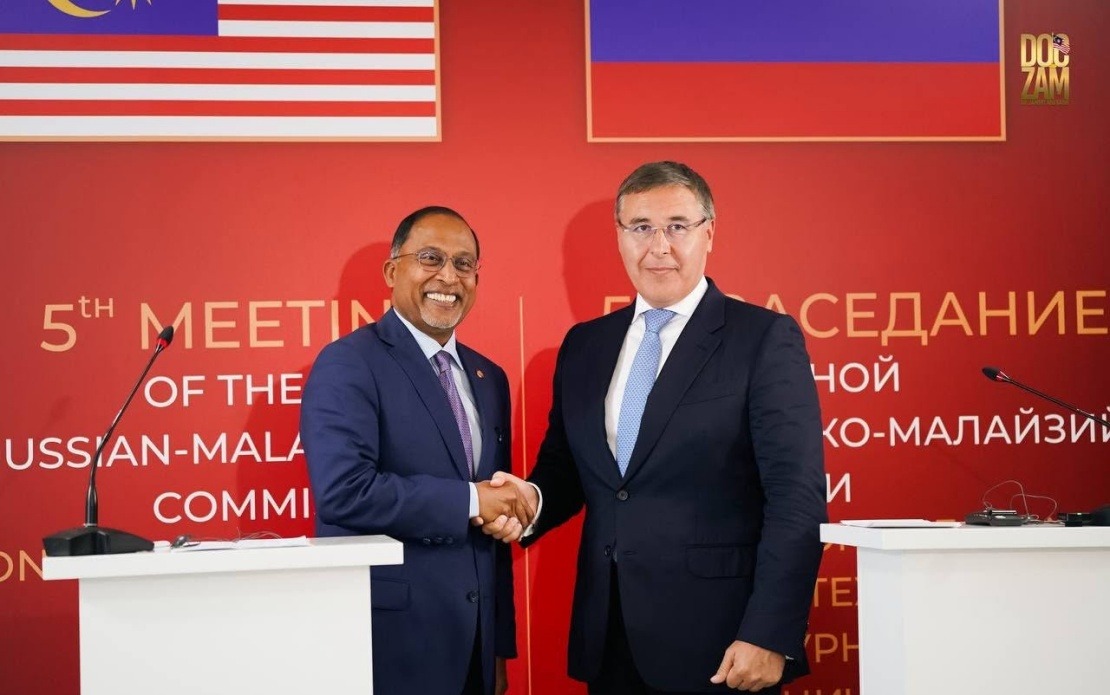
Malaysia and Russia have pledged to complete their 2027 Joint Action Plan by the close of this year, aiming to place their bilateral relationship on a more systematic and outcome-focused footing. Higher Education Minister Datuk Seri Dr Zambry Abd Kadir revealed the commitment following the Fifth Meeting of the Malaysia-Russia Joint Commission for Economic, Scientific, Technical and Cultural Cooperation in Vladivostok, where he co-chaired proceedings with Russian Minister of Science and Higher Education Valery Falkov.
The announcement underscores efforts to harness momentum generated by recent high-level exchanges between His Majesty Sultan Ibrahim, King of Malaysia, Russian President Vladimir Putin, and Prime Minister Datuk Seri Anwar Ibrahim. This year's commission meeting deliberately concentrated on converting the countries' strong political ties into tangible collaborative projects with measurable impacts across multiple sectors. By establishing a comprehensive action plan for 2027, both nations are signalling long-term commitment to deepening ties during a period of significant geopolitical realignment in the Indo-Pacific region.
In the education sphere, Russia will maintain its annual provision of 40 government scholarships for Malaysian students, a programme that has historically facilitated knowledge transfer and people-to-people connections. Beyond sustaining existing arrangements, both countries have endorsed ambitious new initiatives. The proposed first Malaysia-Russia Rectors' Forum scheduled for 2027 would bring together university leadership to identify research synergies and institutional partnerships. Simultaneously, the expansion of the MAI-UniKL Russian Aerospace Programme reflects mutual interest in advanced technological fields where Russian expertise and Malaysian institutional capacity can intersect. These educational ventures are designed to create sustained networks among students, academics and researchers, fostering intellectual exchange that extends well beyond formal agreements.
Trade and agricultural cooperation represents another priority domain. The two sides have identified opportunities to expand market access and strengthen commercial linkages. Particularly significant is discussion around fertiliser supply arrangements, including urea imports from Russia, an issue directly connected to Malaysia's food security strategy. Given global supply chain disruptions and geopolitical uncertainties affecting agricultural inputs, securing reliable suppliers aligns with broader regional food resilience objectives. Such partnerships can also provide Malaysian farmers and food producers greater certainty in sourcing essential materials while offering Russian suppliers stable market outlets in Southeast Asia.
Cooperation in strategic technology sectors marks a fundamental shift in the bilateral relationship's scope. Artificial intelligence, digital technology, smart cities infrastructure, information security and telecommunications have become focal points for technical collaboration. Malaysia's positioning as a regional technology hub and its ambitions to develop smart city capabilities create natural alignment with Russian capabilities in these domains. Renewable energy cooperation, coupled with discussions on liquefied natural gas and liquefied petroleum gas supply chains, addresses mutual interests in energy security and transition toward cleaner fuel sources. The countries are additionally exploring peaceful applications of nuclear energy within their respective regulatory frameworks, suggesting long-term planning across the energy spectrum.
Financial cooperation has advanced through engagement between Bank Negara Malaysia and the Bank of Russia. Notably, both institutions are examining Labuan's potential role as an international financial centre and ASEAN gateway, positioning Malaysia as a regional financial bridge. This dimension could enhance Malaysian institutions' capacity to facilitate Russian investment flows into Southeast Asia while providing Russian counterparts access to ASEAN financial markets. Discussions on Islamic finance and digital assets reflect contemporary financial trends, indicating both countries recognise opportunities in emerging fintech and alternative finance sectors where Malaysia possesses particular expertise.
Beyond these primary sectors, cooperation has expanded into industrial manufacturing, healthcare, transport, green technology, climate change mitigation, creative industries and space exploration. This breadth suggests comprehensive engagement rather than narrow commercial interests. Healthcare collaboration could encompass pharmaceutical research, medical technology exchange and professional training. Transport cooperation might involve infrastructure development or technology transfer. Space sector engagement aligns with Russia's advanced capabilities and emerging Southeast Asian interest in satellite technology and space applications for sustainable development.
The Fifth Commission Meeting witnessed signing of three substantive cooperation agreements between institutions. Universiti Teknologi MARA partnered with Russia's National Research University Moscow Power Engineering Institute and the Institute of Experimental Medicine, while Universiti Tun Hussein Onn Malaysia established ties with the State University of Land Use Planning. These institutional frameworks operationalise broader commitments, creating practical channels through which academic and research cooperation materialises. Such university-level agreements often generate spin-off collaborations in graduate training, joint research projects and technology commercialisation.
Malaysia's designation as host for the sixth Joint Commission meeting in 2027 carries symbolic weight, coinciding with the 60th anniversary of Malaysia-Russia diplomatic relations. This timing reflects deliberate sequencing to commemorate six decades of engagement while launching the next phase of cooperation. The anniversary provides opportunity to assess historical relationship trajectory while projecting future ambitions. Hosting responsibilities will elevate Malaysia's regional profile within ASEAN as a nation capable of facilitating major multilateral engagements with global partners.
From a Malaysian perspective, deepening Russia ties addresses several strategic imperatives. Diversifying partnership portfolios beyond traditional Western relationships aligns with Malaysia's non-aligned foreign policy tradition and regional autonomy objectives. Russian capabilities in education, energy, aerospace and advanced technology offer complementary strengths to Malaysia's own development trajectory. For Southeast Asia more broadly, Malaysia's role in strengthening Russia engagement provides counterbalance within regional great power dynamics, demonstrating ASEAN members' capacity to maintain multi-directional relationships irrespective of external pressures.
The structured approach embodied in the 2027 Joint Action Plan reflects maturation of Malaysia-Russia relations beyond episodic exchanges toward institutionalised partnership. By establishing clear timelines, designated sectors and measurable objectives, both nations signal serious commitment to substantive cooperation. Implementation mechanisms and progress tracking will determine whether these ambitious plans translate into concrete benefits for Malaysian and Russian citizens, businesses and institutions. Success would position Malaysia as a trusted Southeast Asian bridge to Russia while offering Russian partners reliable access to ASEAN markets and networks.

