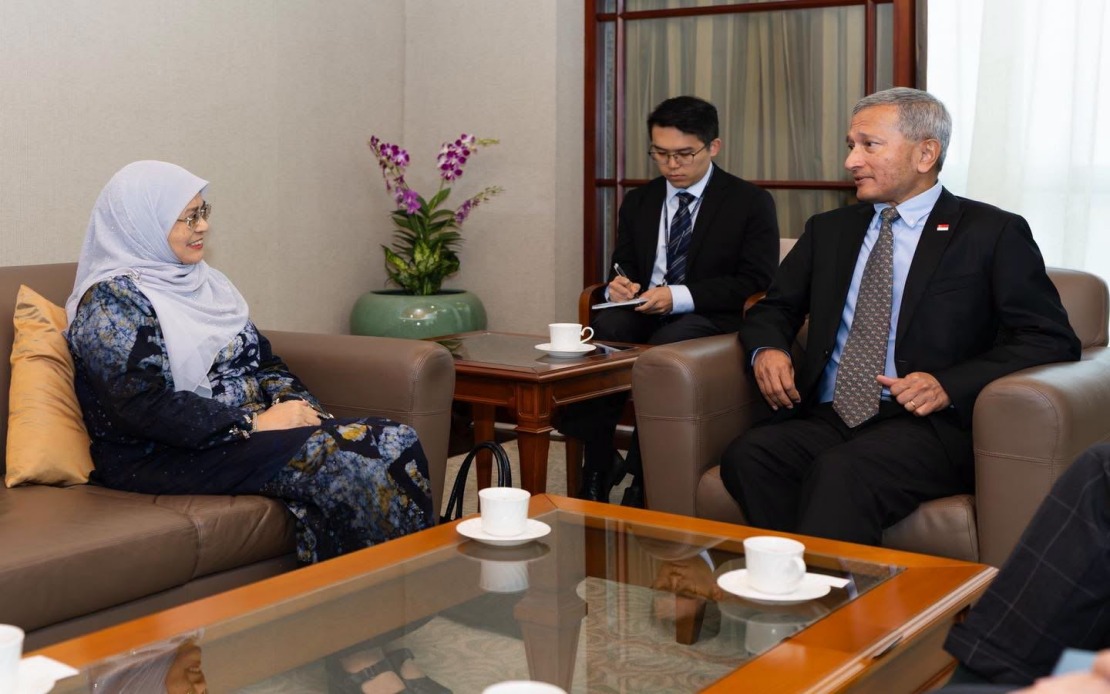
Malaysia and Singapore have recommitted themselves to sustaining the momentum in their historically significant bilateral relationship, with both countries pledging to widen cooperation across multiple sectors affecting citizens in their border regions. This renewed commitment emerged from a high-level diplomatic engagement in Singapore on Wednesday, when newly appointed Malaysian High Commissioner Datin Paduka Anizan Siti Hajjar Adnin met with Singapore's Foreign Minister Dr Vivian Balakrishnan to chart the course of the bilateral partnership moving forward.
The timing of this introductory engagement holds particular significance, as Anizan assumed her diplomatic posting on July 2, 2026, at a period when both nations face evolving economic and social challenges across their shared frontier. Her appointment represents a strategic choice by Malaysia's government, with her extensive diplomatic background positioned to navigate the complexities of managing one of Southeast Asia's most intricate bilateral relationships. The courtesy call functioned as both a ceremonial acknowledgment of her new role and a substantive discussion platform for identifying priority cooperation areas.
During their discussion, both officials emphasized the necessity of expanding collaborative initiatives that directly impact ordinary Malaysians and Singaporeans whose livelihoods span across borders. This encompasses families maintaining residences in both countries, workers commuting between nations, and business owners operating commercial enterprises that depend on seamless bilateral trade and regulatory frameworks. The focus on citizen-centric cooperation reflects a recognition that macro-level diplomatic agreements must translate into tangible improvements in daily life for those most affected by cross-border integration.
Foreign Minister Balakrishnan articulated Singapore's perspective by highlighting the distinctive character of the Malaysia-Singapore relationship, which he anchored in three foundational elements: shared historical experience, robust informal networks connecting communities across the border, and institutional cooperation spanning diverse sectors including trade, defence, security, and environmental management. His public statement credited Anizan with possessing the professional credentials necessary to build systematically on the diplomatic groundwork established by her predecessors, suggesting continuity rather than dramatic policy shifts.
The Malaysian High Commission's account of the meeting underscored mutual agreement on several operational principles. Both parties acknowledged that the bilateral relationship requires active stewardship to prevent misunderstandings and capitalize on opportunities for mutual benefit. This reflects diplomatic reality: the Malaysia-Singapore relationship, while strategically important, has historically experienced friction points ranging from water supply agreements to maritime boundary demarcations and defence collaboration. The emphasis on "maintaining positive momentum" implicitly recognizes these sensitivities and commits both sides to proactive communication.
For Malaysian policymakers and business stakeholders, the substance of this diplomatic exchange carries particular relevance. The cross-border dimension affects critical constituencies in Malaysian border states, particularly Johor, where tens of thousands of residents depend on employment in Singapore or maintain family ties across the causeway. Any deterioration in bilateral relations generates immediate economic reverberations in these communities, affecting property prices, consumer confidence, and employment prospects. The high-level reaffirmation of commitment therefore carries material consequences beyond ceremonial significance.
Singapore's perspective on this relationship reflects its strategic vulnerability as a small, resource-dependent city-state. Maintaining stability and cooperation with larger neighbouring Malaysia is fundamental to Singapore's security and economic prosperity. The island nation depends on Malaysian resources, food supplies, and regional stability, while Malaysia benefits from access to Singapore's advanced financial systems, technology, and regional trade networks. This structural interdependence requires continuous diplomatic attention to prevent minor disagreements from escalating into broader confrontations.
The discussion's emphasis on exploring fresh avenues for cooperation suggests both nations recognize that existing frameworks may require updating to address contemporary challenges. Climate change, pandemic preparedness, digital economy integration, and labour mobility represent areas where increased coordination could deliver mutual advantages. Both countries have demonstrated capacity for innovative problem-solving in the past, and the optimistic tone of this diplomatic exchange indicates openness to exploring new collaborative mechanisms.
Anizan's appointment and her early engagement with Singapore's Foreign Ministry signal Malaysia's prioritization of this relationship at the highest diplomatic levels. Her background in international relations and previous postings position her to understand the nuances of managing bilateral relations with a smaller but highly developed neighbour. Her role transcends routine diplomatic protocol; she effectively serves as a key architect of bilateral policy implementation and serves as an interface between Kuala Lumpur's strategic interests and Singapore's policy objectives.
Looking ahead, the substantive cooperation agenda will likely focus on infrastructure connectivity, facilitating business-to-business engagement, harmonizing regulatory standards where feasible, and addressing perennial issues affecting border communities. The high-level commitment articulated during this meeting provides a mandate for officials at multiple administrative levels to pursue concrete collaborative projects. Success in converting diplomatic goodwill into operational improvements will determine whether this reaffirmation of commitment translates into tangible benefits for Malaysia-Singapore citizens and regional stability more broadly.

